


New Mexico’s Digital Drought: Thirsty Servers Meet Desert Resistance
POLICY WIRE — Santa Fe, N.M. — For years, the digital revolution felt like an ethereal whisper, a frictionless transfer of information. We didn’t dwell much on its physical...

POLICY WIRE — Santa Fe, N.M. — For years, the digital revolution felt like an ethereal whisper, a frictionless transfer of information. We didn’t dwell much on its physical embodiment: gargantuan buildings packed with whirring servers, all guzzling electricity and — this is the kicker — vast amounts of water. But in the parched landscapes of New Mexico, that whisper has turned into a very real, very thirsty roar, sparking an unexpected showdown between silicon dreams and scarce resources.
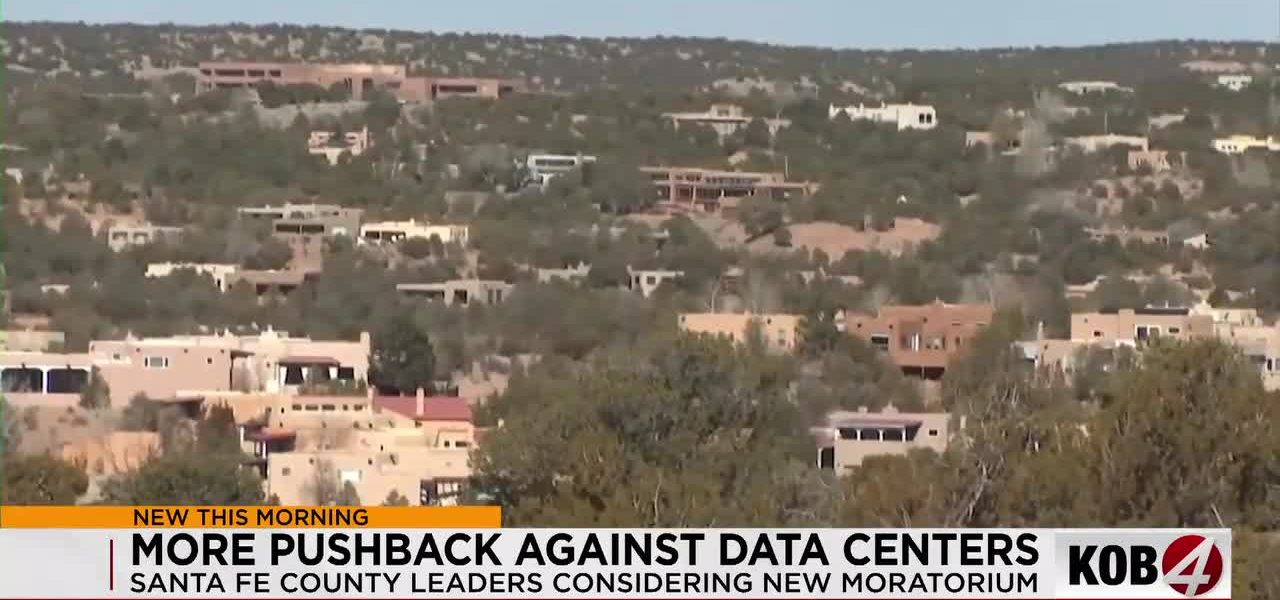
It’s not just another local squabble; it’s a rapidly escalating conflict playing out in unexpected corners. Forget the tech hubs; it’s the high desert where residents are asking tough questions, drawing a line in the sand — literally. Santa Fe County, a locale renowned more for its adobe architecture and artistic heritage than its technological aspirations, finds itself smack in the middle of this fray. Its leaders are mulling over a one-year moratorium, a stop-gap measure on new data center developments. And for good reason: they want to craft land use regulations and environmental standards before the digital deluge hits. It’s smart, proactive policymaking, though you don’t always see that from government these days, do you?
See, there aren’t actually any projects on the drawing board for Santa Fe County right now. Yet, county commissioners aren’t waiting for a crisis. They’ve watched neighbors get burned. There was the very public outcry over Project Jupiter in Doña Ana County, a debacle that clearly spooked some folks. And then you’ve got Socorro County, just down the road, where commissioners are slated to vote on their own temporary halt early next month. Residents there are openly hostile to Green Data’s proposed 10,000-acre project, which includes a solar array, no less. It’s an interesting juxtaposition, trying to solve one environmental problem while potentially creating another. One resident, at a New Mexico Tech town hall, didn’t mince words: [QUOTE_PLACEHOLDER] It’s a gut-punch of a statement, hitting right at the core of the dilemma.
This isn’t a New Mexico eccentricity either; it’s a global flashpoint. Bernalillo County already approved new guardrails back in February. Then El Paso city leaders, not far over the border, just dropped a draft plan for their own regulations. Because everybody’s realizing this isn’t some niche issue anymore; it’s a foundational resource battle. Just this week, New Jersey Governor Mike Sherrill — yes, New Jersey — unveiled a four-year, four-pillar plan designed to rein in data center impacts there. It suggests the issue is far broader, far more complex, — and definitely not going away quietly. The Santa Fe County commissioners are hosting a public hearing on their proposal next month, and you can bet it’s going to be standing room only.
Consider the scale: a 2023 study by researchers at the University of California, Riverside, and Virginia Tech estimated that data centers in regions with significant cooling needs can consume 1.7 million liters (that’s about 450,000 gallons) of water *daily*. Just think about that. That’s for cooling, keeping those endless rows of servers from overheating as they churn through cat videos, cryptocurrency transactions, and the vast, unceasing flow of information we’ve all grown accustomed to. In a desert state where the very existence of a river like the Rio Grande is in perennial jeopardy, those numbers aren’t abstract; they’re an existential threat. It’s a clash between the digital future we’re building and the very land beneath our feet, forcing us to ask: what exactly are we sacrificing for infinite scrolling and instant gratification?
And these challenges resonate far beyond the American Southwest. Look towards South Asia, where rapidly developing economies are also striving for digitalization and connecting their burgeoning populations to the global internet. Countries like Pakistan are pushing for a digital economy, understanding its economic potential. But Pakistan faces its own severe water scarcity issues, compounded by climate change — and inefficient water management. Imagine a scenario where Lahore or Karachi — already grappling with intense heat and limited water resources — suddenly see proposals for massive data centers. They’d face the exact same questions — and environmental anxieties as Socorro or Santa Fe. It’s not an isolated problem, you see; it’s a harbinger of the looming deluge of resource conflicts globally, wherever digital ambition clashes with environmental limits. We’re talking about a phenomenon that binds the arid plains of New Mexico with the sweltering mega-cities of the subcontinent.
What This Means
This growing pushback against data centers isn’t just about NIMBYism; it’s a profound re-evaluation of progress itself. Politically, it signals a shift in local power dynamics. Communities, armed with compelling environmental arguments, are increasingly challenging powerful tech firms and state economic development agencies who prioritize corporate growth metrics over immediate environmental impacts. We’re seeing local leaders — county commissioners and city councils — stepping up to demand a more responsible, more sustainable path for technological expansion. They’re realizing that attracting investment can’t come at any cost, especially when that cost includes dwindling groundwater supplies in an already fragile ecosystem. But then you’ve got the industry lobby, constantly pushing for less regulation, fewer restrictions, selling a narrative of innovation and job creation. It’s a classic power struggle, plain — and simple.
Economically, this resource scarcity injects a harsh dose of reality into the digital economy. The invisible ‘cloud’ has a very real carbon — and water footprint. As localities impose moratoria or stricter regulations, the operational costs for data centers in resource-stressed regions will inevitably rise. This means either higher prices for consumers of digital services or a geographical shift in data center development towards areas with abundant — read: cheaper — water and energy. It’s a pricing in of externalities, what economists have long called for. For the broader market, it could mean a push for more efficient cooling technologies — dry cooling, direct-to-chip, things like that — that reduce water consumption. But that’s innovation born from necessity, not from proactive foresight. We’re watching the collision of unchecked digital growth with the very tangible limits of our planet, and it’s creating some very awkward questions for policymakers and industrialists alike. They can’t ignore the environmental bill forever; it’s finally landing on their desks, not ours, for once. The implications? They’re just starting to scratch the surface.