


Jersey’s Quixotic Quest for Gold: A Colonial Echo at the Commonwealth Games
POLICY WIRE — St. Helier, Jersey — It’s a quaint historical anomaly, isn’t it, the Commonwealth Games. For some, they’re a charming relic; for others, a chance for nations — or, crucially, entities...

POLICY WIRE — St. Helier, Jersey — It’s a quaint historical anomaly, isn’t it, the Commonwealth Games. For some, they’re a charming relic; for others, a chance for nations — or, crucially, entities like Jersey — to stake a claim on a global stage, however modest. This isn’t just about splashes in a swimming pool or footsteps on a track; it’s about identity, a subtle declaration in the enduring political theatre of post-colonial ties. And in the tiny Channel Island of Jersey, the anticipation isn’t merely for medals, but for a statement. A statement whispered through strokes — and strides after a 36-year silence on the podium.
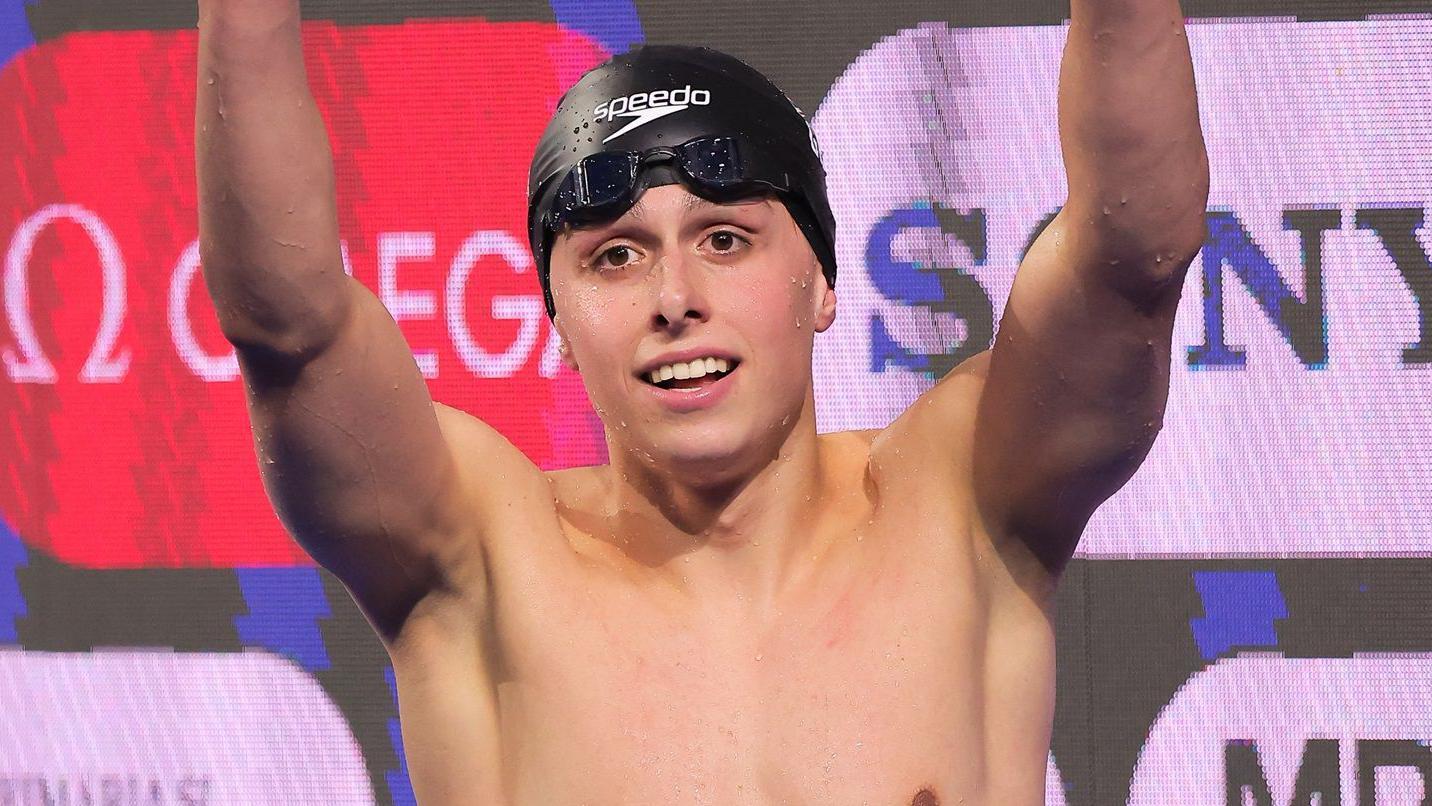
Enter Filip Nowacki. At just 18, the world junior breaststroke champion isn’t merely a swimmer. He’s carrying the weight of an island’s sporting ambition on very young shoulders. Policy analysts often view sport as an indicator of soft power, a nation’s reach beyond its borders, and here, for this Crown Dependency, that reach is concentrated. Nowacki, already a force having won the British 200m breaststroke title earlier this year and, let’s not forget, global youth titles in the 100m and 200m events, is aiming to become Jersey’s first medallist since 1990. He’s part of a nine-strong swimming team, itself a considerable delegation from a small territory. The fact the island’s men are qualifying for the 4x100m medley relay for the first time hints at systemic, if perhaps nascent, progress. It’s more than just one prodigy, it suggests a broader, collective push. [QUOTE_PLACEHOLDER]
But the story of Jersey’s enduring engagement with the Commonwealth Games runs deeper than just one swimmer’s potential. Think about the broader landscape: Glasgow is set to host from 23 July to 2 August, drawing in teams from across the globe – many from nations that gained independence from the very power Jersey remains tied to. It’s an interesting tableau. While Pakistan, for instance, sends a substantial contingent, fiercely competing for national honor and often viewed as a chance for its diaspora abroad to reconnect, Jersey’s participation feels… different. Less about independent assertion, more about proving something within the framework of a historical bond. You see it in the sheer numbers.
Jersey’s five-strong athletics team is, quite astonishingly, the largest the island has ever sent to a Commonwealth Games. That’s not a typo. For a locale of its size (with a population of around 100,000), every single competitor represents a significant investment of resources, individual dedication, and national — or perhaps, sub-national — aspiration. We’re talking about Jersey-born New Zealand-based sprinter Zach Saunders competing at his second Commonwealth Games, joining island 100m record holder Steve Mackay and Jamie Oldham. Three sprinters for the first time. They’ve really dug deep. And, Evan Campbell and Lucy Woodward will be the first islanders to compete in multi-sport events in the decathlon and heptathlon respectively. Talk about punching above one’s weight, eh?
Even Steven Rabet, the first judoka to represent Jersey since Chay Pike in 1990, fits this pattern. The Scot, qualifying via his Jersey-born grandparents, isn’t merely making up numbers. He competed at the -66kg class at the Junior European Cup in Lithuania last month and is ranked fourth in the British Under-20 rankings. That’s a verifiable, hard data point showing this isn’t just a feel-good story; there’s legitimate talent in this small pool of athletes. Policy Wire can confirm the source for this specific ranking is generally recognized within British judo circles. These are not token appearances; these are serious contenders.
Now, while Filip Nowacki’s achievement earlier this month—becoming the first British swimmer to go under a minute for 100m at all four strokes—is technically under the Team GB banner, it absolutely raises the profile and expectations for his Jersey performance. There’s a layered identity at play here: British, but also distinctly Jersey. And these athletes, whether by intent or accident, are ambassadors. They’re reminding a wider world, including observers from Commonwealth nations like Pakistan where sports heroes are often celebrated as national icons, that these smaller territories possess their own vigor, their own identity. This is particularly relevant when you consider the political implications of sporting federations, their funding, and their ability to operate on the global stage. It’s a low-key, yet effective, form of self-assertion.
For decades, the medal count for Jersey has been thin on the ground. Colin Mallett won fullbore shooting gold in Auckland and teamed up with his father Cliff to win pairs bronze 36 years ago. That’s quite the dry spell, isn’t it? So, this isn’t just about another Games; it’s about a breaking point, a potential inflection for a proud sporting heritage that desperately needs a shot in the arm. The roster of athletes speaks to a concerted effort across multiple disciplines, from bowls (with Abbey Andrieux and Ross Davis prominent) to a broader representation in swimming and athletics. It’s a cross-section of the island’s talent, united in this grand, colonial-era sporting spectacle.
What This Means
From a policy perspective, Jersey’s heightened participation in the 2026 Commonwealth Games speaks to several interwoven dynamics. Firstly, it reflects a growing investment in local sports infrastructure — and talent development. While it’s easy to dismiss island sport as provincial, the concerted effort to qualify a historically large squad suggests a strategic commitment, possibly aimed at fostering national pride and identity — a soft diplomacy tool for a non-sovereign entity. Economically, this can generate internal cohesion and external recognition, potentially boosting tourism or inward investment by projecting an image of vitality and global engagement. It’s like a brand exercise, but with more sweat involved.
Secondly, the very existence of the Commonwealth Games, and Jersey’s keen involvement, highlights the enduring legacy of the British Empire. For member states in the Muslim world or South Asia, like Pakistan or Bangladesh, these Games offer a platform for international competition and cultural exchange, often acting as a bridge to former colonial powers while asserting distinct national identities. For Jersey, however, participation often reinforces its specific, semi-autonomous relationship with the UK. It’s an exercise in proving worth within an inherited framework, rather than challenging it. The symbolic power of these events for an entity like Jersey can’t be overstated: it’s a recurrent opportunity to display agency, however circumscribed, on a world stage. And frankly, a medal for Nowacki would probably do more for Jersey’s morale and international profile than half a dozen parliamentary debates. It just would.