

Europe’s Relentless Summer: A Deadly Heatwave Exposes Fractured Futures
POLICY WIRE — Brussels, Belgium — The ancient stones of Rome shimmered with an unbearable mirage. Paris felt like an oven, its cafe terraces unusually desolate. Across much of the European continent,...

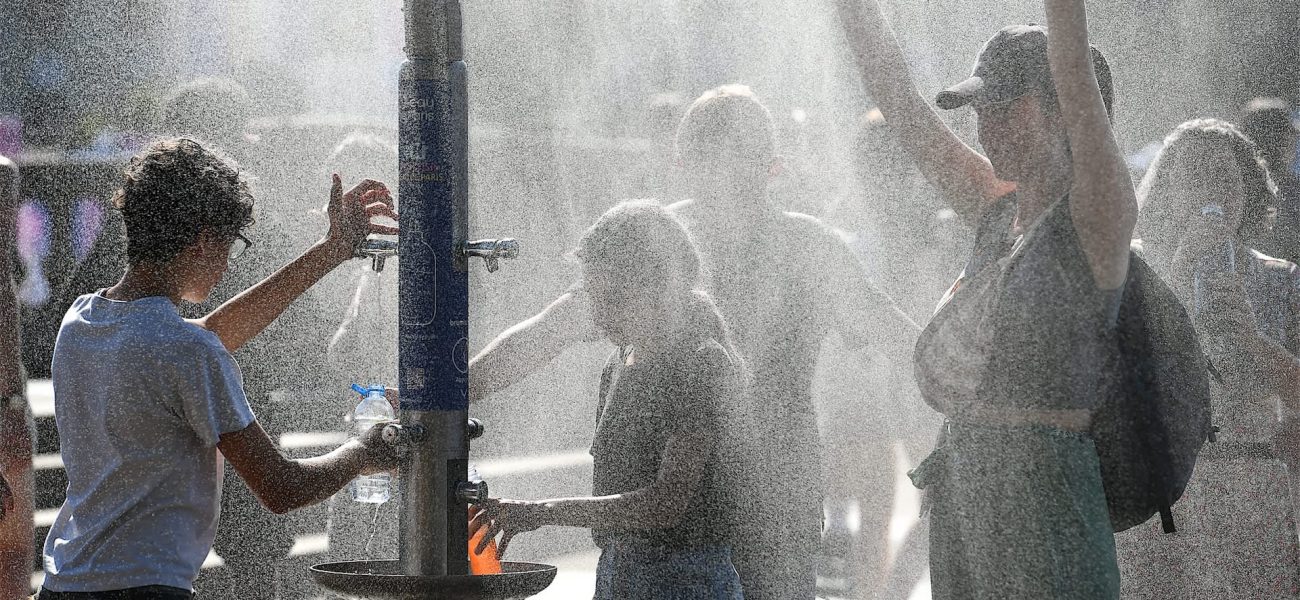
POLICY WIRE — Brussels, Belgium — The ancient stones of Rome shimmered with an unbearable mirage. Paris felt like an oven, its cafe terraces unusually desolate. Across much of the European continent, silence replaced the usual summer hum—a silence wrought not by choice, but by a suffocating heatwave that descended like a slow-motion catastrophe, leaving at least seven people dead and an unsettling question hanging heavy in the sweltering air: just how much more can the ‘Old World’ take?
It’s a brutal irony, isn’t it? Europe, with its advanced infrastructure and robust healthcare systems, still finds itself gasping, much like regions long accustomed to extreme conditions. This isn’t just about rising temperatures; it’s about a jarring collision of expectation versus brutal reality. Citizens, many used to mild summers, simply weren’t equipped for the prolonged, record-shattering baking. From sun-drenched beach towns to bustling urban centers, daily life ground to a hazy halt. Public transport buckled. Hospitals saw spikes in heatstroke — and dehydration cases. And tragically, some didn’t make it.
Because frankly, we’re talking about more than just uncomfortable weather. This current heat dome—an oppressive blanket of stagnant, scorching air—isn’t an isolated incident; it’s a stark preview. We’ve seen similar patterns emerge, becoming less ‘unprecedented’ — and more, well, regular. It’s forcing policymakers to grapple with issues they perhaps preferred to defer—climate adaptation, migration, and the very stability of societal systems.
“We’re beyond the point of just mitigating,” declared Commissioner Isolde Vonderland, the EU’s Climate Policy Coordinator, in a terse digital briefing. “We’re not just watching the mercury rise; we’re witnessing a paradigm shift in our daily existence. Adapting isn’t enough anymore. We need aggressive mitigation, and quickly.” Her words, while urgent, carried a weary acknowledgment of bureaucratic inertia that often plagues such large-scale endeavors.
And what does this mean for geopolitical stability? Look, this kind of sustained thermal assault stretches resources, strains grids, — and impacts productivity. Food supplies become a concern. Water management turns into a crisis. It’s the stuff developing nations have been screaming about for decades. In places like Pakistan, for example, the concept of a ‘deadly heatwave’ isn’t newsworthy; it’s just life, compounded by devastating floods and famines, displacing millions and contributing to widespread humanitarian emergencies. The Indus River Basin has been ravaged repeatedly, an early warning for global vulnerability.
“This isn’t an anomaly; it’s a dress rehearsal for an uncomfortable new normal,” noted Dr. Aris Thorne, a leading Professor of Atmospheric Science at the University of Amsterdam, speaking to reporters from a rather sweltering campus. “We’re locking into a future where these events are annual fixtures, not statistical outliers. Ignoring it now? That’s just criminally negligent.” Dr. Thorne’s sentiment echoes a growing scientific consensus that the planet’s atmospheric patterns are recalibrating faster than policymakers are reacting.
The human cost is obvious, yes. But the economic toll? That’s less immediate, yet deeply insidious. Lost working hours, increased energy demands for cooling, agricultural impacts—it’s all part of the ledger. A recent study by the European Environment Agency, for instance, projects that heat-related deaths across Europe have increased by roughly 30% in the last two decades alone, indicating a deepening crisis. That’s not just a number; it’s communities grappling with loss, health systems pushed to the brink, and governments facing mounting healthcare expenditures.
📄 POLICY WIRE WHITEPAPER PUBLISHED: PAKISTAN'S NATIONAL SECURITY POLICY PRIORITIES
👉 READ BY CLICKING HEREBut the real kicker here is the sense of exposed vulnerability. Europe often perceives itself as insulated from the worst extremes, a narrative now crumbling with each successive heatwave. It’s not immune. And its reactions, or lack thereof, send signals globally. Do wealthy nations pull up the drawbridge? Or do they finally invest in solutions that transcend borders?
What This Means
This latest European sizzle isn’t merely a weather event; it’s a geopolitical alarm bell ringing deafeningly loud. Politically, leaders face growing pressure from electorates weary of feeling helpless against environmental forces. We’ll see intensified debates over climate policy, and likely, a push for more centralized, EU-wide response mechanisms—whether those materialise is anyone’s guess. But it also creates friction. You’ve got populists dismissing it, environmentalists demanding urgent action, and moderates trying to chart a viable path between the two extremes. That internal strife is already palpable.
Economically, expect disruptions. Energy markets will continue to see volatility as demand for cooling skyrockets, putting grids under immense strain and raising questions about energy security—a topic already fraught with complexities in the aftermath of recent global events. Agriculture will suffer, impacting food prices and potentially contributing to inflationary pressures across the Eurozone. And this isn’t just a European problem. These cascading impacts ripple outwards, affecting global trade and supply chains, much like the broader instabilities Europe often frets about. We’re seeing climate become an increasingly powerful, — and disruptive, economic driver.
The long-term implication points towards an inevitable acceleration of migration debates. As South Asian nations, and others in the global south, become even less habitable due to climate extremes, Europe—despite its current struggles—remains a destination. How the continent balances its humanitarian obligations with internal pressures, all while battling its own climate demons, promises to be one of the defining challenges of this generation. It’s a harsh truth: the world’s heating up, — and we’re all feeling the burn.