


Prodigal Son’s Exit: Hoffenheim’s Homegrown Star Moves On
POLICY WIRE — Sinsheim, Germany — For those who’ve watched European football evolve beyond mere sport into a global financial behemoth, a quiet transaction in Germany’s Bundesliga isn’t just a...

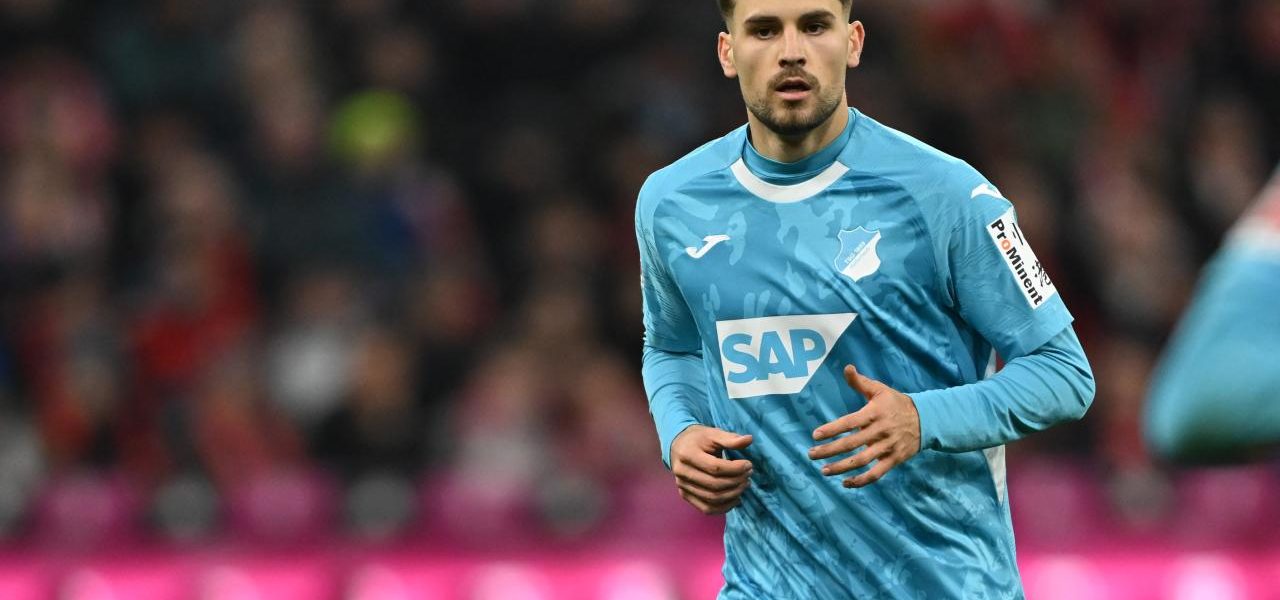
POLICY WIRE — Sinsheim, Germany — For those who’ve watched European football evolve beyond mere sport into a global financial behemoth, a quiet transaction in Germany’s Bundesliga isn’t just a roster change. It’s a snapshot, stark — and immediate, of the relentless churn of ambition and economic pragmatism. Luka Đurić, a name barely whispers beyond the confines of the Kraichgau, just walked away from TSG Hoffenheim, his boyhood club, to SC Paderborn. It’s a career choice that, upon closer inspection, tells a bigger story than just a single player moving clubs.
Đurić, just 22, represented an aspiration for many clubs—a player developed from toddlerhood right through to the first team. You know, the kind of narrative that builds emotional capital with fans. He literally began his football journey at Hoffenheim’s youth academy from the tender age of four, his father, Nebojsa Đurić, having worn the club’s colors years earlier (1992 to 2004). This isn’t just about athletic potential; it’s about a lineage, a community, a homegrown identity. And that’s now broken.
His trajectory wasn’t exactly an unmitigated disaster; quite the opposite. Đurić progressed through all the youth teams, ultimately making a total of 88 appearances for the U23s, scoring 26 goals and providing 18 assists, according to club statistics. He even got his Bundesliga debut in February 2026, against Bayern Munich no less—a rite of passage for any ambitious young German footballer. That said, it wasn’t enough, apparently, to forge an unbreakable bond or secure a guaranteed starting spot that aligned with his burgeoning aspirations. But maybe it’s less about breaking — and more about building?
Sporting Director Frank Kramer’s comments felt… clinical. [QUOTE_PLACEHOLDER] he said, praising Đurić’s unique story — and acknowledging his role as [QUOTE_PLACEHOLDER]. The phrasing—[QUOTE_PLACEHOLDER]—sounds like a cordial, if not entirely joyous, parting of ways. It’s a business transaction, first — and foremost, regardless of sentiment. Because let’s face it, loyalty in professional football often feels as quaint as a rotary phone.
This kind of player mobility, especially from a development-focused club like Hoffenheim to a newly promoted side, isn’t unique to Germany. It mirrors patterns seen across continents, impacting talent pipelines even in places far removed from the Bundesliga’s glittering stadiums. Consider countries like Pakistan, where football, while growing, often loses its brightest talents to the economic gravitational pull of wealthier leagues. Their youthful prospects, dreaming of European careers, face immense hurdles: infrastructure, coaching quality, visa issues—the works. But the ultimate goal remains the same: a bigger stage, a better salary, more competitive football. Đurić, despite his privileged Hoffenheim upbringing, is still chasing that higher tier of validation, just like a Pakistani teenager might dream of playing in any European second division.
And that’s the rub, isn’t it? Talent is a global commodity now, constantly in motion. These young players—whether from Sinsheim or Karachi—are acutely aware of their market value and their brief window to capitalize on it. You can’t blame them for wanting more, even if it means leaving the comfort of home. That ambition drives the engine of professional football, but it also strips away some of the romanticized local connection. It’s an interesting dance, watching clubs try to maintain their identity while facilitating what’s essentially economic migration for athletes.
📄 POLICY WIRE WHITEPAPER PUBLISHED: PAKISTAN'S NATIONAL SECURITY POLICY PRIORITIES
👉 READ BY CLICKING HEREHe’d spent his entire formative footballing life within Hoffenheim’s embrace. You just wonder about the message it sends when even a lifelong academy product ultimately opts for a change of scenery. It’s a cold world, the business of football.
What This Means
The departure of a talent like Luka Đurić holds subtle but significant implications beyond the mere transfer fee, whatever that might be. Economically, it showcases the continuous recalibration of player value within the European football market, where potential often commands premium movement. Clubs like Hoffenheim, known for their youth development prowess, operate as sophisticated incubators. Their financial models frequently rely on nurturing and then selling players to larger, wealthier clubs—a classic supply chain in the sports industry.
This transaction, while seemingly small, underscores the challenges faced by mid-tier clubs in retaining their brightest homegrown stars, even when those stars have a deep personal connection to the club. Politically (within the club — and footballing ecosystem), it can be seen as a necessary compromise. Hoffenheim is seen as letting a valued asset pursue his ambition, which might be a strategy to maintain a reputation for being player-friendly, attracting future prospects. However, it also suggests that the promise of promotion or increased game time at a slightly smaller club holds more sway than sentimental ties to a long-term institution. It’s a recurring pattern: local identity is traded for upward mobility. It’s a testament to the hyper-competitive nature of professional sports, where the bottom line and career progression almost always win over the sentimental story. And for clubs in nations where football economies are less developed, this brain drain of talent to Europe remains a perpetual policy headache.