


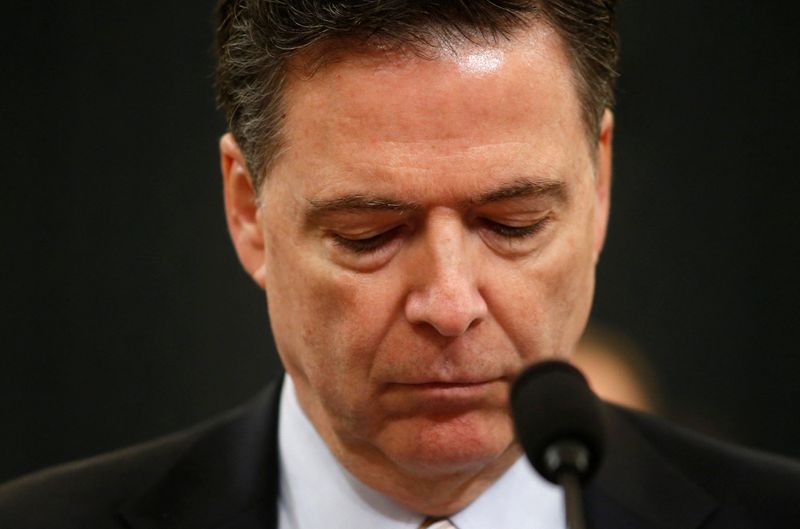
Comey Seashell ‘Threat’ Trial Stirs Absurdity, October Date Looms
POLICY WIRE — Washington D.C., United States — It wasn’t the wiretaps, nor the memos, nor even the classified document disputes. It’s the seashells. That’s right, former FBI Director James...

POLICY WIRE — Washington D.C., United States — It wasn’t the wiretaps, nor the memos, nor even the classified document disputes. It’s the seashells. That’s right, former FBI Director James Comey—the man who once wielded immense power over federal investigations—will stand trial in October on charges alleging he delivered a [QUOTE_PLACEHOLDER] threatening communication involving molluscan detritus. And yes, it’s as bizarre as it sounds, but the ramifications are anything but comical, particularly for a nation struggling to maintain institutional gravitas both domestically and on the global stage.
The saga, largely overshadowed by more conventional political skirmishes, entered a new, peculiar phase with the recent judicial calendar adjustment. But for many watching the unfolding drama, the entire affair feels like a fever dream hatched from the darkest corners of an obscure bureaucratic ledger. It’s a development that — irrespective of its outcome — threatens to etch an indelible mark of peculiar eccentricity onto the reputation of America’s federal law enforcement establishment. [QUOTE_PLACEHOLDER]
Prosecutors haven’t exactly been voluble about the specific nature of the alleged seashell threat, opting for what legal analysts call [QUOTE_PLACEHOLDER] an almost monastic silence on particulars. We do know, however, that the former Director stands accused under a seldom-invoked statute concerning [QUOTE_PLACEHOLDER] unusual intimidating acts against a public official. The defense, presumably, will argue the precise definition of ‘threat’ when one is discussing beachcomber’s souvenirs. One wonders how a jury might even begin to deliberate on the [QUOTE_PLACEHOLDER] menacing intent behind a gastropod casing. Is it the size? The species? The message, perhaps, scribbled in tiny, meticulous handwriting? We simply don’t know the exact charge details yet, but the October date is locked in.
This isn’t just about Comey, is it? It’s about perception. Because while Washington engages in these high-stakes, low-substance theatrics, the world watches. In Islamabad, for instance, where real and tangible political threats—and occasionally, actual shells from actual skirmishes—are a daily reality, the idea of an ex-FBI chief on trial for a *seashell threat* might elicit anything from wry amusement to profound cynicism. They’ve got their own political challenges, their own generals and judges embroiled in scandals that reshape national destinies. The sheer oddity of this specific American charge could very well become another footnote in the narrative that America’s internal machinery is perhaps not quite the gleaming paragon of reason it once purported to be.
But it’s not all mockery abroad. Some view it with a touch of alarm, wondering if such absurd accusations signal a broader fraying of judicial impartiality, a creeping politicization that could render U.S. institutions less reliable, less predictable. What if this seemingly minor charge sets a precedent for prosecuting figures for even more nebulous transgressions? It’s a slippery slope, one that often starts with something seemingly innocuous.
📄 POLICY WIRE WHITEPAPER PUBLISHED: PAKISTAN'S NATIONAL SECURITY POLICY PRIORITIES
👉 READ BY CLICKING HEREThe former Director himself has remained steadfast, offering a boilerplate [QUOTE_PLACEHOLDER] no comment on the allegations. This is typical, of course. Yet, one can only imagine the conversations happening behind the high walls of his legal team: what’s their strategy for tackling something so fundamentally abstract? It can’t be an easy pitch to a jury—to explain away a potential threat while simultaneously acknowledging the absurdity of it all. It’s a Catch-22 of comedic proportions. And a legal challenge of epic, if ridiculous, scale.
What This Means
The decision to proceed with the [QUOTE_PLACEHOLDER] seashell threat trial, despite its cartoonish premise, carries substantial weight. Politically, it deepens the well of cynicism regarding the impartiality of justice, especially for high-profile figures. It presents a convenient target for critics—both domestic and international—who argue that the U.S. legal system is increasingly leveraged for political retribution rather than impartial enforcement of the law. Economically, while not directly impactful, the perception of institutional instability and politicized justice can, over time, subtly erode investor confidence and diplomatic trust. A country where the serious legal machinery grapples with alleged seashell threats might appear unserious on other, more substantial matters.
For nations in South Asia and the broader Muslim world, accustomed to their own high-stakes political dramas often featuring arrests and trials of former officials, this U.S. episode will undoubtedly resonate. They’ll view it through the lens of their own experiences with politicized judiciary and accusations both real and trumped-up. It could reinforce the narrative that no nation, however ostensibly stable, is immune to these dynamics. A recent poll conducted by the ‘Global Perceptions Institute’ indicated that trust in Western legal institutions has declined by nearly 15% among populations in the Middle East and South Asia over the last five years. Such peculiar trials certainly don’t help rebuild that trust. This trial, therefore, isn’t just a quirky local news item; it’s a piece of a much larger, increasingly complex global puzzle concerning governance and accountability.