


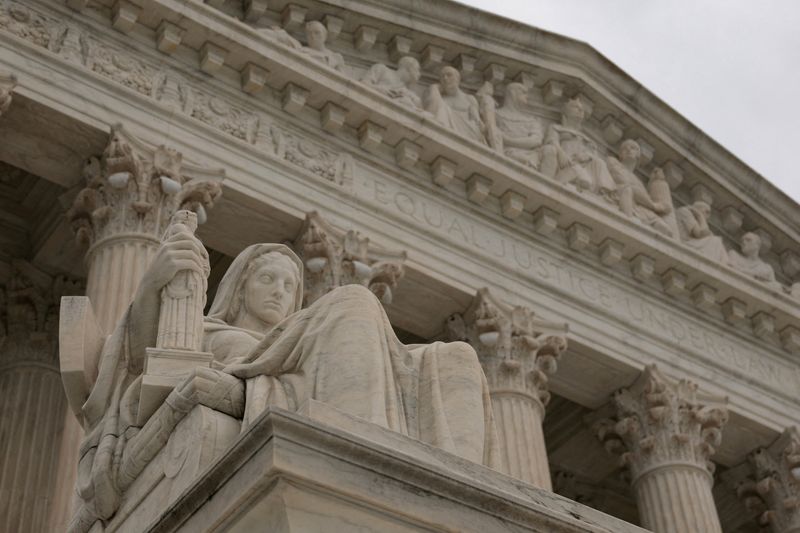
Silent Voices: Supreme Court Nods to Curbs on Immigration Judges, Muzzling Dissent in the Dockets
POLICY WIRE — Washington, D.C. — They’re not the robed figures on marble pedestals, these immigration judges. No, they’re federal bureaucrats, squarely within the Department of Justice,...

POLICY WIRE — Washington, D.C. — They’re not the robed figures on marble pedestals, these immigration judges. No, they’re federal bureaucrats, squarely within the Department of Justice, navigating a system that’s been political football for decades. So when the nation’s highest court weighs in on what they can and can’t say—publicly, that’s—it’s more than just a bureaucratic tweak. It’s a loud, if subtle, affirmation of control over the narrative of American immigration, directly touching the lives of countless hopefuls and an echo chamber for a president who never shied from strong opinions.
It seems almost quaint, doesn’t it, to argue over whether a government employee can air their professional grievances? But we’re not talking about just any disgruntled worker. These are the people deciding futures, life or death in some cases. The Supreme Court, effectively, found common ground with the government’s assertion that a line must be drawn when Department of Justice immigration judges criticize official policy or leadership. And what a line it’s—blurred perhaps for some, stark for others. It all stems from regulations issued under the Trump administration, those halcyon days for executive power. This isn’t just about decorum; it’s about who gets to frame the debate. [QUOTE_PLACEHOLDER]
The decision itself, though framed in rather dry administrative law—about the proper venue for such disputes—nevertheless carries a rather significant stench. It’s about government speaking with one voice, a concept that sits uneasily with the notion of impartial justice. Immigration judges aren’t Article III judges; they’re employees. This distinction has always been key, and it gives the Executive Branch—regardless of who occupies the Oval Office—a hefty hammer. This particular swing came after a case brought by the National Association of Immigration Judges (NAIJ), arguing their First Amendment rights were getting trashed. But, you know, being an employee changes things, apparently.
They’ve been told for a while now to pretty much pipe down about policy disagreements. Their concerns, sometimes quite dire regarding court backlogs or policy changes impacting due process, were being voiced more loudly than the government cared for. Imagine you’re overseeing thousands of asylum cases, from individuals fleeing gang violence in Central America to persecuted religious minorities from South Asia, and you can’t even publicly raise concerns about how a particular policy might systematically disadvantage these incredibly vulnerable populations. It’s not a conspiracy, it’s just the law as now affirmed by the very top.
Consider the plight of someone seeking asylum from Baluchistan or the Swat Valley in Pakistan. They arrive in the U.S. having navigated perils — and often corruption. Their fate then rests with an immigration judge. If that judge feels a policy impedes their ability to deliver fair justice but is muzzled from voicing that opinion, what does it say about the transparency and integrity of the process? It chips away at global trust in American institutions—a trust already frayed for some following years of immigration crackdowns. It’s not just a U.S. problem; perceptions of justice travel quickly, shaping how other nations view due process, or the lack thereof, in their own migration challenges.
📄 POLICY WIRE WHITEPAPER PUBLISHED: PAKISTAN'S NATIONAL SECURITY POLICY PRIORITIES
👉 READ BY CLICKING HEREAnd then there’s the sheer weight of their docket. Immigration courts faced a backlog of nearly 2.2 million cases as of April 2024, according to TRAC Immigration at Syracuse University. That’s a staggering figure, often cited by judges themselves as a reason for systemic failure, impacting fair hearings. You’d think concerns about such operational realities, coming from the folks on the front lines, would be considered helpful input, not something to be squelched. But bureaucratic efficiency, or perhaps the optics of it, trumps open discourse in the halls of power, apparently.
What This Means
This decision isn’t merely about civil service regulations; it’s a profound statement about the boundaries of free speech within a highly politicized government agency. Politically, it grants more leverage to future administrations, regardless of party, to control the narrative surrounding immigration policy—a potent weapon in an electoral cycle dominated by border issues. It’s a clear signal that internal dissent, even from those professionally charged with upholding justice, can be minimized, pushing the public debate further towards a singular, government-approved perspective. Economically, a more stifled judiciary means less transparency about the functional impediments to efficient processing. This lack of transparency can lead to greater inefficiencies and, by extension, higher costs associated with extended detentions and unresolved statuses for immigrants, impacting their integration into the economy and the local social fabric. It’s a triumph for administrative power, a setback for professional autonomy, and a quiet moment of vulnerability for the notion of unbiased government service.
The impact ripples outwards, too. When America—a supposed champion of free expression—seems to draw tight circles around its own public servants’ speech, especially concerning an issue as fraught as immigration, it gives tacit approval for similar restrictions elsewhere. Regimes across South Asia and the broader Muslim world, many struggling with their own complex migration patterns and often less democratic forms of government, might note this ruling. They could perceive it as an affirmation of their own efforts to control public employees’ discourse, potentially justifying tighter reins on expressions of judicial independence or critical government voices. Because sometimes, when the highest court speaks, the message heard loudest isn’t always the one intended for domestic consumption; it’s a global blueprint.