
Gridiron’s Fray: When Loyalty Shifts From the Field to the Forum
POLICY WIRE — New York, USA — For years, America clung to a comforting fiction: the locker room, the arena, the playing field itself, as hallowed ground, immune from the messy skirmishes of partisan...

POLICY WIRE — New York, USA — For years, America clung to a comforting fiction: the locker room, the arena, the playing field itself, as hallowed ground, immune from the messy skirmishes of partisan politics. A place where tribal loyalties, albeit intense, never bled into the real tribalism of the ballot box. But that particular illusion? It’s done. Shattered. Not by policy debates or election results, but by a couple of New York Giants, a former President, and the uncomfortable truth that silence, too, is a choice.
It wasn’t the endorsement that truly shook the apple cart—we’ve seen those before. No, it was the swift, pointed rebuke from within the very same team that made Jaxson Dart’s public embrace of Donald Trump so jarring. Quarterback Dart, the franchise signal-caller, chose a New Jersey rally to give his two cents (or, more accurately, his very visible endorsement), capping it off with a casual “Go Big Blue” chant. He probably thought it was all good. But then, Abdul Carter, a prominent defensive end—and crucially, not exactly a wallflower—hit X (formerly Twitter) with his own take. And just like that, the unwritten code, that fragile, gentleman’s agreement among athletes to keep it zipped, imploded.
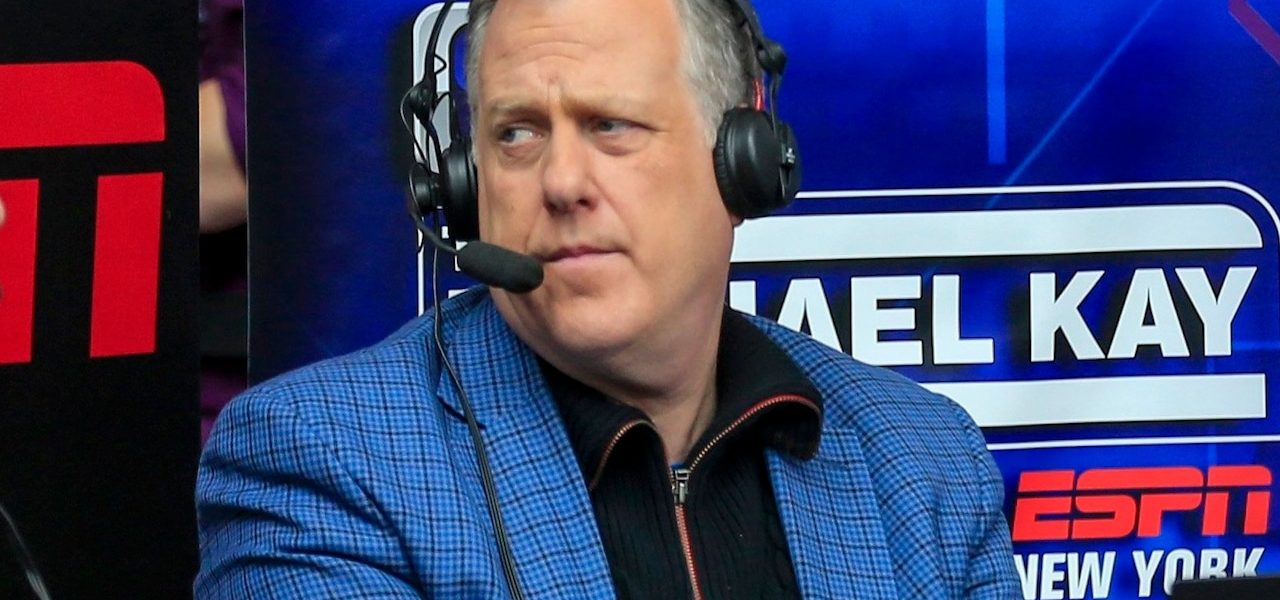
Enter Michael Kay, the long-time voice of the Yankees, now dissecting this particular drama on his ESPN New York show. Kay, always one to slice through the nonsense, pointed out the obvious paradox: Dart gets to use his platform, but Carter, who then uses *his* to respond, suddenly doesn’t? “You could do stuff behind the scenes if you like a candidate. You could donate money… But instead, he tried to be front-facing about it,” Kay stated in a segment, his voice laced with the kind of weary resignation only a lifetime observing public figures can instill. “So then you have to suffer the consequence because what you’re doing is that you’re endorsing and appearing at a rally for one of the most polarizing political figures in the entire 250-year history of the United States.”
Because that’s the deal, isn’t it? Public figures aren’t just employees; they’re walking, talking billboards. Their choices resonate, for better or worse. Dart, predictably, remained unrepentant. “This is America,” he was overheard telling reporters, a standard-issue defense, “I’ve got the right to express myself just like anyone else, and nobody’s gonna tell me to be quiet about what I believe in.” A straightforward, if perhaps naive, reading of his job description.
But Carter didn’t buy it. He pushed back hard. “Team unity isn’t just about sharing a huddle; it’s about sharing basic human values. When actions off the field compromise that, someone needs to speak up, regardless of whose feelings get ruffled,” Carter is rumored to have said to a teammate, an assertion his social media activity certainly echoed. For a significant chunk of the public, particularly among younger demographics and minority groups, neutrality often reads as complicity. And honestly, it often feels that way. Look at Pakistan’s cricket captains, national heroes whose every utterance, every perceived political tilt, sends shockwaves through a deeply partisan society—it’s not a uniquely American dilemma. Navigating personal conviction versus public image? That’s a tightrope act global superstars across the Muslim world contend with daily.
Kay wasn’t letting anyone off easy. He took aim at those lambasting Carter. “He’s a grown man. He could say whatever he wants. He could support whoever he wants — and let the chips fall where they may. And I, unlike others, don’t have a problem with what Abdul Carter said because it was public what Jaxson Dart did and then Abdul Carter made it public as well.” He made a fair point. He even lobbed a thought experiment: does anyone, he wondered, actually know Eli Manning’s political leanings? The answer, he guessed, was likely no, — and that was surely by shrewd design.
📄 POLICY WIRE WHITEPAPER PUBLISHED: PAKISTAN'S NATIONAL SECURITY POLICY PRIORITIES
👉 READ BY CLICKING HEREIt comes down to this: when you’re the face of a franchise, you’re not just throwing touchdowns; you’re managing a brand. A very public brand, bought into by fans from every conceivable background. One survey conducted in 2022 by the Pew Research Center showed that 57% of Americans believe athletes should *not* use their platforms to express political views, a sentiment that spikes sharply among older, more conservative demographics. That’s a lot of folks you’re potentially alienating.
What This Means
This isn’t just a sports spat; it’s a bellwether for a deeply fractured public sphere. The idea that professional athletes—often among the most influential public figures, especially for young people—can somehow cordon off their ‘personal’ beliefs from their ‘professional’ persona in the age of constant connectivity is an absolute fantasy. Team owners — and league offices are caught in a deepening political quagmire. Managing multi-million-dollar brands now requires active political risk assessment for individual player actions, creating headaches management never signed up for. The unspoken contract between athlete — and audience? It’s rewriting itself, in real-time, on social media feeds and talk radio. And frankly, the old rulebook just doesn’t apply anymore.
From an economic standpoint, the calculus becomes tricky. The monetization of fan loyalty—merchandise, ticket sales, broadcast deals—is directly impacted by public perception of its biggest stars. When stars polarize, so too does the fan base, potentially shrinking the total addressable market for teams and leagues. It’s no longer just about wins and losses; it’s about navigating the choppy waters of America’s ideological battles, with lucrative sponsorship deals hanging in the balance. How a team’s leadership responds to such internal ideological friction could itself become a statement, either aligning with a segment of its base or alienating another. The line between sports as entertainment and sports as a political battleground continues to blur, making every athlete’s choice a potential flashpoint. We’re in new territory now, aren’t we? And it’s not going back.