


Teutonic Troubles: Germany’s Great Ape Escape Exposes Fragile Order
POLICY WIRE — Cologne, Germany — The bucolic calm of western Germany, famous for its meticulous efficiency and strict adherence to protocol, found itself in disarray this week, its pastoral scenes...

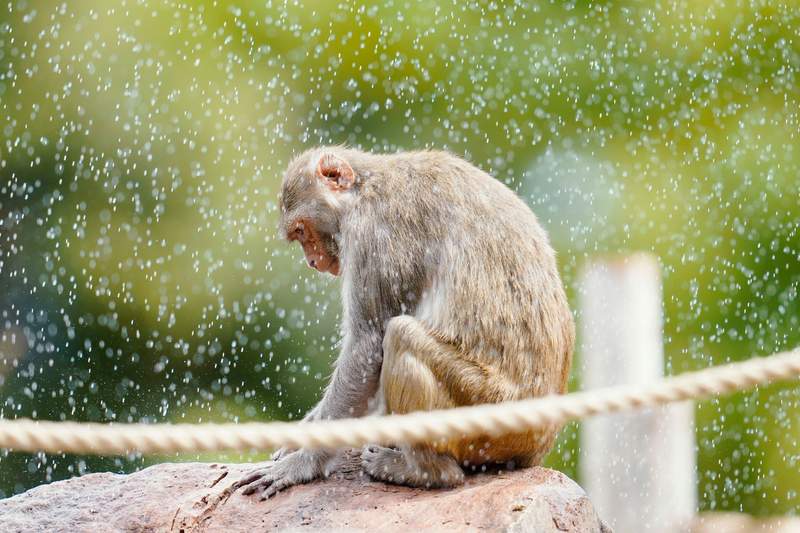
POLICY WIRE — Cologne, Germany — The bucolic calm of western Germany, famous for its meticulous efficiency and strict adherence to protocol, found itself in disarray this week, its pastoral scenes punctured by an unscripted arboreal ballet. Not of native fauna, mind you, but a mischievous band of Rhesus macaques, refugees from some undisclosed confinement, now charting their own chaotic course through a landscape unaccustomed to such primal insolence. They’re free. And Germany, for all its systems — and safeguards, isn’t quite sure what to do with them.
It’s not often that the Rhineland plays host to a spontaneous simian liberation. But somewhere, perhaps in a quiet, unassuming German home or a private, less-than-above-board facility, a gate was left ajar, or a cage found wanting. These weren’t cuddly family pets, mind you. Rhesus macaques can be feisty. And their sudden appearance presents a particularly sticky wicket for local authorities. Imagine, if you will, the collective frowns on German officialdom as they grapple with protocols for repatriating a species not native to European forests.
“We’re dealing with a dynamic situation, one that requires both caution and a degree of specialized expertise,” remarked Klaus Schmidt, a spokesperson for the local district authority, his voice betraying a hint of polite exasperation. “These animals are intelligent; they’re resourceful. But they’re also a public safety concern – they can carry diseases, they can be aggressive. This isn’t just about catching some mischievous puppies, it’s a genuine challenge.” He’s not wrong. Because the sight of a creature more commonly associated with, say, the jungles of India or research facilities, suddenly pilfering apples from a German orchard, has a way of shaking up perceptions of normalcy.
The incident throws a glaring spotlight onto the darker corners of Europe’s exotic animal trade – a market as robust as it’s ethically dubious. Who owned these monkeys? How did they acquire them? And what oversight, if any, existed to prevent such an escape? Dr. Anja Weber, a senior analyst at Germany’s Federal Agency for Nature Conservation, didn’t mince words. “Every escape is a regulatory failure. These animals don’t belong in private hands, not in this climate. They require incredibly specific care, — and even the most well-intentioned owner can lose control. But let’s be frank, many owners aren’t ‘well-intentioned’ in the public interest; they’re often driven by status or profit.” She points out that the sheer volume of such traffic is staggering: Wildlife trade monitor TRAFFIC reported that between 2011 and 2020, EU member states recorded over 50,000 seizures of live animals, many of which were CITES-listed species, a statistic that only hints at the black market’s true reach. This particular group of primates, she argues, is just the latest, and certainly not the last, symptom of a much larger, global disease.
But the escape isn’t just a German problem. It’s a microcosm of a global entanglement. The insatiable demand for exotic pets, particularly among certain wealth strata, often feeds off supply chains stretching into South Asia and beyond, regions where regulations are often lax, enforcement patchy, and the initial capture of these animals profoundly inhumane. While the specifics of these macaques’ provenance remain murky, their ancestors almost certainly hailed from environments dramatically different from a cool German forest. The ethical questions raised resonate particularly in nations like Pakistan, where debates surrounding the welfare of exotic animals in private zoos or kept as status symbols sometimes ignite public discourse, albeit often without much sustained regulatory action. The cultural fetishization of the exotic in one part of the world creates unpredictable havoc in another.
📄 POLICY WIRE WHITEPAPER PUBLISHED: PAKISTAN'S NATIONAL SECURITY POLICY PRIORITIES
👉 READ BY CLICKING HEREOne might even suggest a certain karmic balance at play: European markets, hungry for the unusual, now find the unusual quite literally on their doorsteps. But it’s not really a laughing matter, not when you consider the potential zoonotic risks these animals carry, or the environmental havoc a non-native species can wreak if left to establish a breeding population. The hunt is on, presumably with nets and tranquilizer darts, to restore order and remind these little simian renegades that there are rules. Even for monkeys.
What This Means
This seemingly localized scramble for escaped monkeys represents something far larger than a quirky news item. Politically, it spotlights the gaping holes in European Union member states’ regulatory frameworks for exotic pet ownership. Germany, a nation famed for its orderly processes, finds itself unexpectedly exposed, demonstrating that even the most rigorous bureaucracies can be caught flat-footed by the unpredictable. This isn’t just about animals; it’s a symptom of globalization’s messy underbelly, where demands in affluent nations directly impact wildlife populations and legal frameworks in often less-regulated parts of the world, creating a cross-continental game of whack-a-mole for public safety and environmental agencies.
Economically, the incident imposes a tangible cost on local taxpayers, diverting emergency services, animal control, and even law enforcement personnel from other duties for what amounts to a large-scale primate roundup. More broadly, it adds weight to the arguments for stricter import controls and higher penalties for illegal wildlife trafficking—a market with a financial footprint stretching into billions annually, often entwined with other illicit trades. For consumers, it’s a stark reminder that the “trophy” pet in one’s living room might originate from a brutal trade network, posing environmental and health risks back home. And for policymakers, it’s a wake-up call that addressing exotic animal ownership isn’t merely an animal welfare issue, but a complex challenge touching upon national security, public health, and international criminal enterprise. Because these weren’t wild apes setting up shop, these were creatures of our own design, escaping the constructs we imposed, to deliver a sharp, if simian, critique of our own regulations.