


The Gridiron’s Cruel Carousel: Why the Jets Are Betting on a Ghost of Kicking Past
POLICY WIRE — Florham Park, New Jersey — They say hope springs eternal, especially in professional sports. For the New York Jets, however, hope often feels less like an eternal spring and more like a...

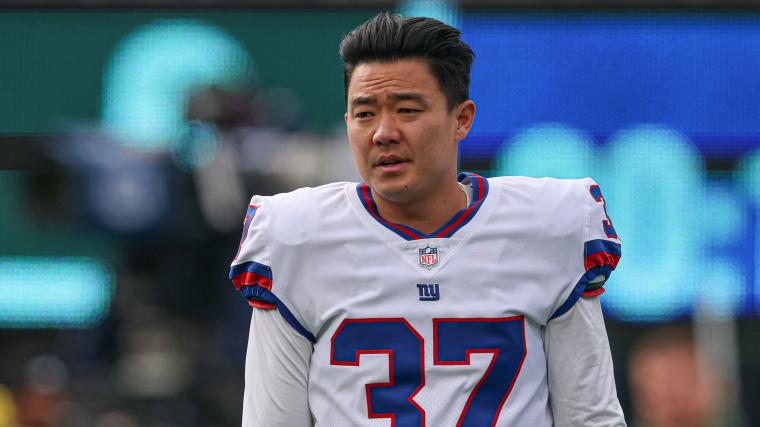
POLICY WIRE — Florham Park, New Jersey — They say hope springs eternal, especially in professional sports. For the New York Jets, however, hope often feels less like an eternal spring and more like a perpetually dripping faucet — a persistent, low-grade annoyance promising eventual overflow, yet rarely delivering a flood. Now, enter Younghoe Koo, a name that once conjured images of pinpoint accuracy, now merely another entry on a beleaguered depth chart. It’s not exactly a seismic shift, is it? More of a minor tremor in a league constantly undergoing geologic upheaval.
Because the NFL, you see, isn’t about sentiment. It’s a meat grinder, a cold, hard marketplace where yesterday’s heroes can quickly become tomorrow’s footnotes. Even kickers, those specialist artisans of the oblong pigskin, aren’t immune. Younghoe Koo, a guy who once strode onto Pro Bowl fields in 2020, finds himself back in the churn, signed to the Jets depth chart earlier this week. His journey, from Atlanta darling to New York auditionee, speaks volumes about the brutal, unsentimental arithmetic of the game. He’s not here for a parade; he’s here to compete for his professional life.
But the Jets, bless their hearts, they’ve always had a flair for the dramatic, especially where kickers are concerned. And now they’ve got three under contract: Koo, Cade York, — and Lenny Krieg. It’s like a macabre lottery, a trial by fire where only one leg emerges victorious. General Manager Joe Douglas, never one for flowery prose, likely summed it up with pragmatic brevity. A league insider, accustomed to the brutal realities of the salary cap and roster construction, observed dryly, “Teams aren’t buying reputations; they’re buying possibilities. You look at a guy like Koo, a Pro Bowler a few seasons back, who’s had a rough patch — that’s an opportunity for a high-reward, low-cost investment if he still has it. You roll the dice.” It’s a cynical view, sure, but a truthful one in this cutthroat environment. Every dollar counts.
Koo’s recent stats, you ask? A rather pedestrian 6-for-9 on field goals in 2025 with his previous team, the Giants, — and 13-for-14 on extra points. A far cry from his glory days. But in a league obsessed with past performance, there’s always a coach willing to believe in the flicker of a flame. Robert Saleh, the Jets’ head coach, is surely under pressure, — and you know he’s not mincing words in that locker room. “This isn’t a developmental camp, this is a roster spot fight,” a hypothetical Saleh might growl during an impromptu team address. “We need points. Consistent points. If you can deliver, you play. If you can’t, well, we know where the door is.” That’s the gospel truth of modern football.
His career averages are what still tantalize the optimists: Younghoe Koo’s career field goal percentage sits at a respectable 85.3%, a figure gleaned from league historical data – 185 successful kicks out of 217 attempts. A number that would make most NFL general managers nod approvingly. That kind of historical accuracy doesn’t just disappear, does it? Or so they hope. But professional football isn’t merely about raw talent; it’s about timing, opportunity, and the relentless pressure of performance, often amplified by a brutal media cycle.
📄 POLICY WIRE WHITEPAPER PUBLISHED: PAKISTAN'S NATIONAL SECURITY POLICY PRIORITIES
👉 READ BY CLICKING HEREWhat This Means
The arrival of Koo isn’t just about special teams; it’s a stark encapsulation of the hyper-transactional, global ‘gig economy’ that now dominates elite sports. Athletes, especially specialists, are less loyal employees and more high-skill contractors, cycling through teams, constantly auditioning. This extends beyond the NFL, reaching into global football, basketball, and even cricket leagues like the IPL, where foreign players are acquired, utilized, and discarded with dizzying speed. It’s a system where origin doesn’t matter as much as immediate utility, and loyalty is often sacrificed at the altar of the bottom line. Consider the legions of young men in South Asia, for instance, honing their cricketing skills, dreaming of an IPL contract. Their careers, much like Koo’s in this NFL context, hinge on momentary brilliance and an unwavering capacity to perform under absurd pressure. And if they falter? Another aspiring talent is ready to step in. It’s a global phenomenon, this ceaseless hunt for performance arbitrage.
The Jets are effectively taking a flyer on potential, a familiar gamble for a franchise long acquainted with cycles of hope and despair. They’re hoping to unearth that 2020 Pro Bowler again, to find the man who can steady the kicking ship. And Koo, for his part, is fighting for a lifeline. It’s a harsh business. Very harsh. For both team — and player, the stakes couldn’t be higher – one kick at a time. The perpetual carousel spins on. Hopefully, for the Jets, this time it stops on a winner. Because their fans? They’ve waited long enough.