


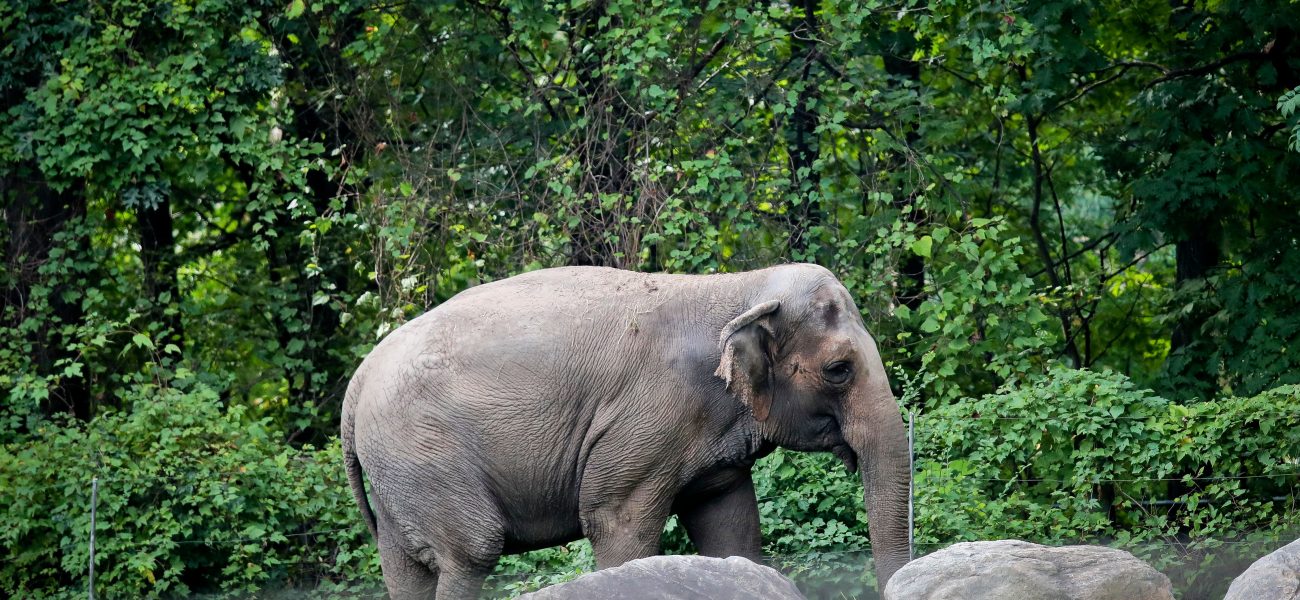
Happy’s Demise: Echoes of Sentience and a Shifting Global Compassion
POLICY WIRE — New York City, USA — For years, she was a quiet, grey ambassador for an entire species’ misunderstood intellect, a living embodiment of profound self-awareness that transcended...

POLICY WIRE — New York City, USA — For years, she was a quiet, grey ambassador for an entire species’ misunderstood intellect, a living embodiment of profound self-awareness that transcended mere instinct. Happy, an Asian elephant—once a scientific star—has met her end at the Bronx Zoo. It’s a somber punctuation mark, really, on a long, often contentious chapter in the ever-evolving saga of animal captivity.
It wasn’t her passing that made the news, not really. We knew that day would come. The actual headline was the years-long, increasingly bitter, and often absurd legal skirmishes over whether Happy, or any creature exhibiting her cognitive capacities, should even be called property. Her final moments, described as peaceful, seem a quiet defiance against the cacophony of human argument that swirled around her for over a decade. And look, she was an old girl—about 52, a good, long life for an elephant, even if spent behind bars (or, well, thick steel enclosures).
The brouhaha began not with age, but with a mirror. That’s right. Back in 2005, she became the first elephant—maybe even the first non-human mammal after some primates and dolphins—to pass the mirror self-recognition test. Researchers noted, with considerable astonishment, that when marked with paint above her eye, Happy repeatedly touched the mark while looking in the mirror. It was, many said, a clear sign. A conscious, self-aware creature, looking back at itself. The study, published in the Proceedings of the National Academy of Sciences, rocked the foundations of our smug anthropocentric assumptions, providing a quantifiable metric for something we usually relegate to philosophical musings about humans. That test changed everything for those who care about elephant rights, elevating her from mere exhibit to sentient being.
Her alleged solitude became the rallying cry. Happy had spent much of her later life without another elephant companion after her longtime mate, Grumpy (yes, really), died in 2002, and then another companion, Patty, passed away in 2006. She lived in a sizable exhibit—Elephant Barn and Asia Habitat—but often alone, raising profound questions about the social needs of such highly intelligent animals. The Nonhuman Rights Project, an animal advocacy group, spent years trying to secure her release to a sanctuary through habeas corpus filings. They argued she was a person, legally speaking, trapped. The zoo — and its allies, conversely, maintained her welfare was paramount and she was well cared for.
A court determined,
[QUOTE_PLACEHOLDER] they simply aren’t people under the law. We’re trying to make the right decision.
And so the fight, rather than being over Happy’s specific well-being, became about an abstract, if morally urgent, legal precedent.
📄 POLICY WIRE WHITEPAPER PUBLISHED: PAKISTAN'S NATIONAL SECURITY POLICY PRIORITIES
👉 READ BY CLICKING HEREIt’s interesting, really, the philosophical tightrope we walk. We crave these majestic creatures, flocking to zoos and parks—and the Bronx Zoo alone attracts over 2 million visitors annually, a testament to this enduring fascination (Source: Wildlife Conservation Society, 2022 Annual Report). Yet, we also recoil at the ethical implications of their captivity. This isn’t some niche concern. It’s a global conversation, affecting decisions in Peshawar, Pakistan, where concerns about elephant welfare have led to calls for improved conditions and bans on imports. The debate over animals like Happy forces us to confront uncomfortable truths about our dominion, and whether it equates to genuine stewardship, or just plain old possession. Her life, though confined, compelled us to consider just who—or what—is looking back from across that psychological abyss. Happy didn’t ask for any of it, but she forced a reckoning.
What This Means
Happy’s peaceful end, ironically, means little peace for the debate she sparked. For policymakers, this isn’t just about one elephant; it’s a barometer for shifting public attitudes towards animal welfare, a sentiment that increasingly spills into regulatory frameworks and international conservation policy. Zoos, once untouchable bastions of entertainment and education, are under increasing pressure to justify their existence, or at the very least, drastically redefine their operational ethics. It’s not economic at its core—these facilities are still massive tourism drivers and research hubs. But public perception is now irrevocably linked to perceived ethical standards.
The legal challenges Happy represented—her purported personhood, her right to bodily liberty—signal a tectonic shift in animal rights discourse. You’ve got countries like India — and Ecuador already recognizing animal rights in their constitutions. This trajectory implies future legislation will have to grapple with more than just basic humane treatment; it’ll confront fundamental questions of liberty and inherent value for certain species. We’re talking potential reclassifications, restrictions on breeding, or even outright bans on keeping highly intelligent or socially complex animals in traditional zoo settings. Brussels, always one for grand pronouncements, has even begun discussions on common EU standards that factor in cognitive complexity.
the long-term economic viability of large urban zoos could be compromised if public opinion fully sways towards viewing captivity as inherently cruel for animals like elephants. Their future might lie less in exhibiting single, solitary, or even small groups of megafauna, and more in rehabilitation, sanctuary work, or strictly protected, expansive reserves. It’s a messy ethical quagmire with deep pockets of both conviction and entrenched tradition, but make no mistake: Happy’s long, slow exit is just one symptom of a much larger shift.