


Vaibhav Sooryavanshi: The $11 Billion Spectacle’s Newest Star, Or Just Another Burnout Waiting?
POLICY WIRE — Mullanpur, India — In a region often fraught with complex political calculations and intractable economic quandaries, some diversions carry a weight beyond mere sport. The Indian...

POLICY WIRE — Mullanpur, India — In a region often fraught with complex political calculations and intractable economic quandaries, some diversions carry a weight beyond mere sport. The Indian Premier League—IPL, for the uninitiated—isn’t just a cricket tournament; it’s a multi-billion-dollar economic engine, a sprawling youth dream factory, and perhaps the most potent symbol of aspiration in South Asia. And this season, the league’s relentless machinery spit out another prodigy, a barely-there teenager who momentarily made even the grizzled cynics sit up and take notice.
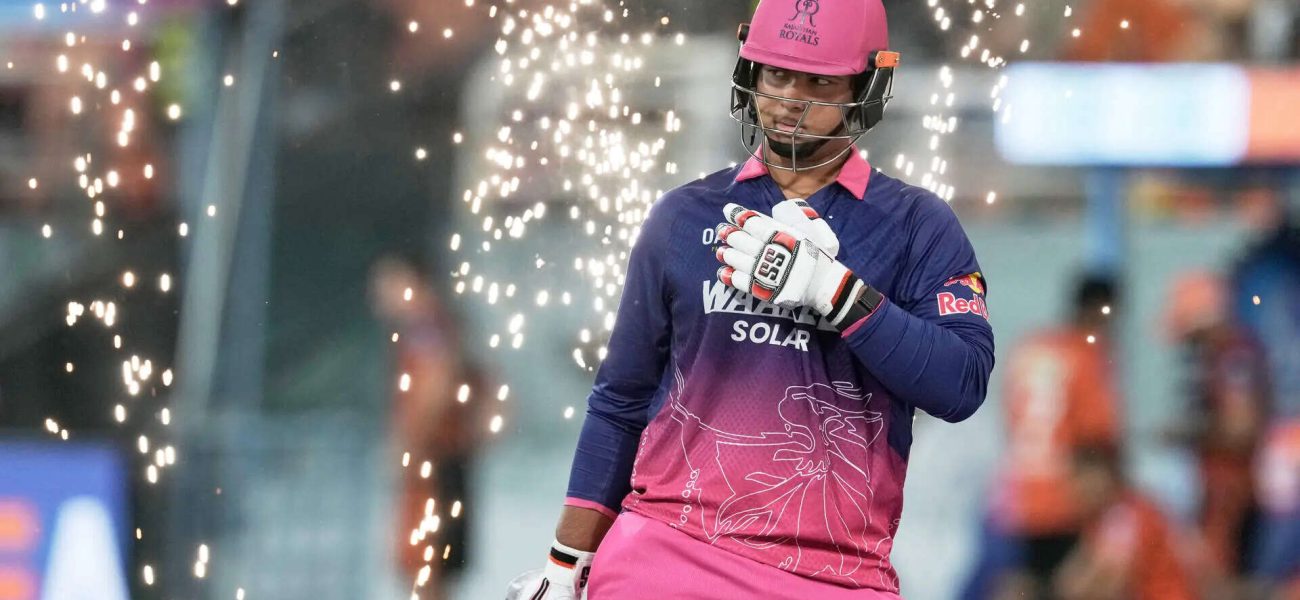
It wasn’t a presidential summit, nor was it a geopolitical chess match that briefly seized the Indian public’s collective consciousness. Instead, it was a 15-year-old with a bat. Vaibhav Sooryavanshi, still fresh from… well, presumably attending high school, became a walking, talking, boundary-smashing headline for the Rajasthan Royals. During the high-stakes Eliminator against Sunrisers Hyderabad, the boy unleashed absolute carnage, swatting a dizzying 97 runs off just 29 balls. Imagine that: 97 runs, twenty-nine deliveries. It’s a frankly preposterous scoring rate that obliterated several records while threatening the sacred ones.
Even seasoned international pros, the kind who’ve seen everything from sticky wickets to political protests, appeared utterly befuddled. Pat Cummins, the celebrated Australian captain and one of the world’s premier fast bowlers, ended up conceding 64 runs without a single wicket in his four overs. Sooryavanshi alone hit him for four sixes. Think about the audacity, the sheer nerve of a kid, still unencumbered by the full weight of expectation or, for that matter, adult responsibilities, standing toe-to-toe with giants and frankly, schooling them.
He didn’t get that elusive century, falling just short of Chris Gayle’s fastest IPL ton by a hair’s breadth. A singular, monstrous six would’ve done it. But missing a personal milestone did little to diminish the performance; his twelve sixes against Hyderabad—sending balls repeatedly deep into the stands as if by remote control—equalled his own Indian record for most maximums in an innings. And with that, he surpassed Gayle’s 14-year-old record for most sixes in a single IPL season, accumulating 65. The prior mark? 59. This isn’t just an athlete, it’s a spectacle, a market waiting to be fully tapped.
Because let’s not get it twisted, the IPL isn’t just sport; it’s big business. According to a 2023 report by the D&P India advisory firm, the IPL’s brand value soared to a staggering $10.9 billion, making it one of the most commercially successful sports leagues worldwide. It’s a machine built to find and showcase talent like Sooryavanshi, transforming raw ability into advertising revenue and nationalistic pride.
And what about the human element? Mr. Rohan Gupta, a senior official with the Board of Control for Cricket in India (BCCI), didn’t mince words, observing, “These young players aren’t just athletes; they’re brand assets, embodying the aspiration of a generation. Their success story, like Sooryavanshi’s, broadcasts to millions that with talent and a stage, anything’s possible in India. It’s an economic miracle, really.” That’s a polite way of saying the kid’s worth is measured in market cap.
S. K. Ramaswamy, the Union Minister for Youth Affairs — and Sports, mused recently on the burgeoning talent. “India’s demographic dividend isn’t just about labor; it’s about harnessing passion. Cricket, particularly the IPL, offers an unparalleled platform for our youth to excel, offering both glory and a viable career path that helps define India’s cultural soft power globally.” He’s not wrong. It’s an undisputed juggernaut.
📄 POLICY WIRE WHITEPAPER PUBLISHED: PAKISTAN'S NATIONAL SECURITY POLICY PRIORITIES
👉 READ BY CLICKING HEREYet, this dizzying display of Indian cricketing might—and the stratospheric sums attached to it—casts a long shadow across the subcontinent. For countless youngsters in neighboring Pakistan, Bangladesh, and even the quieter valleys of Nepal and Sri Lanka, the IPL is both a captivating spectacle and a distant dream. It’s an opulent bazaar of opportunity that remains, for many, either politically or economically inaccessible. One wonders if similar localized league structures, though perhaps less grand, could ignite such fervent hope and ambition beyond India’s borders. Or if this level of spectacle makes such endeavors seem hopelessly quaint.
What This Means
This kind of instant superstardom isn’t merely about an exceptional talent hitting a few good balls; it reflects several profound shifts. Economically, Sooryavanshi’s performance, and the buzz it generates, pours gasoline on the IPL’s already roaring financial engine. It reinforces India’s dominance in the global cricket economy, solidifying its soft power projection through sport. This isn’t just a domestic league; it’s a cultural export, selling an aspirational narrative to millions. Think of it as a meticulously packaged Bollywood blockbuster, but with actual athletic prowess at its core.
Politically, the IPL subtly bolsters the current government’s narrative of a ‘New India’ where opportunity, driven by economic liberalization and innovation, is supposedly abundant for all—even for a kid still needing his mother’s permission to go on a school trip. It also underscores the country’s vast youth population, and the pressure—and opportunity—to channel that energy into productive, visible avenues. But let’s not forget the flip side of this shiny coin: the immense, almost inhuman pressure placed on someone barely old enough to vote. We’re talking about a human being thrust into the glare of unprecedented scrutiny, with potential earnings in the millions and public expectations in the billions. For every Sooryavanshi, how many promising young talents buckle under that weight, their potential quietly evaporating in the shadow of relentless expectations?
There’s a reason this league captivates audiences well beyond India’s boundaries. It represents raw talent, sheer commercialism, and the kind of high-octane drama that simply transcends traditional news cycles. And that, in an increasingly fragmented global landscape, is an invaluable, if slightly uncomfortable, commodity.