


Border Blitz: New Mexico AG Unleashes Legal Fury on Counties Over ICE Allegiances Amid Federal Showdown
POLICY WIRE — ALBUQUERQUE, N.M. — It’s not just the desert winds stirring up dust across New Mexico these days. No, the legal squall brewing within the Land of Enchantment is something else entirely,...

POLICY WIRE — ALBUQUERQUE, N.M. — It’s not just the desert winds stirring up dust across New Mexico these days. No, the legal squall brewing within the Land of Enchantment is something else entirely, pitting state power against local autonomy—and both against the long arm of federal immigration policy. Because, honestly, what’s a quiet Tuesday without a good, old-fashioned legal brawl?
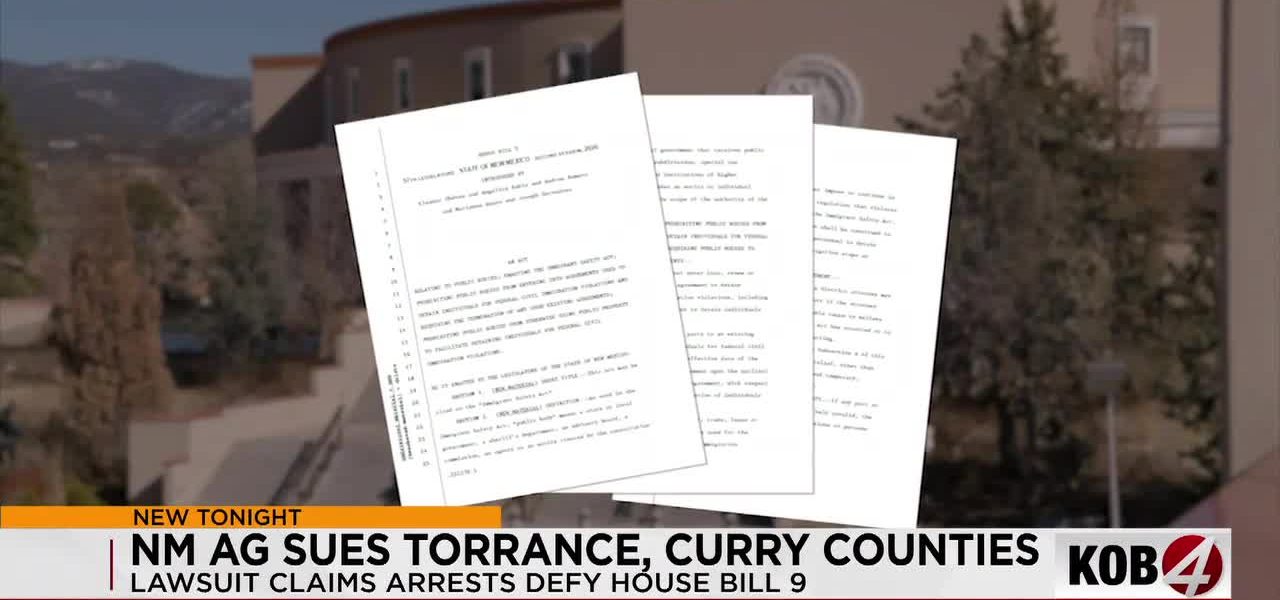
Seems two counties out east, Torrance — and Curry, have decided to chart their own course on immigration enforcement. And that decision, a rather brazen one in some circles’ estimation, has now landed them squarely in the crosshairs of New Mexico Attorney General Raúl Torrez. He’s lobbed a lawsuit their way, a formal declaration of war in legal terms, over their handshake deals with U.S. Immigration and Customs Enforcement. [QUOTE_PLACEHOLDER]
It’s about those agreements with the Immigration — and Customs Enforcement, you see. These aren’t just minor disagreements over local zoning. The AG’s office sees these arrangements as a direct challenge, a flat-out violation of the state’s new Immigrant Safety Act.
Picture it: a state enacts a law, and then some local sheriffs — bless their independent hearts — go and cut deals that seem to fly directly in its face. What’s a state attorney general to do?
But the narrative gets thick, trust me. This isn’t some simple David and Goliath tale where the state is clearly David, or Goliath, depending on your political leaning. It’s got layers, like a particularly unappetizing seven-layer dip of bureaucratic conflict. According to the lawsuit, sheriffs in Torrance — and Curry counties entered into agreements with U.S. Immigration and Customs Enforcement despite New Mexico law.
Yep, that’s the phrase, pulled straight from the filings. It’s the kind of blunt assertion that lawyers love to print.
These county-level agreements? They let law enforcement serve ICE warrants on people held in local jails.
Seems straightforward, right? Not so much, according to House Bill 9, the piece of legislation that kicked off this whole shebang. It took effect May 20.
Which, one would imagine, would mean everyone gets in line. But apparently, these counties didn’t get the memo, or perhaps, they shredded it.
The delicious irony? The AG himself, Mr. Torrez, isn’t exactly immune to federal scrutiny on this very topic. Not even close. Earlier this month, the U.S. Department of Justice filed a lawsuit — another one! — against the state of New Mexico and the City of Albuquerque for *passing* that very same House Bill 9.
So, the state sues counties for *violating* it, while the feds sue the state for *enacting* it. It’s a full-on, multi-level legal donnybrook. And in a development that must surely sting, That federal lawsuit also names Attorney General Raúl Torrez
as a defendant. Ouch. Talk about coming full circle. It’s almost theatrical in its absurdity.
You see, this isn’t just about New Mexico, a state that’s no stranger to immigration debates, being a border state and all. It’s a microcosm of a much larger, ongoing fight playing out across America – where state laws clash with federal mandates, and local leaders find themselves stuck in the middle, or sometimes, deliberately choose a side. This push-pull between various levels of government reflects a broader struggle, one that resonates even in places like Pakistan, where federal decrees regarding population registration or resource allocation often face fierce resistance and varied implementation at the provincial or district level. It’s the constant tension between centralized authority — and local realities, a dance as old as governance itself. Like Pakistan’s Sindh province, for instance, often asserting its regional prerogatives against federal dictates on issues from water distribution to educational policy, these New Mexico counties are effectively challenging the supremacy of state law on grounds of what they perceive as local necessity or federal partnership. The principle is eerily similar, a battle for jurisdictional clarity in a messy, interconnected world.
The state’s perspective is fairly clear: we passed a law, — and you’ve got to follow it. No ifs, buts, or clever interpretations of existing agreements. The counties, well, their defense remains to be fully articulated outside of the current legal filings, but you can bet it’ll involve concepts of federal supremacy and perhaps a hint of a local sheriff’s responsibility to protect his patch, as he sees fit. Meanwhile, the feds, they’re arguing that House Bill 9
itself is an overreach, interfering with their constitutional authority on immigration. It’s a tangled web, tangled enough to give a spider a migraine. And navigating this legal labyrinth? It’s not for the faint of heart.
📄 POLICY WIRE WHITEPAPER PUBLISHED: PAKISTAN'S NATIONAL SECURITY POLICY PRIORITIES
👉 READ BY CLICKING HEREThese legal tussles, they aren’t cheap. According to the Transactional Records Access Clearinghouse (TRAC) at Syracuse University, federal civil lawsuits filed against states or localities related to immigration enforcement have risen by 25% over the past five years. That’s a significant jump, illustrating just how often these conflicts are landing in courtrooms. Think about that for a second. It means more lawyers, more court time, — and more taxpayer dollars diverted to these intergovernmental fights. Because when government sues government, we all end up footing the bill.
It’s not pretty. It’s convoluted. But it’s, compelling drama. A legal ping-pong match where the ball keeps getting served by different hands, at different speeds, to different opponents. We’ll be watching to see if New Mexico can wrangle its counties into line, or if the federal behemoth will make the state’s own law unenforceable. A tricky situation indeed, complicated by layers of jurisdiction and divergent philosophies on just who should handle what when it comes to undocumented immigrants. Don’t touch that dial. The next episode is bound to be just as messy.
What This Means
This tri-directional legal confrontation – state versus counties, federal versus state – reveals the precarious dance of American federalism, especially on the highly contentious ground of immigration. For New Mexico, success for the AG against Torrance and Curry counties would solidify the state’s authority in setting its own immigration policy and underscore the validity of the Immigrant Safety Act
. It’d send a clear message: local entities don’t get to cherry-pick which state laws they follow, particularly on issues the state deems crucial for public policy. But here’s the rub: if the federal government’s lawsuit against New Mexico prevails, it could effectively kneecap the very act the AG is trying to enforce. That would leave the state in an unenviable position, unable to implement its own progressive immigration framework.
Economically, prolonged legal battles drain resources – not just from state and county coffers, but potentially from vital services. Legal fees add up. the uncertainty stemming from these clashing jurisdictions can have a chilling effect. Immigrant communities, often already living with trepidation, become more wary of all law enforcement, state or local, undermining trust and potentially making crime reporting or public health initiatives more difficult. Think about what that does to local economies reliant on these populations. For businesses, inconsistent enforcement creates an unpredictable operating environment. It’s hard to plan when the rules of engagement are shifting constantly.
Politically, Attorney General Raúl Torrez is in a high-stakes game. Winning against the counties reinforces his progressive credentials and the will of the state legislature that passed House Bill 9. Losing to the federal government, however, or seeing the state’s flagship immigration legislation weakened, could deal a blow to his standing and that of the state’s Democratic leadership. But this kind of principled stand often galvanizes political bases. On the flip side, the counties’ defiance might be a nod to a conservative base that views ICE cooperation as paramount. The outcome here will undoubtedly reshape the political landscape, influencing future elections and legislative priorities within New Mexico. This isn’t just about immigrants; it’s about power, precedent, — and whose interpretation of the law holds sway. And let’s be honest, it’s going to make a messy headline for a while.