


Fleeting Return: Star’s Setback Unmasks Fragile Victories Amid Dodger Dominance
POLICY WIRE — Los Angeles, USA — One could argue triumph always contains a seed of its own irony. But for the Los Angeles Dodgers this week, the irony wasn’t subtle; it was a bludgeon, a...

POLICY WIRE — Los Angeles, USA — One could argue triumph always contains a seed of its own irony. But for the Los Angeles Dodgers this week, the irony wasn’t subtle; it was a bludgeon, a 2×4 to the side of pure, unadulterated elation. Their Tuesday night spectacle against the Colorado Rockies? A walloping 15 runs piled high, another in a series of steamroller victories—you know, the kind that makes opposing managers wish they’d stayed home. Yet, in the cool, clinical aftermath, the talk wasn’t about runs or home runs. Not really. No, the manager, Dave Roberts, found himself doing something far less celebratory. He was discussing how quickly, how agonizingly fast, the bottom could drop out.
See, it’s not just a game; it’s a grinding season, a relentless machine that eats ambition for breakfast. And for veteran utility man Kiké Hernández, it feels like that machine just chewed him up and spit him right back where he started. His much-anticipated comeback, a mere two games after clawing his way back from elbow surgery, lasted just about as long as a sneeze in a dust storm. Hernández is, for all intents — and purposes, headed back to the injured list, felled by a left oblique strain. What a brutal twist. He’s back on the shelf—that proverbial ‘out of sight, out of mind’ ward—and after missing the first 53 games of the season, a mere handful of swings erased that hard-won return.
It’s a kick in the teeth, certainly, for any athlete. But here’s the rub: he’d finally, finally returned to the lineup just Monday. Immediately, he looked comfortable. But the next day? Oh, the next day started like a Hollywood script: a home run in his first at-bat. Then a double during a four-run explosion. A perfect setup for a triumphant arc. But then the cameras caught it—a flicker of discomfort, a wince while rounding the bases. Exit stage left. The entire performance, all that buildup, evaporated in a matter of pitches. Per MLB.com, he felt that first twinge even in batting practice before his Monday debut, dismissing it as just a little tightness. But ignoring discomfort? That’s always a fool’s errand, isn’t it? He couldn’t ignore the pain when swinging, throwing, or, worst of all, running. Reality, they say, bites.
And what about the man himself? Hernández wasn’t just bummed. He was a wreck, speaking with reporters like someone who’d just seen his carefully constructed sandcastle wiped clean by an unexpected wave. He felt “pretty defeated.” How couldn’t he? Months of rehab, endless hours pushing past pain, only to suffer another blow. And because a professional ball player feels that deep sense of loyalty to the organization, it wasn’t just personal injury. He expressed guilt. [QUOTE_PLACEHOLDER] Then the bitter pill: “It happened in BP.” To come back, take another player’s spot, only to fall again almost immediately? That’s a punch to the gut, a betrayal of one’s own efforts.
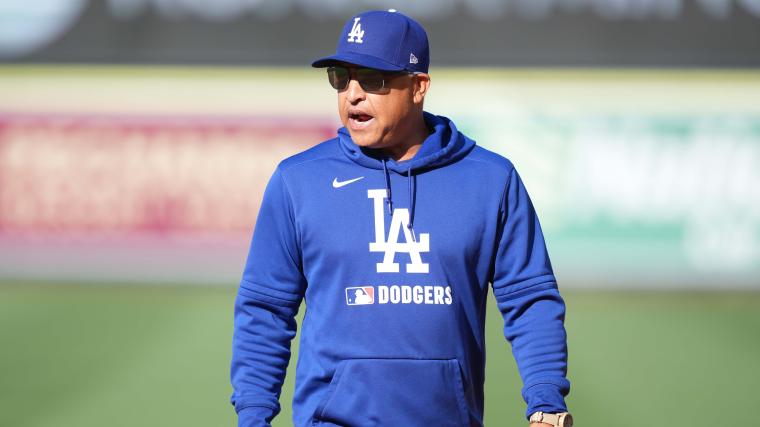
His manager, Roberts, seemed to grasp the deep unfairness of it all. Roberts knows Hernández worked [QUOTE_PLACEHOLDER] The sentiment, though empathetic, doesn’t change the logistics. This team’s got to shuffle, yet again. Alex Freeland, an infielder from Triple-A Oklahoma City, is now poised to get the call, another domino falling in this ceaseless game of roster roulette. Even a momentary sigh of relief, such as Shohei Ohtani dodging a bullet after being hit in the hand, feels fragile. His scheduled start remains—for now. This is a cruel sport; it keeps finding ways to remind you who’s boss.
📄 POLICY WIRE WHITEPAPER PUBLISHED: PAKISTAN'S NATIONAL SECURITY POLICY PRIORITIES
👉 READ BY CLICKING HEREThis endless, unexpected injury parade, where hard-fought gains are suddenly undermined by seemingly minor physical issues, echoes certain geopolitical realities far from the sunny fields of Los Angeles. Think about the fragile, painstaking progress in nations like Pakistan, where monumental efforts in economic reform or security stabilization often yield tiny, precarious improvements. They’ve missed a staggering 53 games, you could say—decades, even—only to return and find some fundamental, underlying stressor brings them right back to square one, their activation costing another generation its roster spot. The struggle for stability in the region, the back-and-forth between hope and setback, sometimes feels just as inevitable and crushing as a seasoned player pulling a muscle in the warm-up, forcing the hard decisions of calling up fresh faces, often unproven, into positions of immense pressure. Just last year, official reports confirmed that Pakistan’s current account deficit soared to nearly 17.5 billion U.S. dollars in the 2021-22 fiscal year, illustrating how massive efforts to stabilize an economy can be met with stubborn, unforeseen global and domestic hurdles.
What This Means
The immediate political and economic implications here are a subtle, yet potent, reminder that human capital, no matter how skilled or dedicated, remains profoundly fallible. This isn’t just about a ballplayer; it’s a microcosm of the systemic challenges faced by any organization, any nation, when trying to sustain high performance amidst continuous, unpredictable external and internal pressures. You invest in recovery—money, time, the intangible goodwill of a fan base and a clubhouse—only for that investment to potentially evaporate overnight. Economically, this translates to tangible opportunity costs: a different player had to give up his spot for Hernández to return, and now, another will take his place, causing ripples through developmental pipelines. Morale, too, takes a hit, even in a winning culture. There’s a cynicism that can seep in when best-laid plans go awry so dramatically, an acceptance of persistent struggle despite overwhelming individual successes. For policymakers, it’s a lesson in the fragility of progress, whether it’s managing a public health crisis or attempting diplomatic breakthroughs. No lead is truly safe, no victory entirely secured when the underlying foundations—be they physical health or social stability, as seen with issues like vigilante justice in Chattogram—remain so prone to unpredictable failure.