


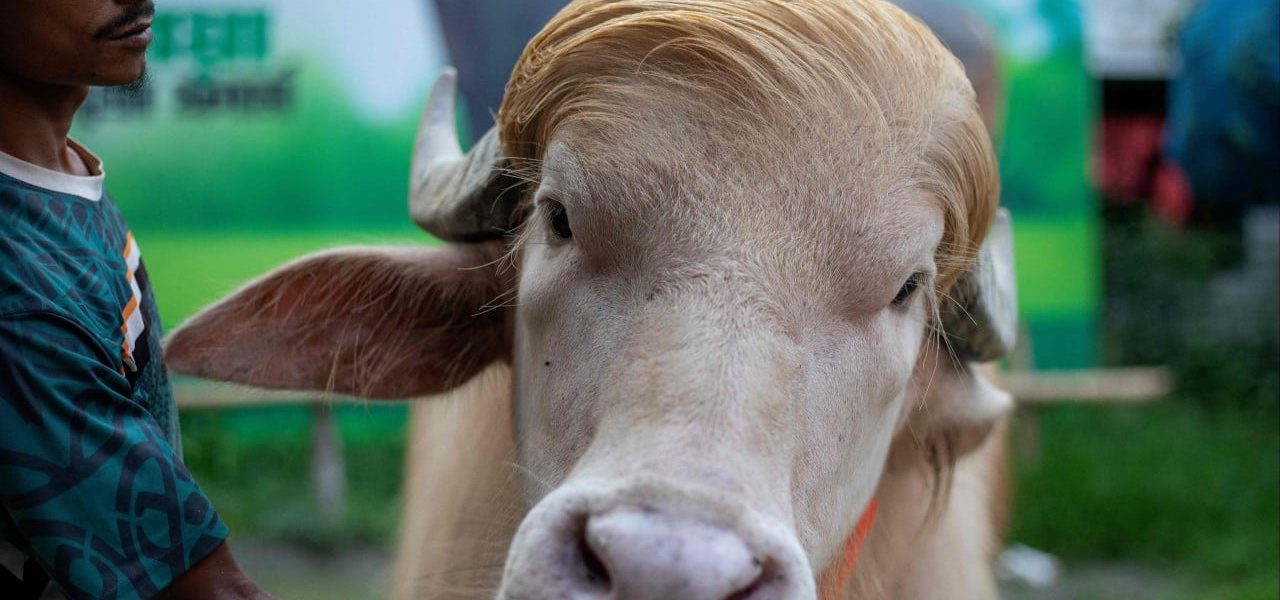
From Sacred Slab to Celebrity Stroll: How a ‘Trump’ Buffalo Shook up Bangladesh
POLICY WIRE — Dhaka, Bangladesh — Sometimes, the strangest global headlines don’t involve presidential elections or escalating conflicts. Sometimes, they involve a particularly...

POLICY WIRE — Dhaka, Bangladesh — Sometimes, the strangest global headlines don’t involve presidential elections or escalating conflicts. Sometimes, they involve a particularly flamboyant bovine, a social media frenzy, — and an ancient religious rite. Such was the peculiar case recently in Bangladesh, a South Asian nation where the lines between a literal “feast of the sacrifice” and viral celebrity blurred.
It wasn’t geopolitical machinations or economic forecasts that captured immediate public imagination. No. It was a 700kg (1,500-pound) bull with a distinctively styled mop of light hair. This animal, an albino buffalo no less, had, shall we say, a certain coiffure. A likeness that prompted its temporary owners—farmers prepping it for Eid al-Adha—to bestow upon it an irreverent, yet catchy, nickname: “Donald Trump.” [QUOTE_PLACEHOLDER]
Because, why not? In a world increasingly keen on assigning human traits, and specifically celebrity branding, to almost everything, a rare albino buffalo with “a flowing helmet of light hair resembling the signature look of the US president” was just begging for it. And it got it. But that nickname, far from a mere amusing moniker, ultimately yanked the creature back from the brink of a sacred, traditional fate.
This beast, destined for the chopping block like millions of its brethren during the upcoming Eid al-Adha, saw its fortunes dramatically altered. Its newfound internet fame meant it got a reprieve, a pass from being “due to be slaughtered.” Instead of providing sustenance for local families, the now-iconic “Donald Trump” buffalo is slated for permanent residency at the national zoo. An odd twist, don’t you think, for an animal initially bred for ritual offering?
Bangladesh, a Muslim-majority country home to approximately “170 million people,” observes Eid al-Adha with deep reverence and widespread participation. It’s a holiday marking Abraham’s willingness to sacrifice his son, and as such, the ritual slaughter of livestock—cows, goats, sheep, and buffalo—is a central component. The meat is then traditionally divided among family, friends, — and the less fortunate. It’s an event that not only carries profound spiritual weight but also fuels a colossal seasonal economy. Annually, roughly 10 million animals are sacrificed during Eid al-Adha across Bangladesh, a staggering figure reported by The Daily Star newspaper in 2023, reflecting a multi-billion dollar trade cycle that invigorates rural economies. But amidst this profound cultural rhythm, the celebrity-infused exception carved out for one peculiar buffalo hints at a modern shift in sensibilities.
The sudden, unlikely celebrity of this animal doesn’t just provide a chuckle; it throws a stark spotlight on our collective obsession with novelty and how fleeting online fame can suddenly intercede in traditions spanning millennia. People flocked to see the “Trump” buffalo, shared its pictures across social media platforms, and created a groundswell of public sentiment. This wasn’t some concerted lobbying effort by PETA (People for the Ethical Treatment of Animals, just in case you’re wondering what that stands for), but a spontaneous, organic movement born from a simple, strange comparison and a healthy dose of virality. And it worked.
But consider the sheer happenstance. What if the buffalo had been named “Sheikh Hasina” (Bangladesh’s prime minister) or “Joe Biden”? Would its fate have been different? It’s difficult to say. Yet, the association with a universally recognized, albeit polarizing, global figure undeniably gave it an edge, transforming it from a mere livestock item to an unlikely symbol of modern interconnectedness and the quirks of global culture. It’s not just a South Asian story; it’s a reflection of how attention economics can elevate anything, from memes to magnificent mammals, beyond their original purpose. It shows how profoundly human interpretation can reshape destiny, even for a “rare albino buffalo with a flowing helmet of light hair.” This phenomenon isn’t entirely new; consider the global outcry or celebration when other animal stories capture the internet’s imagination. You don’t often see such direct interventions in established cultural practices, though, especially those rooted in faith.
📄 POLICY WIRE WHITEPAPER PUBLISHED: PAKISTAN'S NATIONAL SECURITY POLICY PRIORITIES
👉 READ BY CLICKING HEREBecause in this instance, a powerful symbol of political personality quite literally saved a creature from its sacred appointment. And it serves as a stark, if amusing, reminder that in an increasingly interconnected world, the whims of celebrity and internet trends can sometimes dictate more than policy. They can dictate life itself, or at least a trip to the local zoo rather than a ritualistic ceremony.
“Donald Trump” will now spend its days munching grass and perhaps musing—if buffaloes muse—on the strange journey it took. From the anonymity of a Bangladeshi farm to the cusp of an ancient rite, and finally, to the relatively plush accommodations of a national park, all thanks to a certain golden-blonde topknot and a world eager for distraction. What a world, eh? This unique episode might just offer some insights into the curious interplay of global and local forces, not just in commerce, but in culture itself. And for a refreshing perspective on human determination against odds, one might even look at tales of unlikely ascendance.
What This Means
The curious case of Bangladesh’s “Trump” buffalo isn’t just a feel-good animal story; it’s a potent, albeit humorous, case study in soft power and the unanticipated consequences of digital connectivity within Muslim-majority nations. Economically, while one buffalo saved doesn’t dent the colossal Eid al-Adha livestock market, the incident highlights the nascent influence of social media in public sentiment formation, even in traditional contexts. If public pressure can redirect a sacrificial animal, what broader implications does this hold for consumption patterns, animal welfare discussions, or even political narratives within Bangladesh and other parts of South Asia?
Politically, the naming of the buffalo after a prominent American leader, however tongue-in-cheek, subtly infuses international political personalities into local cultural discourse. It suggests an awareness, an engagement, and perhaps a level of cultural exchange that permeates beyond official diplomatic channels. It’s a reminder that global figures aren’t just symbols on news channels; their personas become part of the everyday, sometimes in the most unexpected and bizarre ways. This particular buffalo’s salvation, rooted in its “celebrity,” underscores the shifting value systems at play where novelty and internet virality can occasionally trump deeply entrenched religious and economic practices, however momentarily. For Bangladesh, a nation constantly navigating its identity between tradition and modernity, this small tale offers a peculiar snapshot of its evolving cultural landscape.