

Pirates’ Bold Turn: Pittsburgh Readies for an Unthinkable Summer Swirl
POLICY WIRE — Pittsburgh, USA — For decades, the ritual was as ingrained as the Steel City’s very bedrock: come late July, Pittsburgh’s faithful baseball enthusiasts knew, deep in their bones,...

POLICY WIRE — Pittsburgh, USA — For decades, the ritual was as ingrained as the Steel City’s very bedrock: come late July, Pittsburgh’s faithful baseball enthusiasts knew, deep in their bones, what was coming. It wasn’t the sweet taste of victory or the clamor of a genuine playoff push. No, it was the methodical dismantling, the annual garage sale of talent. You grew up expecting it. But what if, just this once, the compass spun wild? What if the notorious Black — and Gold machine decided, against all corporate-historical odds, to actually buy?
It’s a notion that strikes some locals as borderline blasphemous, others as the ultimate dream. A prediction floating out there—from The Athletic’s Levi Weaver, bless his intrepid soul—suggests the Pittsburgh Pirates, currently clinging to an improbable respectable record, might just become buyers at Major League Baseball’s looming trade deadline. And yeah, for anyone with a passing acquaintance of this franchise’s penchant for fiscal prudence (some might call it Scrooge-like), that’s less a prediction and more a fever dream.
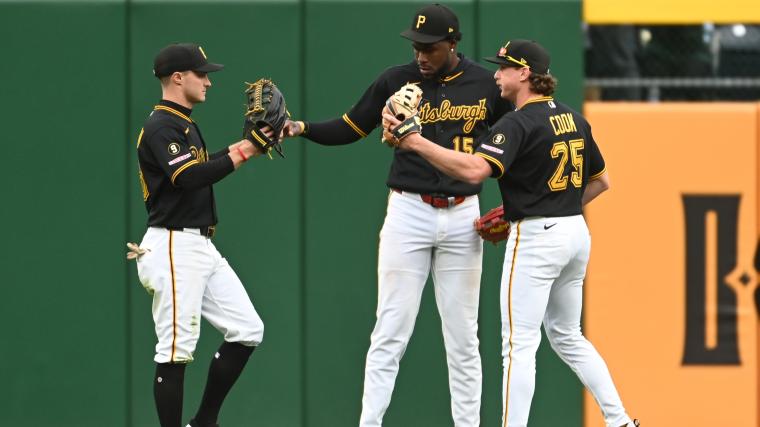
Because let’s be honest: even with the current club, sitting pretty at 29-26 and only 4.5 games shy of the NL Central summit, past is prologue here, right? We’ve seen glimmers before, hasn’t the city? False dawns in a perennial twilight. But this squad? They’ve got something. They’ve got the electric arm of Paul Skenes, still performing like a man among boys; new bats in Brandon Lowe and Ryan O’Hearn making some noise; and the youthful promise of Konnor Griffin flashing. It’s enough, maybe, to make an owner—even one known for his exceedingly conservative tendencies—pause and do a double-take.
And yet, Bob Nutting, the man whose surname often precedes sighs across the Three Rivers, is usually perceived as immune to such transient phenomena as ‘excitement’ or ‘momentum.’ His tenure has, historically, prioritized the ledger over the pennant. But circumstances, even for the most steadfast, have a way of applying pressure. Consider that across Major League Baseball, fan engagement, particularly among younger demographics, is more critical than ever. Velocity and vulnerability are both on display in how clubs approach their rosters.
“We’re always looking to field a competitive team,” Nutting recently told a local press corps (or, well, what passes for it when the microphones aren’t usually pointed his way on matters of significant spending). “And sometimes, the market dynamics—coupled with our current performance—suggest that a prudent, targeted investment now can absolutely yield dividends down the line. It’s not about being reckless, but responsive. You have to recognize when an opportunity, however unexpected, presents itself.” There’s the subtle shift, the telltale tremor. It’s a calculated gamble, but a gamble nonetheless.
For those outside the American Rust Belt, particularly across continents where sports fanaticism reaches different, sometimes even more volatile, peaks—say, for cricket aficionados in Lahore or Dhaka—the concept of ownership repeatedly failing to capitalize on fan loyalty might seem almost alien. The emotional investment in a team, whether it’s the national eleven in Pakistan or a struggling baseball franchise in Pittsburgh, carries real weight. And in modern sports, that emotional capital translates directly into revenue streams: attendance, merchandise, broadcast deals. According to a 2023 report from Statista, Major League Baseball recorded a staggering 70.7 million fans attending games, an economic force no owner can casually ignore.
📄 POLICY WIRE WHITEPAPER PUBLISHED: PAKISTAN'S NATIONAL SECURITY POLICY PRIORITIES
👉 READ BY CLICKING HERE“This isn’t just about baseball; it’s about the evolving financial psychology of ownership and the sheer power of fan capital,” explained Dr. Elias Khan, a leading sports economics pundit at the Lahore University of Management Sciences, during a virtual conference on global sports markets. “A team that’s perpetually seen as a ‘seller’ erodes public trust, year after year. If Pittsburgh, against its historical leanings, truly moves as a buyer, it’s a clear recognition that even in this hyper-commercialized world of sports, reputation and perceived ambition have a quantifiable price tag. It’s about more than wins; it’s about brand rejuvenation.”
So, here we’re. Will it be a rotation arm? A power bat for the DH spot? The possibilities, however outlandish they’d have sounded a mere six weeks ago, are suddenly, thrillingly, on the table. They’ve played frisky up till now, defying the pre-season punditry. Maybe this is the year they shake off the decades-old shroud of fiscal restraint and dare to dream, if only for a few months, of legitimate contention. Because, frankly, a city needs it. A franchise certainly needs it.
What This Means
Should the Pirates indeed reverse their entrenched philosophy and make a splash at the trade deadline, the ripples would extend far beyond the outfield fence. Economically, a genuine surge of optimism could translate into significantly higher gate receipts, increased local spending around PNC Park, and a noticeable boost in team merchandising – vital for a franchise often lagging in these metrics. Politically, the team’s fortunes are often intertwined with local civic pride; a winning team can foster a sense of collective achievement, temporarily deflecting attention from the often grinding realities of urban life, providing a communal escape valve. For ownership, it signals a calculated pivot towards long-term brand equity, acknowledging that a loyal, hopeful fanbase, rather than just a lean balance sheet, is the ultimate talent commodity. It’s a high-stakes play in the business of belonging, where the goodwill of the people might finally outweigh the short-term hit to the wallet. It wouldn’t just change the playoff race; it could alter the psychological landscape of a city.