


IPL’s Crucible: Depth vs. Dazzle in India’s High-Stakes Cricket Derby
POLICY WIRE — New Delhi, India — In the crucible of India’s frenzied professional cricket circuit, where fortunes turn faster than a veteran leg-spinner’s delivery, an Eliminator...

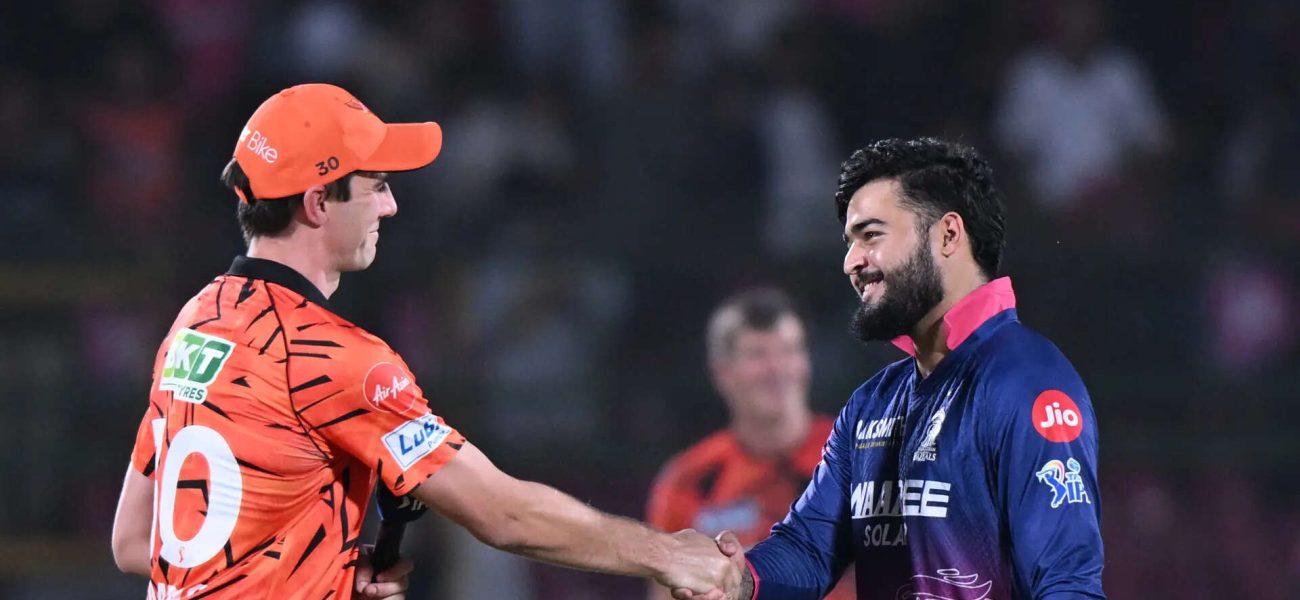
POLICY WIRE — New Delhi, India — In the crucible of India’s frenzied professional cricket circuit, where fortunes turn faster than a veteran leg-spinner’s delivery, an Eliminator isn’t just another fixture. It’s an abrupt, binary interrogation of an entire season’s strategy, played out under a scorching spotlight that could blind even the most seasoned competitors. Loser packs up. Winner lives to fight another day, but barely. And for the Sunrisers Hyderabad and Rajasthan Royals, gearing up for their impending do-or-die clash at the PCA New International Stadium, it’s less about sporting chance and more about a calculated gamble on organizational philosophy.
It’s here that the quiet authority of voices like Anil Kumble, the former India captain, truly cuts through the usual bluster. He isn’t given to dramatic flourishes, but his observations land like a precise yorker. Kumble, speaking ahead of the crunch tie, didn’t hedge. His verdict? Hyderabad, he says, holds the qualitative edge—a deeper bench of game-changers across the batting order and bowling attack that Rajasthan simply can’t match. It’s a compelling argument, considering how often these knockout bouts hinge on which team can weather a storm when their primary anchors falter.
“Look, this isn’t merely about individual brilliance; it’s about organizational depth, it’s about resilience under sustained pressure,” Kumble posited on Jio Hotstar, his words carrying the weight of decades spent navigating such high-pressure moments. “Rajasthan’s top order might be explosive, sure, but can they truly absorb an extended assault? Hyderabad’s strength lies in its calculated redundancy, its multiple points of impact. That’s the practical difference in a tournament designed to expose even the slightest cracks.” He knows. He’s seen it all. But he doesn’t shout about it.
Kumble’s dissection highlights Rajasthan’s perceived dependence on a tight circle of stars—Yashasvi Jaiswal, Vaibhav Sooryavanshi, and the explosive Jofra Archer. If these three don’t fire, the former India coach suggests, the Royals might as well be batting with one hand tied behind their backs. It’s a harsh truth, especially for an Eliminator. He also pointed to Hyderabad’s mid-season resurgence, attributing it directly to the introduction of young fast bowlers Praful Hinge and Sakib Hussain. Their performance wasn’t just good; it was transformational, disrupting what Kumble called a “different playing combination” and setting Hyderabad on a winning path. In their prior encounter against the Royals, for instance, Hinge and Hussain “tore through RR’s top order,” a memory that undoubtedly looms large.
Kumble even hinted at a tactical play, suggesting Hyderabad might opt for Hinge again over a more experienced player like Harshal Patel. It’s a risk, betting on youthful aggression, but one with a psychological edge, considering Hinge’s previous dismissal of Suryavanshi. Such decisions—small on paper, colossal in impact—are what define these brutal, win-or-go-home scenarios. It isn’t just about raw talent anymore; it’s about nerve — and strategy.
📄 POLICY WIRE WHITEPAPER PUBLISHED: PAKISTAN'S NATIONAL SECURITY POLICY PRIORITIES
👉 READ BY CLICKING HEREAcross the subcontinent, where cricket bleeds into everything from national pride to public policy, the ramifications are rarely just confined to the boundary ropes. Shahan Baig, a long-time commentator and former development official for the Bangladesh Cricket Board (BCCB), offered a broader, more philosophical take. “These knockout games, they aren’t merely sport for entertainment’s sake,” Baig mused from his office in Dhaka. “They reflect a franchise’s fundamental economic and player philosophy – do you spend lavishly on a few dazzling global stars, or do you patiently cultivate an assembly line of adaptable, domestic talent? For aspiring cricketing nations like ours, trying to punch above our weight internationally, it’s a constant, agonizing lesson in sustainable resource allocation and the value of a solid, deep pipeline of players.” It really does come down to more than just runs and wickets. In fact, reports from sports analytics firm Sportzchain indicated that over 65% of all fantasy cricket leagues across South Asia saw an uptick in active participation during the IPL’s knockout stages last season, showcasing the immense engagement these particular games generate.
What This Means
This isn’t just about who makes it to Qualifier 2. It’s a policy litmus test, a real-time stress assessment of modern sports economics in a talent-rich region. A victory for Sunrisers Hyderabad, predicated on Kumble’s observed depth, signals the wisdom of cultivating a versatile squad, nurturing young domestic bowlers who can handle the pressure cooker, even on their debut. It suggests a more sustainable, perhaps less glamorous, but ultimately more resilient, operational model. For the Rajasthan Royals, an exit would force a harsh reckoning with their star-dependent approach. Can a team relying on a handful of superstars sustain itself in an environment where player form is as volatile as monsoon weather? It’s an age-old debate in sports, from European football to the NBA: balanced collective or individual genius? And these Eliminator rounds, often dismissed as mere entertainment, become highly effective case studies in strategic workforce management, financial allocation, and talent retention within a brutally competitive globalized talent market. Whoever prevails, the lesson won’t be lost on observers—especially those in national sports federations from Karachi to Colombo—looking to build future champions, or at least financially viable sports enterprises. Because ultimately, success here offers blueprints, doesn’t it?