


Green Card Gridlock: Trump’s Bureaucratic Ambush Scrambles Immigrant Pathways
POLICY WIRE — WASHINGTON — It was barely a whisper—a shift on a federal website, really—but the seismic tremors shook immigration law offices nationwide the moment it hit. One minute, people pursuing...

POLICY WIRE — WASHINGTON — It was barely a whisper—a shift on a federal website, really—but the seismic tremors shook immigration law offices nationwide the moment it hit. One minute, people pursuing permanent residency could adjust their status right here in America. The next? Nope. Pack your bags. That unexpected change came last week, plunging an already fraught process into fresh bureaucratic purgatory.
Flavia Santos Lloyd, an immigration attorney, knows the drill. Her phone, predictably, went berserk with clients—many probably in a cold sweat—desperate for answers she frankly didn’t have. She wasn’t sure what to tell them, because the rules changed without clear explanation. This latest policy tweak, from former President Donald Trump’s administration, demands that green card hopefuls currently in the U.S. leave the country to complete their application from back home. Unless, of course, there’s some vague, unspecified exception. [QUOTE_PLACEHOLDER]
It’s all part of a sustained campaign, don’t forget. For the last several years, the administration has been incrementally—sometimes brutally—tightening the screws on legal immigration, following an initial focus on those here without authorization. Now, it seems, legal pathways are in the crosshairs, — and folks like attorney Charles Kuck see it plain. He believes This is simply an attempt to try to limit — and scare people away from the legal immigration process. He didn’t mince words either, adding, This is a scare tactic. Kuck expects legal challenges to quickly mount against such an opaque and disruptive mandate. And honestly, who wouldn’t?
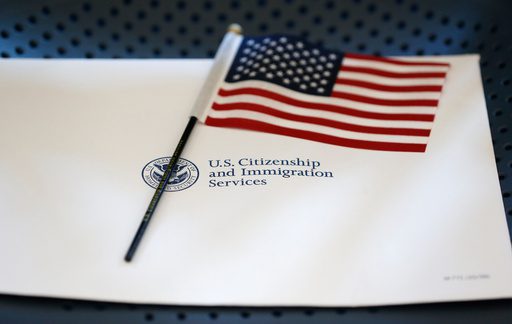
This U.S. Citizenship and Immigration Services (USCIS) directive, dropped without much fanfare on a Friday, potentially snarls the futures of hundreds of thousands of green card applicants annually, according to official statements surrounding the initial announcement. For more than half a century, legal residents have had the option to apply for permanent status from inside the country—spouses of U.S. citizens, students, workers, refugees. But suddenly, as USCIS’s website put it, From now on, an alien who’s in the U.S. temporarily — and wants a Green Card must return to their home country to apply, except in extraordinary circumstances. Pretty definitive, right? But then USCIS muddied the waters even more, stating only those who provide an economic benefit or national interest could probably stay.
Naturally, this has lawyers, advocates, — and those navigating the labyrinthine immigration system reeling. USCIS even issued a detailed memo for its own staffers—one that experts say is more nuanced than the public pronouncement. Matthew Soerens, the U.S. director of church mobilization for World Relief, found glimmers of hope in the guidance for refugees. He believes it won’t apply to those fleeing their homelands, who often can’t return for safety reasons. But it’s a hope born more of reading tea leaves than explicit clarification. Likewise, Boundless Immigration, a law firm, read the memo as instructing officers to apply existing discretionary standards more rigorously—a bureaucratic way of saying ‘get tougher.’ But they surmised it wouldn’t totally halt the process for all eligible applicants. Clear as mud, then. Shev Dalal-Dheini of the American Immigration Lawyers Association reckons it could be aimed at people who overstayed visas—a parent, for instance, whose tourist visa lapsed but has a citizen child. Others like Kevin Miner, from Fragomen, a law firm, think employment-based visas, like H-1Bs, might largely be exempt, particularly those with dual intent provisions—allowing foreign nationals to seek permanent residency. Miner still anticipates those will continue to precede business as usual — and that we won’t see a significant impact.
📄 POLICY WIRE WHITEPAPER PUBLISHED: PAKISTAN'S NATIONAL SECURITY POLICY PRIORITIES
👉 READ BY CLICKING HEREBut the damage—the chilling effect, as Flavia Santos Lloyd put it—is already done. On a recent Tuesday, new questions popped up in green card interviews. Someone married to a U.S. citizen, who’d previously been fine adjusting status here, was suddenly asked why they weren’t applying from their home country. Had they considered it? Did they still have family there? Another applicant was told they needed to prove they wouldn’t be a financial burden or a public charge—even submitting a hypothetical 2025 tax return or bank statements. It’s a classic move: inject maximum uncertainty, let fear do the rest. That’s probably the point.
For individuals from nations like Pakistan, navigating America’s immigration pathways has always been a tightrope walk. Family-based petitions, for instance, are common. The new rule means someone who arrived on a temporary visa—perhaps to care for an ailing parent or visit relatives—and subsequently married a U.S. citizen, could now face the impossible choice of returning to a region with its own complex geopolitical realities, just to complete an application that, until recently, could be handled right here. They’re effectively being told: leave the very family you’re trying to build a future with. This isn’t just bureaucratic red tape; it’s a policy that hits deep at the practicalities of international travel, the security of their home nations, and the emotional fabric of family units. It forces individuals into a Catch-22, pushing them back to environments that may be unstable, or where the U.S. doesn’t even have robust consular services. It’s a calculated friction.
What This Means
This administrative reshuffle isn’t just about tweaking forms; it’s a political signal fire. On the surface, it’s about tightening borders. Deeper down, it’s a calculated move to reduce overall legal immigration through attrition — and intimidation. By forcing applicants—many of whom are already established in U.S. communities and contributing economically—to leave the country, the administration effectively introduces a deterrent, adding massive financial, logistical, and personal burdens to the green card process. This tactic can also serve as a political dog whistle to segments of the electorate that favor drastically lower immigration numbers. Economically, it could deter some foreign talent, especially those who aren’t on specific dual-intent visas, from choosing the U.S. as a long-term destination. It fosters an environment of instability and suspicion that could push international businesses, too, to consider less capricious options. Politically, it complicates U.S. relations with countries whose citizens form a significant part of the immigrant pool, raising humanitarian concerns and potentially straining diplomatic ties over a policy many international observers will view as punitive. Ultimately, it’s a powerful lever—or a clumsy hammer, depending on your perspective—in a broader strategy to reshape America’s demographic future by quietly constricting every available door.