

Twilight’s End: Albuquerque Standoff Raises Grim Questions on Crisis Response
POLICY WIRE — ALBUQUERQUE, N.M. — It started, not with sirens blaring for armed robbery or a high-speed chase, but with a plea. A family, desperate and fearful, contacted authorities about a young...

POLICY WIRE — ALBUQUERQUE, N.M. — It started, not with sirens blaring for armed robbery or a high-speed chase, but with a plea. A family, desperate and fearful, contacted authorities about a young man, in his 20s, locked in a harrowing struggle with his own mind. He was, they said, [QUOTE_PLACEHOLDER] It’s a common enough call now, isn’t it? An unfortunately routine slice of Americana that’s becoming an alarmingly frequent preamble to tragedy.
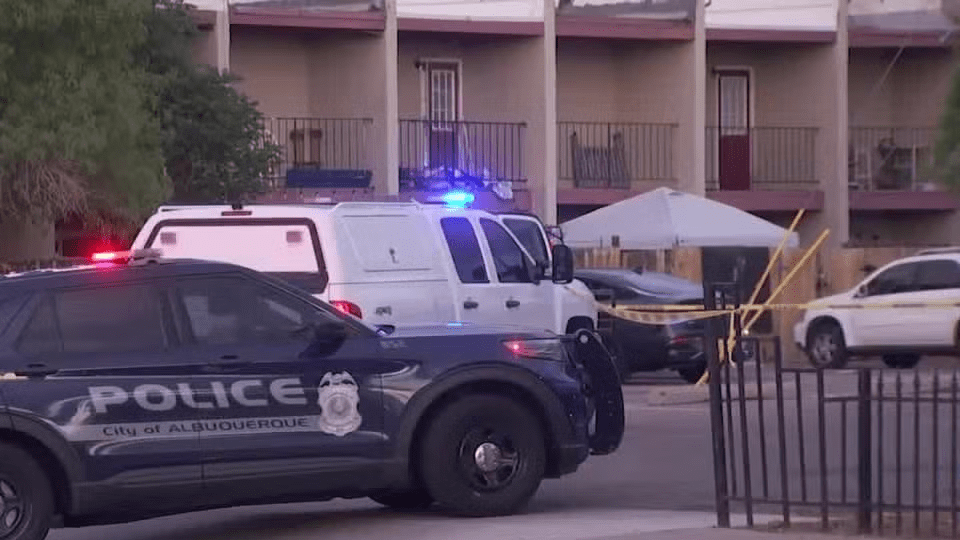
On Tuesday evening, the routine escalated in northwest Albuquerque. Dispatch sent officers to the area of Eighth Street — and Bellamah Avenue. When the Albuquerque Police Department (APD) personnel arrived, they found more than just a quiet distress signal. Someone was yelling, emerging from a group that included the distressed individual. But here’s the thing: after securing the family out, the man remained inside that home, a fortress of internal turmoil and mounting external pressure. Police attempted engagement, they tried coaxing him out, insisting they [QUOTE_PLACEHOLDER] A simple phrase, packed with intention, or at least the aspiration of it.
But intentions, even good ones, don’t always translate into smooth outcomes. When he eventually exited, officers tried what’s generically termed “less lethal” force—a phrase that’s an almost polite euphemism, really, for methods designed to incapacitate without killing. But it didn’t work. It failed, spectacularly. He simply retreated back inside, hardening the stand-off into something far more dangerous. Then came the unmistakable sound of a gun. He [QUOTE_PLACEHOLDER] hitting an officer’s vehicle. Then, just like that, the scenario pivoted. [QUOTE_PLACEHOLDER] [QUOTE_PLACEHOLDER] wounded them. A terrible, kinetic escalation, though thankfully, the officers involved are [QUOTE_PLACEHOLDER]
The sequence that followed paints a familiar, stark picture of urban combat. The suspect emerged once more, this time with a gun, kicking off what’s being called a shootout. Police officers—charged with maintaining order—faced down someone who had, moments prior, been deemed a danger only to himself. A drone confirmed the suspect went back inside the home, where, it was later confirmed, he died. What a bleak, unavoidable denouement to what began as a cry for aid. APD Chief Cecily Barker didn’t specifically say if an officer’s gunshot led to the man’s death. It’s an inquiry left hanging in the arid New Mexico air.
The event now falls under the careful, methodical scrutiny of the [QUOTE_PLACEHOLDER] This isn’t just about accountability, or protocol. It’s about a persistent, gaping fissure in our collective ability to handle such complex situations without resorting to lethal force. We talk a big game about mental health. We really do. But when the rubber meets the road—when that distressed individual picks up a weapon—the training, the tools, they all seem to bottleneck into one stark outcome. In many parts of the developing world, particularly in countries like Pakistan, the societal stigma around mental illness is often compounded by inadequate resources for care, making the intersection of distress and state intervention equally, if not more, fraught. It’s not a unique American problem, it’s just ours happens in public, with drones, — and with plenty of firepower.
📄 POLICY WIRE WHITEPAPER PUBLISHED: PAKISTAN'S NATIONAL SECURITY POLICY PRIORITIES
👉 READ BY CLICKING HEREWhat This Means
This Albuquerque episode isn’t just a local news item; it’s a glaring symptom of a larger, systemic pathology in how Western societies—and by extension, the world—handle the crisis of mental health intersecting with law enforcement. We consistently task police, trained primarily for criminal interventions, to navigate some of the most delicate human vulnerabilities. But they’re not always social workers. They’re not always counselors. And they often aren’t equipped for de-escalation when the stakes are literally life — and death. Because what this really highlights is a systemic gap.
According to data compiled by Treatment Advocacy Center in 2022, individuals with untreated mental illness are 16 times more likely to be killed by law enforcement than other civilians during police encounters. Think about that for a second. That’s a statistic that should keep anyone awake at night, anyone concerned about both public safety — and public health. This isn’t about blaming officers on the ground; it’s about acknowledging the untenable position we, as a society, continually put them in. We’ve largely de-institutionalized mental healthcare without adequately investing in community-based solutions, creating a vacuum often filled, tragically, by the criminal justice system.
The economic implications are immense, too. Reactive responses—emergency services, investigations, protracted legal processes—cost far more than proactive, preventative mental healthcare. It’s a vicious cycle where budget cuts to mental health clinics indirectly become budget demands for tactical police units. And that cycle doesn’t just play out here; its echoes reverberate globally, from overwhelmed hospitals in Dhaka struggling with basic care to the very public discourse in Japan about individual autonomy and state intervention. Ultimately, such incidents chip away at public trust in institutions, foster resentment, and don’t actually make anyone safer. A truly safe community isn’t one with more firepower, but one with more compassionate — and effective social supports. And that, folks, is where we’re failing, consistently, sometimes fatally. It’s a bitter truth, — and it hits us, often, in places like Albuquerque.