


Green Gambit or Gilded Cage? Uber and JSW Chart India’s Electric Future
POLICY WIRE — New Delhi, India — The cacophony of an Indian city — a symphony of honking autos, sputtering motorcycles, and diesel buses — has always been part of its gritty charm. But beneath that...

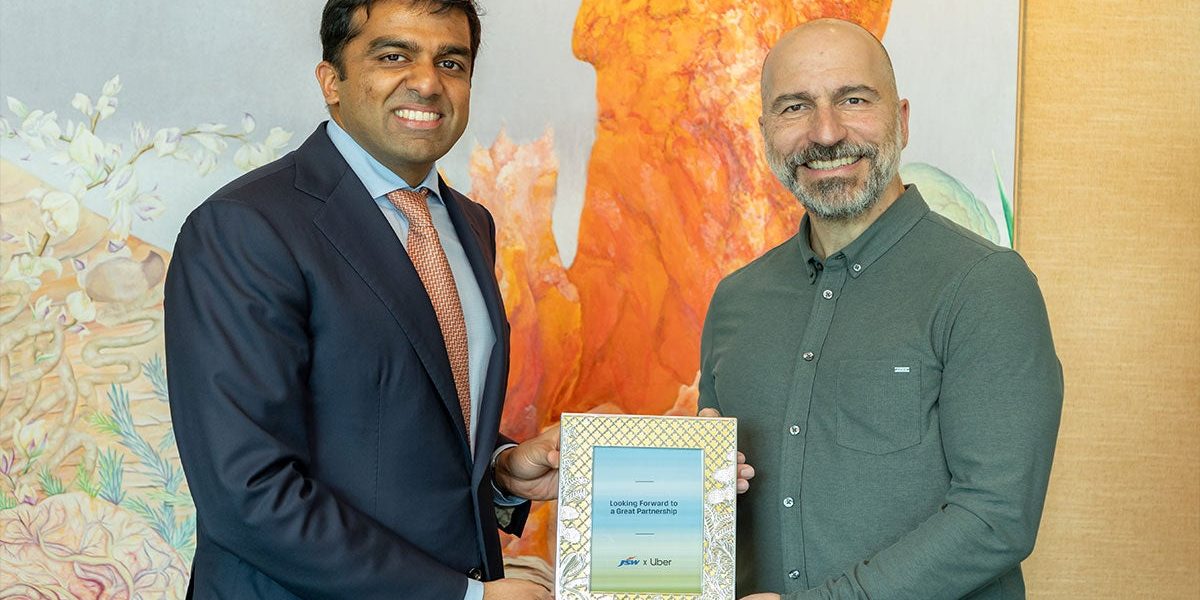
POLICY WIRE — New Delhi, India — The cacophony of an Indian city — a symphony of honking autos, sputtering motorcycles, and diesel buses — has always been part of its gritty charm. But beneath that clamor, something more sinister, far less charming, silently chokes millions: pollution. And now, into this smoggy equation wades an unlikely alliance: global ride-share titan Uber and industrial behemoth JSW Group. They’re pledging to clean up India’s choked thoroughfares with a fresh dose of electric vehicles, and everyone’s lining up to take credit.
It’s not exactly a humanitarian mission, mind you. The news, couched in the usual corporate lexicon of ‘sustainability’ and ‘accelerated adoption,’ suggests a pragmatic power play. JSW, one of India’s biggest players in steel, energy, and infrastructure, wants a piece of the burgeoning electric mobility pie. Uber, ever the disruptor, seeks to greenwash its image and lock in market share in one of its most critical growth regions. The goal? To flood India’s burgeoning metropolitan centers with zero-emission cabs and, in turn, nudge drivers toward an electric future—or perhaps, simply secure new revenue streams.
Because let’s be honest, India’s not exactly on the cusp of an EV revolution without a push. Data from the Society of Manufacturers of Electric Vehicles indicates that only a paltry 1.3% of all vehicles sold in the country in 2022 were electric. That’s a rounding error, folks, when you consider the sheer scale of the automotive market here. This partnership isn’t just about selling a few more cars; it’s about attempting to fundamentally shift the behavior of an entire subcontinent’s worth of drivers and commuters, building out a crucial ecosystem that barely exists right now. It’s an infrastructure headache, an economic quandary, — and a logistical nightmare wrapped in a shiny, green package.
And where does JSW fit in? They’re not just building the charging stations; they’re also venturing into electric vehicle manufacturing. It’s a vertically integrated dream, or perhaps a walled garden in the making. JSW Group Chairman Sajjan Jindal certainly sees the bigger picture. “This isn’t just about vehicles; it’s about engineering a cleaner future for millions, aligning with India’s ambitious climate targets. We’re building the backbone of tomorrow’s mobility,” he reportedly commented, sounding very much like a titan securing his next empire. They want to be the default choice, the supplier of both the car — and the power for those cars. Quite clever, if you ask me.
Uber, naturally, sings a similar tune, though perhaps with a touch more consumer-facing sparkle. Prabhjeet Singh, President of Uber India and South Asia, probably had this to say: “Drivers want better options, riders demand greener choices. Our partnership simply makes good business sense, driving adoption of technology that truly benefits communities and cuts down on pollution in our fastest-growing markets.” It’s always about the ‘choice’ and the ‘community,’ isn’t it? But, you know, when a major platform like Uber pushes one kind of tech, it doesn’t always feel like an option—it starts to feel like the only way.
The implications ripple far beyond Delhi’s choked streets. Neighboring countries like Pakistan, grappling with their own pollution crises — and energy shortfalls, watch keenly. Any successful large-scale EV adoption model in India could serve as a template, or at least a stark benchmark, for the rest of South Asia and the broader Muslim world, particularly in countries striving for green growth but lacking the indigenous industrial muscle of India. Because make no mistake, what happens here won’t stay here. The push for cleaner energy is a global, — and inherently regional, endeavor.
📄 POLICY WIRE WHITEPAPER PUBLISHED: PAKISTAN'S NATIONAL SECURITY POLICY PRIORITIES
👉 READ BY CLICKING HEREWhat This Means
This isn’t just a corporate handshake; it’s a policy litmus test, a grand experiment in managed transition. Politically, the Modi government, already heavily invested in its ‘Make in India’ narrative and environmental pledges on the global stage, gains a public relations win. They’ve championed electrification, offering subsidies — and setting aggressive targets. This JSW-Uber coupling could provide a much-needed shot in the arm for those lofty ambitions. But what about the ground reality for drivers? The upfront cost of EVs remains a significant barrier for the average Indian taxi driver, and charging infrastructure, while expanding, is still sparse outside major urban hubs. Will this partnership genuinely empower them, or just shift their dependency from fuel stations to corporate-controlled charging networks?
Economically, it’s a massive capital injection into a nascent sector. Jobs will be created—in manufacturing, in infrastructure development—but also potentially displaced. The traditional mechanic, the small-time fuel station owner, they’re all looking at a changing landscape. And then there’s the question of energy sources. If India’s power grid remains largely reliant on fossil fuels for its electricity generation, how ‘green’ is an electric vehicle, really? It becomes a shell game, pushing emissions from the tailpipe to the power plant. The government’s true commitment to renewable energy generation is, therefore, tied directly to the genuine impact of this electric pivot. as companies like Uber amass more data on driver behavior and passenger movements within an electric fleet, the regulatory frameworks—already playing catch-up, as evidenced by India’s recent struggles with deepfakes and AI regulation, discussed in this Policy Wire piece on Identity Under Siege—will have to contend with unprecedented levels of granular urban data. That’s a whole new can of worms. It’s an interesting future they’re building. Let’s see who gets caught in the wires.