

Ghost Ships and Geopolitics: Iranian Oil Veers to Pakistan as US Sanctions Bite
POLICY WIRE — New York, USA — It’s a high-seas game of cat and mouse, but this time, the stakes aren’t just a cargo of illicit goods. They’re barrels of crude oil, an essential global...

POLICY WIRE — New York, USA — It’s a high-seas game of cat and mouse, but this time, the stakes aren’t just a cargo of illicit goods. They’re barrels of crude oil, an essential global commodity, caught in the geopolitical crosshairs of a sanctions regime. And as Washington flexes its naval muscle, two unassuming oil tankers have made an unexpected tactical maneuver, suddenly redirecting their courses towards Pakistan, turning an economic squeeze into a diplomatic chess match on the Indian Ocean.
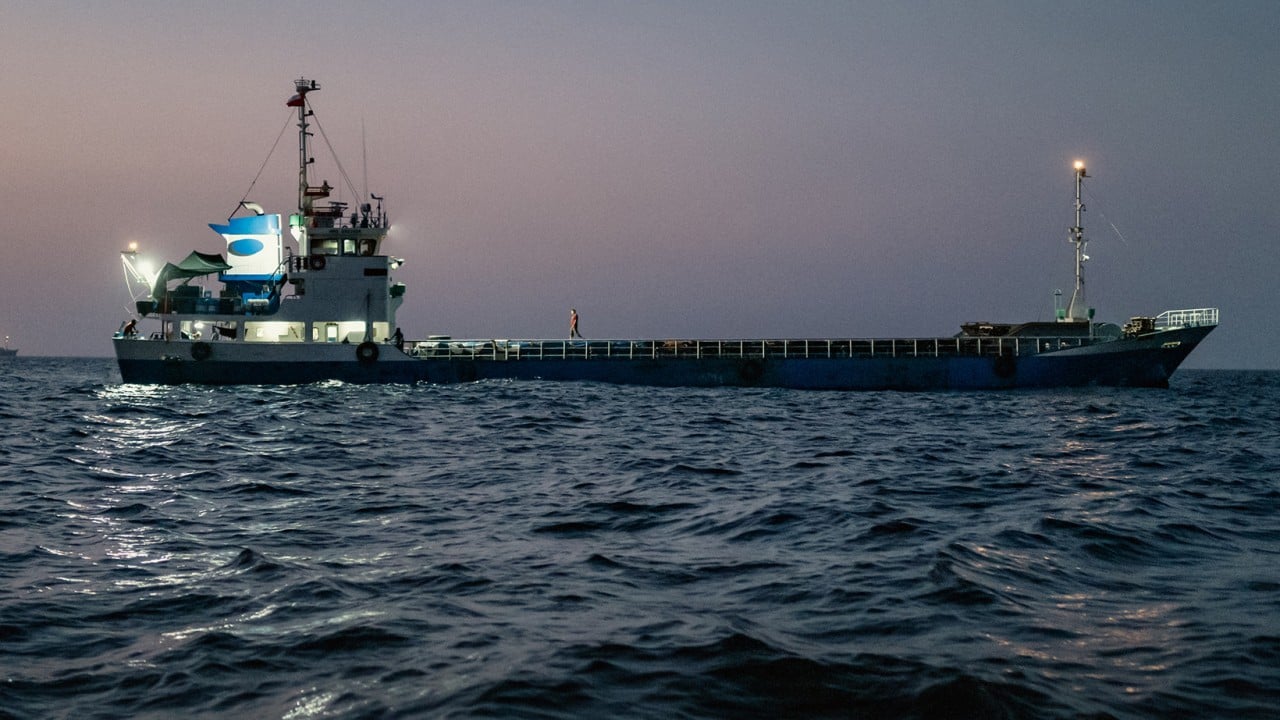
For those tracking global shipping lanes—a data-rich realm usually of interest only to freight insurers and logistics experts—the recent pivot by the tankers `The Rani and the Amil` wasn’t just a deviation. It was a digital shrug at the American financial architecture. These vessels, bearing a `combined 1 million barrels of crude`, didn’t just casually drift; they `switched their destination signals to Karachi on Tuesday`, painting a new, rather provocative, dot on the maritime map for `ship-tracking data show`. [QUOTE_PLACEHOLDER]
This isn’t some rogue pirate drama. It’s an calculated gambit, observers reckon, `an unusual move that may be an indication they’re seeking a safe place to wait as the US blockade takes effect.` The vessels, fortunately for their owners, were `already outside the Persian Gulf` by the time `Washington reimposed its naval blockade of Iranian shipping.` That’s timing, isn’t it?
Because the implications ripple out, much further than just the cargo holds of these two vessels. This seemingly small alteration in a shipping itinerary doesn’t just involve an exchange of coordinates; it signals an economic defiance, an apparent quest for sanctuary that pulls a traditionally US-allied nation, Pakistan, into the complex and often treacherous orbit of Iran’s sanctioned oil trade. It’s not just a commercial transaction anymore, it’s a statement.
But Pakistan’s got its own set of problems, you see. Its relationship with the U.S. is complicated, a perpetual tightrope walk between alliance, aid, — and autonomy. This past year alone, Pakistan has faced incredible economic challenges, a precarious balance of payments situation and a constant scramble for foreign investment. Islamabad simply doesn’t want to pick fights with its benefactors. And Iran is its next-door neighbor, a vital energy source for the country’s beleaguered economy—the Gas Pipeline Project, for instance, has always loomed large, a testament to the nation’s desire for reliable and affordable energy. So when these tankers arrive on its maritime doorstep, it’s not a straightforward decision to turn them away. It’s never simple, is it?
And it’s a test for everyone involved. For the U.S., it’s a question of whether its sanctions, ostensibly designed to cripple Tehran’s energy exports, have merely forced Iran into finding ever more creative, circuitous, and geopolitically uncomfortable avenues for trade. For Iran, it’s about sustaining its economy in the face of what it views as coercive measures. But for Pakistan, it’s a tight spot. Very tight. They’re trying to navigate this without alienating crucial international partners, or disrupting its delicate regional balancing act. Pakistan’s got pressing economic needs, an ever-present requirement for affordable energy, which can make a country do surprising things, sometimes for its own basic survival. According to the International Energy Agency, global oil demand in 2023 hovered around 102 million barrels per day, meaning 1 million barrels is a fractional, but politically charged, contribution to an insatiable worldwide appetite.
The current global economic climate doesn’t help anyone make easy decisions, particularly with volatile energy prices and inflation pinching households from Lahore to London. What might seem like a mere blip on the shipping radar, becomes a stark illustration of the complex interplay between economic sanctions, sovereign necessity, and the desperate search for trade lifelines in a globalized yet deeply fractured world.
The tankers sit there now—or at least their digital signals indicate a sedentary posture near Karachi. What happens next? That’s where the whispers begin, the backroom talks, the carefully worded statements that often conceal more than they reveal. `It’s unlikely the` journey will conclude without further diplomatic ripples. This situation isn’t just about crude oil; it’s about precedent. It’s about how far nations will go, and what lines they’ll be forced to cross, when faced with an ultimatum, an ultimatum from a world power holding most of the cards.
Because, honestly, everyone’s got to make a living, haven’t they? Even those playing geopolitical hardball. The shipping industry itself is an intricate web, and moments like these remind us just how vulnerable some nodes can be, especially those caught between two titans. The drama isn’t just on the high seas; it’s unfolding in chanceries and government offices, wherever the global economic winds blow the hardest.
What This Means
This incident is less about the immediate economic impact of a million barrels of Iranian crude – a comparatively small quantity in the vast ocean of global oil trade – and everything about political signaling and the evolving dynamics of international pressure. The apparent seeking of harbor in Karachi forces Pakistan into a very uncomfortable position. It directly challenges Islamabad’s efforts to maintain good relations with the United States while balancing its geographic and strategic imperatives with Iran. Pakistan cannot afford to openly defy US sanctions, given its dependence on international financial institutions where American influence remains significant.
However, it also can’t afford to completely alienate Iran, a neighboring Muslim country and potential partner, especially on energy needs. The `Gas Pipeline Project` has been on hold, in part, due to U.S. pressure. This incident will intensify the already existing diplomatic tightrope walk, likely leading to quiet but intense discussions between Washington and Islamabad. There could be covert assurances or specific mechanisms discussed to prevent perceived violations without publicly embarrassing either side. But this highlights the inherent weakness in a blanket sanctions regime, where enforcement becomes a complex and often messy affair. Nations will, by hook or by crook, attempt to protect their strategic interests, often leveraging unexpected partners or finding desperate avenues for trade. For Pakistan, the outcome of this specific drama might set a new precedent for how it manages its delicate regional balance under the harsh glare of global scrutiny. The economic ripples, while not a tsunami, could nonetheless create subtle shadows over its economic prospects.