


The Unsung Scripter: When India’s Cricket Pageant Rewrites Hero Narratives
POLICY WIRE — DHARAMSALA, INDIA — The great narratives of sport, like those of geopolitics, rarely unfold precisely as predicted. Sometimes, the marquee player, the one with the global endorsements...

POLICY WIRE — DHARAMSALA, INDIA — The great narratives of sport, like those of geopolitics, rarely unfold precisely as predicted. Sometimes, the marquee player, the one with the global endorsements and the fanatical following, sets the stage—then quietly exits. Such was the Tuesday night tableau in Dharamsala, where Royal Challengers Bengaluru supporters, having bought tickets to witness a Virat Kohli masterclass, found themselves instead captivated by an entirely different, perhaps more compelling, saga. It wasn’t the pre-ordained idol who burned brightest.
No, the evening’s actual performance came courtesy of an individual previously content to operate from the shadows: Rajat Patidar. But in a sport increasingly about star power and brand equity, a phenomenon many South Asian nations—especially India and Pakistan—grapple with in their own unique ways, Patidar delivered a searing reminder that collective endeavors often birth individual legends from unexpected quarters. It wasn’t about who *should* dominate; it was about who *did*. [QUOTE_PLACEHOLDER]
Kohli’s promising innings, however, was cut short by Jason Holder for 43, leaving the throngs of spectators in a momentary hush. They’d paid their hard-earned rupees to cheer their king, remember. What the crowd got instead was a stunning exhibition of strokeplay from Royal Challengers Bengaluru skipper Rajat Patidar. And this, a policy analyst might argue, presents an interesting micro-economic model—the market reacting dynamically to a new, unforeseen value proposition. An unexpected surge from an emergent talent, displacing a known commodity, can change everything—investor sentiment, media focus, even the balance of power within a franchise.
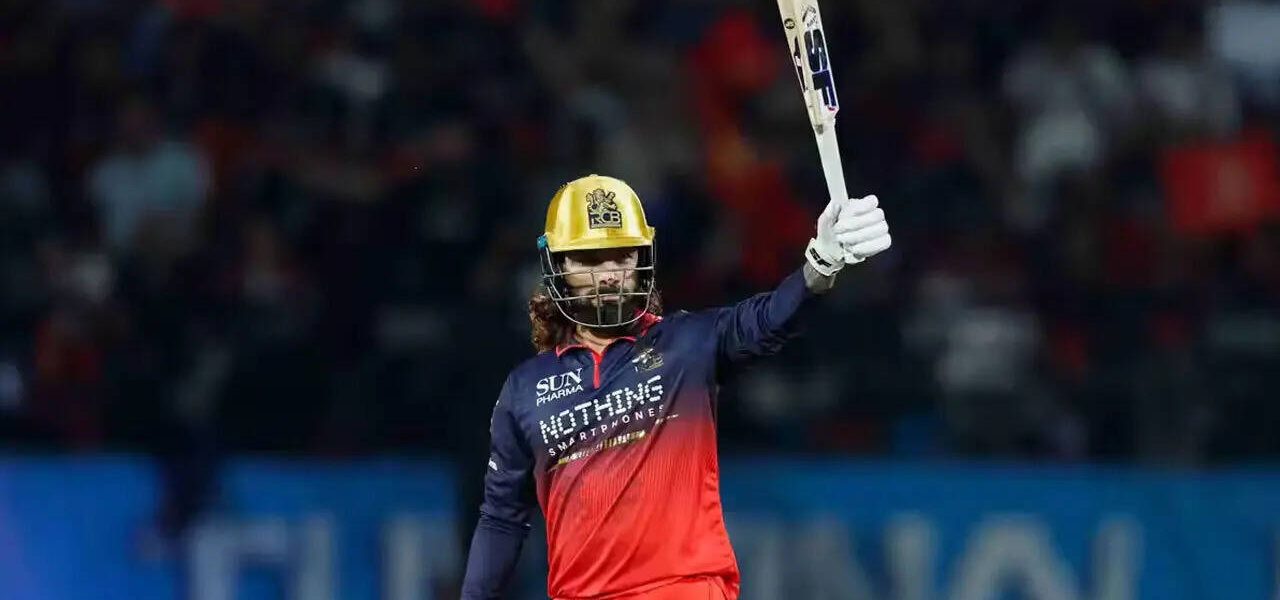
Riding on their underrated captain’s unbeaten 93 off 33 balls, RCB steamrolled Gujarat Titans by 92 runs. They would march into their second successive IPL final, a formidable accomplishment that transcends mere runs and wickets. Patidar’s whirlwind knock, studded with five fours and nine sixes, pushed RCB to an imposing 254/5, the highest total in IPL playoff history. This isn’t just a number; it’s a statement, a benchmark set against all previous high-stakes encounters in a league defined by its commercial muscle. Because after that, Gujarat was essentially toast.
And so the Gujarat Titans were subsequently bowled out for 162 in 19.3 overs. More than the light and sound show at the break, the Titans seemed to be reeling from Patidar’s fireworks when they came out to chase. It’s a psychological capitulation—an enemy force stunned not just by firepower but by its sheer, unexpected intensity. Their innings got off to a poor start as Sai Sudharsan was hit wicket off Jacob Duffy for 14. Skipper Shubman Gill soon followed, bowled by Bhuvneshwar Kumar for just two. This sequence speaks volumes about the fragility of even the most established batting line-ups when under immense, psychological duress.
Jos Buttler briefly threatened with a 11-ball 29. But once Josh Hazlewood removed him, Gujarat’s chase unravelled quickly. It always does, doesn’t it, when that one glint of hope is extinguished? Wickets tumbled regularly as Titans lost half their side inside the Powerplay, reaching only 51/5 after six overs. From there, the match became a formality, plain — and simple, and they were eventually bowled out in the final over. Rahul Tewatia offered the lone resistance for the Titans with 68 off 43 balls, a noble but ultimately futile gesture in the face of an avalanche. For RCB, Duffy claimed three wickets while Bhuvneshwar, Rasikh Salam Dar — and Krunal Pandya picked up two each. They were a machine.
When RCB batted, Patidar walked in with the stadium briefly stunned after Kohli’s dismissal in the ninth over. The RCB fans soon found their voice again as Patidar began depositing balls into the stands with ease. Casual fans, serious politicos, and the teeming masses across Pakistan and India share this love for the unpredictable drama that only cricket can consistently deliver—a shared cultural touchstone, ironically enough, in a region otherwise marked by profound ideological fissures. Patidar just took that common sentiment — and amplified it by a factor of ten.
📄 POLICY WIRE WHITEPAPER PUBLISHED: PAKISTAN'S NATIONAL SECURITY POLICY PRIORITIES
👉 READ BY CLICKING HERECapitalising on a life offered by Kagiso Rabada when he was on 21, Patidar tore into the Titans attack and added 95 for the fourth wicket with Krunal Pandya. They’d gifted him a reprieve, — and he made them pay, dearly. The Titans didn’t help their cause as they were sloppy in the field, while their bowlers lost discipline in the end overs. Because sometimes, policy breakdowns aren’t about grand strategy—they’re about simple, executable errors. The momentum shifted decisively in the 15th over, when Patidar — and Krunal launched an assault on Kulwant Khejroliya. The left-arm seamer bowled two noballs and a wide in the over as Patidar and Krunal collected 28 runs. Though Krunal fell for 43 off 28 balls, Patidar carried on. He brought up his fifty in just 21 balls and shifted gears with ease as RCB scored 86 runs in the last five overs. This isn’t just sports; it’s a high-stakes, real-time corporate and psychological drama, played out with bats and balls.
Standing deep in his crease, Patidar sent yorker-length deliveries over the ropes and pulled short balls into the stands with clinical precision. It was an exercise in power — and surgical exactitude. Venkatesh Iyer had given RCB a flying start by striking three fours in Mohammed Siraj’s first over, laying some groundwork. But Patidar finished it.
What This Means
Beyond the brute force of a bat on ball, this match encapsulates several telling narratives for observers of South Asia’s broader political economy. First, the Indian Premier League isn’t merely a sporting event; it’s a massive, multi-billion dollar enterprise, an engine of both soft power and substantial revenue. The narrative of an unsung hero rising—rather than the perpetually hyped superstar delivering—suggests a deeper resilience within the system itself, a constant regeneration of talent that ensures the product remains fresh and engaging, attracting viewers from across the region and beyond. This unpredictability maintains viewer engagement, crucial for its colossal advertising revenue. And that, dear reader, is policy gold.
Second, the sheer spectacle and economic scale of the IPL provides a common cultural denominator, however fleeting, for an entire subcontinent. While diplomatic ties between India and Pakistan often remain frosty, the shared love for cricket transcends—momentarily, at least—these geopolitical tensions. A brilliant innings in Dharamsala echoes through homes in Karachi, Lahore, and Dhaka, connecting peoples through a shared emotional investment. This shared fandom acts as a kind of informal communication channel, a societal balm that official diplomacy often struggles to achieve. It proves that despite their differences, an economic model predicated on shared entertainment, however commercialized, still finds its way through. Patidar’s knock wasn’t just a win; it was a ripple in a very large pond, proving that the human element, that dash of individual brilliance, still matters most.