


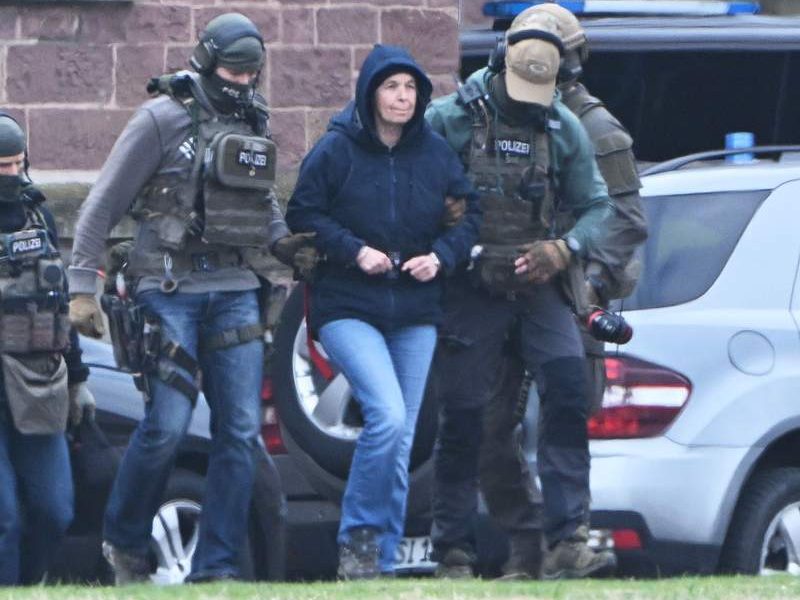
The Ghost in the Machine: Decades-Long Hunt Snags Former RAF Man in Financial Heist Retrial
POLICY WIRE — London, UK — Three decades. That’s how long it took for the long arm of the law—or maybe just sheer stubbornness—to finally tap Christopher Smith, a former Royal Air Force...

POLICY WIRE — London, UK — Three decades. That’s how long it took for the long arm of the law—or maybe just sheer stubbornness—to finally tap Christopher Smith, a former Royal Air Force officer, on the shoulder. He’d vanished into thin air after a rather audacious, if unsophisticated, multi-million-pound payroll robbery. Most folks thought he’d bought a villa in some non-extradition sunshine haven, perhaps even living out his twilight years a gentleman of leisure. But then, as it always seems to, time ran out.
His recent appearance in a British courtroom, finally facing the music, wasn’t just a retrial; it was a ghost returning, a stark reminder that some debts are never truly erased from the ledger. Smith, you see, was just one cog in a rather lucrative, brutal little caper three decades prior. The original story has long since faded from front pages, relegated to dusty police archives. But here we’re, watching a court revisit details so old they predate half the internet. His co-conspirators, long since caught — and served their time, might’ve raised an eyebrow. Or perhaps just grumbled at his extended run.
Because, make no mistake, Smith’s escape wasn’t just a simple skip across the channel. It involved a meticulous, protracted period off the grid, assuming new identities, laying low. Think about it: a man who once served his country in uniform suddenly turns to high-stakes crime, then becomes a master of anonymity for what feels like an entire epoch. You almost have to admire the nerve—until you remember the victims, the financial chaos, the lives upended.
Assistant Commissioner Gareth Davies of the Metropolitan Police put it rather bluntly when discussing these prolonged chases. “We don’t forget,” he said last year, his voice devoid of pretense. “These cases might hibernate, but they’re never truly closed. It’s a question of resources, yes, but more importantly, it’s a commitment to justice that transcends decades. The world shrinks. Sooner or later, most of them slip up.”
Smith’s re-emergence spotlights the incredibly intricate and often frustrating world of international fugitive recovery. He wasn’t found through a dramatic chase scene; he was located through slow, grinding investigative work, leveraging new forensic technologies and old-fashioned police networking. It’s not sexy. It’s methodical, soul-crushingly methodical.
📄 POLICY WIRE WHITEPAPER PUBLISHED: PAKISTAN'S NATIONAL SECURITY POLICY PRIORITIES
👉 READ BY CLICKING HEREAnd it’s a game played on a global scale. Dr. Ayesha Rahman, an independent expert on transnational crime, noted the evolving challenges. “Many individuals attempting to evade Western justice tend to target regions where enforcement capabilities are uneven, or where political instability offers cover. Pakistan’s northwest, for instance, has presented its own complex issues for international law enforcement seeking specific individuals. This isn’t just about catching a thief; it’s about navigating complex diplomatic waters, too.” The landscape for those on the run is shifting, however subtly. For instance, according to the National Crime Agency’s annual report for 2022-23, cooperation with Interpol and Eurojust has resulted in a 14% increase in the apprehension of UK fugitives abroad compared to the previous five-year average, often from countries previously considered ‘safe’ havens.
His particular form of financial malfeasance – a plain vanilla robbery, albeit a sizable one – doesn’t resonate with the same global concerns as, say, counter-terrorism. But the principles are identical. Justice, eventually, needs to be served. The notion of impunity, whether for a hardened militant or a runaway robber, corrodes the very fabric of governance.
What This Means
The Smith verdict—whether guilty or innocent—sends a powerful, if somewhat cold, message: you can run, but you can’t truly hide anymore. Politically, it’s a win for law enforcement agencies that, for all their funding woes, persist. It burnishes the image of a justice system that, while imperfect — and often sluggish, ultimately delivers. Economically, such a lengthy pursuit is eye-wateringly expensive. Millions, no doubt, were poured into this pursuit over three decades. But the perceived value in deterrence, — and in upholding the rule of law, is considered priceless by many. It maintains public faith, especially important when public sentiment frequently questions the efficacy of the police and courts. And, it’s a reminder that the unseen ‘reserves’ of state power—forensics, international liaisons, sheer institutional memory—are formidable, even when they operate in the shadows for a generation. It suggests a future where, for complex transnational crimes, the clock might tick slowly, but it rarely stops for good. The fugitive’s world? It’s getting smaller, day by excruciating day. Don’t think for a second it isn’t.