

Bannu’s Echo: Pakistan’s Northwest Confronts a Ghastly Claim of Responsibility
POLICY WIRE — Islamabad, Pakistan — Sometimes, the quiet pronouncement of blame slices deeper than the initial explosion. When a splinter faction casually declares its hand in a massacre, it doesn’t...

POLICY WIRE — Islamabad, Pakistan — Sometimes, the quiet pronouncement of blame slices deeper than the initial explosion. When a splinter faction casually declares its hand in a massacre, it doesn’t just tally bodies; it unspools the tangled, messy reality of power—and its absence—in a region perpetually teetering on the edge. Fourteen police officers, we know now, died in the latest permutation of this violent ledger. But it’s not just the sheer number, nor even the audacity of the claim, that’s chilling. It’s what it reveals about the hydra-headed beast Pakistan has been fighting in its northwestern frontier for decades.
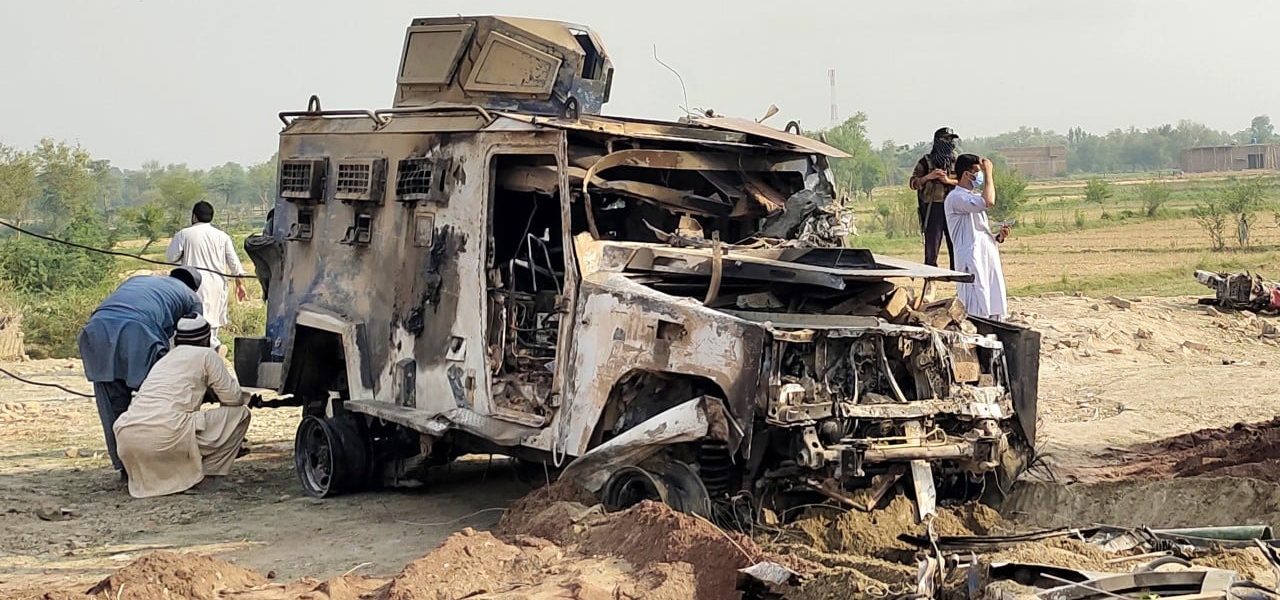
It was a Saturday night, and in the Bannu district, life, as it’s often wont to do, suddenly became utterly, irrevocably cheap. A self-proclaimed breakaway group of the Pakistani Taliban has claimed the attack. This wasn’t a mere skirmish. It was a well-orchestrated, grisly display of intent. A suicide bomber and several gunmen detonated an explosives-laden vehicle near the post in Bannu, authorities said early on Sunday. You’d think the deafening roar of that blast would be the loudest part of the whole terrible ordeal. You’d be wrong. [QUOTE_PLACEHOLDER]
The aftermath, the grisly accounting, saw the death toll rise to 14 police officers, per authorities. That number isn’t just a figure; it represents 14 families ripped apart, 14 futures erased. This kind of raw, undeniable data point hits different in a country that’s seen far too many of them. The official count confirms this tragic truth.
Because that initial blast wasn’t enough. No, it rarely ever is. What followed was a brutal, sustained gunfight. The attack triggered an intense shoot-out, — and some… that’s what a senior police official Sajjad Khan said. The original account cuts off there, a stark reminder that many details—the human ones—often stay trapped in the moment of terror. It was all a cold-blooded assertion of influence in an area where lines blur constantly between insurgent and state, between local grievances and grander, nefarious designs. Bannu is a district in Khyber Pakhtunkhwa province bordering Afghanistan, after all. This isn’t some backwater forgotten by geopolitics; it’s a crucible.
For years, Pakistan has grappled with internal divisions and external pressures, struggling to maintain order in its restive borderlands. The rise — and ebb of various extremist groups have kept Islamabad perpetually on its heels. This recent, devastating event reminds us that even when the central narrative shifts to other regional concerns—say, the curious alliances of emerging global blocs—the fight at home, against its own renegade elements, never truly pauses. It morphs, it retreats, but it always comes back. It’s a cyclical, horrifying routine they’re forced to endure.
This self-styled splinter group, a relatively unknown entity till now, signals a dangerous fragmentation within the broader Tehrik-i-Taliban Pakistan (TTP) movement. When such groups proliferate, when they carve out their own gruesome niche, it complicates counter-insurgency efforts immensely. It’s not just about one enemy anymore; it’s a constellation of them, each vying for supremacy through ever-more audacious acts of terror. And they’re perfectly fine with targeting those who swore an oath to protect—the police, the soldiers, the first line of defense against chaos. They don’t care.
📄 POLICY WIRE WHITEPAPER PUBLISHED: PAKISTAN'S NATIONAL SECURITY POLICY PRIORITIES
👉 READ BY CLICKING HEREYou can’t help but wonder what this means for the average Pakistani citizen, those just trying to live their lives amidst the perennial shadow of extremism. What happens to trust when the protectors become the targeted, when a seemingly ordinary evening turns into a bloodbath? It breeds fear, sure. But it also breeds a certain hardened resignation, a dark familiarity with brutality that no society should have to develop.
What This Means
The Bannu attack isn’t just another grim headline; it’s a blaring klaxon for Pakistan’s internal security paradigm and its regional diplomacy. Politically, it complicates Islamabad’s already fraught relationship with the current Afghan Taliban regime, who they’ve often pressured—to little avail, it seems—to rein in cross-border militant activities. The fact that a ‘breakaway group’ claims responsibility doesn’t necessarily exonerate anyone; it merely highlights the fluid and often unholy alliances that define the region’s insurgency landscape. It’s a messy game of mirrors, you see. Pakistan’s government, often caught between Western demands for action and domestic nationalist sentiments, now faces renewed calls to crack down hard, risking accusations of overreach or further alienating Pashtun populations near the border. This kind of attack pushes the needle hard toward more kinetic responses, fewer diplomatic niceties.
Economically, this sort of sustained instability casts a long, unwelcome shadow. Foreign investment, which Pakistan desperately needs to pull itself out of its perpetual fiscal doldrums, doesn’t flow easily into regions synonymous with violence. It dries up. Businesses struggle. Tourism remains stunted, particularly in areas like Khyber Pakhtunkhwa, rich in natural beauty and cultural heritage but scarred by decades of conflict. The constant drain of resources—manpower, money, attention—towards internal security measures means less available for development, for education, for infrastructure. It’s a vicious feedback loop. This cycle perpetuates poverty, which can, in turn, become a fertile breeding ground for radicalization. It’s a bitter pill to swallow, this kind of unending, self-inflicted wound.