

Unexpected Heroics: From Benchwarmer to Bellwether Amidst Playoff Strife
POLICY WIRE — Washington, D.C. — Imagine a bureaucracy so accustomed to its senior officers that their absence, however temporary, threatened to cripple the entire operation. Then, picture a junior...

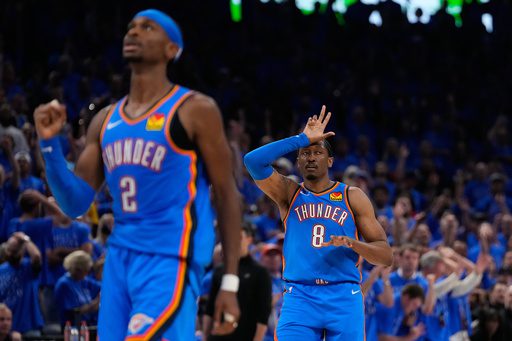
POLICY WIRE — Washington, D.C. — Imagine a bureaucracy so accustomed to its senior officers that their absence, however temporary, threatened to cripple the entire operation. Then, picture a junior aide—one barely known beyond the internal staff directory—thrust onto the national stage. No one really saw it coming. Such was the almost farcical reality that unfolded for the Oklahoma City Thunder this past Tuesday, albeit on a hardwood court rather than in the halls of government. With key personnel out, Jared McCain, previously a peripheral figure, didn’t just fill a gap; he ignited a campaign, forcing a victory that puts the Thunder a mere heartbeat from the NBA Finals.
It’s a storyline policymakers ought to chew on: the unscripted moment where organizational depth becomes its saving grace. Nobody expected McCain to make his first career playoff start under such conditions. And no one really anticipated the fireworks, frankly. Yet, the team, currently the reigning NBA champions, managed to beat the San Antonio Spurs 127-114 in Game 5 of the Western Conference finals. That win wasn’t just a scoreboard tick; it’s an audit of their bench strength, or perhaps, a lucky break that illuminated hidden talent when a crisis demanded it. [QUOTE_PLACEHOLDER]
The circumstances that paved McCain’s dramatic entry couldn’t be more straightforward for any institution accustomed to the grind of human resources. Jalen Williams, a figure of significant weight to the team, was downgraded to out. Then there was Ajay Mitchell, often the second line of defense, also ruled out earlier with his own physical complaints. This wasn’t some strategic masterstroke; it was pure, unadulterated need. It left the coaching staff—much like a cabinet facing unforeseen vacancies—scrambling for viable options. But you don’t always need years of service for someone to perform, do you? Just grit.
McCain stepped in. He dropped 20 points, with 18 of those coming in the pivotal second half. That’s an impactful shift, a sudden re-alignment of production, demonstrating a form of operational resilience that often gets overlooked until catastrophe hits. Because when the big names falter, either through injury or other circumstance, it’s the quiet workhorses who determine whether the entire enterprise stalls or accelerates. Thunder coach Mark Daigneault reflected this sentiment perfectly. We just thought he could give us some good stuff, just based on where we’re right now with a couple guys out, Daigneault acknowledged. He then continued, offering a window into the professional psyche, saying, He was really good. … Great mental toughness. I never take it for granted when somebody steps into a role like that in a game like this, but certainly not surprised. He’s got great moxie — and confidence and he showed that tonight.
And boy, did he ever. He wasn’t shy, either, with his 19 shot attempts in Game 5 tying Shai Gilgeous-Alexander for the most on the Thunder. The kid’s averaged 8.8 points in 12 playoff games off the bench prior to this, mind you. That’s a steady-enough contribution for a support role, but this? This was different. This was taking the reins — and driving the carriage. McCain, for his part, downplayed the pressure post-game on NBA TV, explaining his philosophy: Coming into this game, I just literally wanted to play as hard as I can on the offensive end and rebound and everything else will flow. A simple, effective mission statement for any challenging assignment, frankly. He summed it up even more succinctly later, saying, Everything else comes together.
One could draw a straight line from this narrative of emergent talent to the broader development challenges faced by nations striving to build sustainable institutional capacities. In Pakistan, for example, cultivating sports talent, like cricketing phenoms or rising football stars, isn’t just about athletic prowess. It’s also about fostering a national identity, providing aspirational figures, and developing programs that allow unforeseen heroes to emerge when the established ones are sidelined. It’s about how raw potential, given an opportunity, can significantly impact national morale — and global perception.
📄 POLICY WIRE WHITEPAPER PUBLISHED: PAKISTAN'S NATIONAL SECURITY POLICY PRIORITIES
👉 READ BY CLICKING HEREThis isn’t to say every mid-tier bureaucrat or reserve athlete is a hidden gem waiting to explode. Williams, for example, is dealing with chronic injury issues, having missed 58 of the Thunder’s 95 games this season, including playoffs. Of those absences, a significant 39 were related to his hamstrings. That’s a staggering figure, creating a long-term staffing problem for the Thunder. It’s a health statistic that speaks volumes about player management and the sheer grind of elite competition—an average of almost 1 game in 2 missed by a key player due to recurrent injuries, according to AP NBA data. And when the well-known figures are out, you’re counting on the McCain-types, the young bucks who get their moment when others can’t answer the bell.
Game 6 looms on Thursday in San Antonio. It’s unclear how long McCain remains in the starting five. But his effort Tuesday certainly was one heck of an audition for someone suddenly asked to step into the glare of national competition. He didn’t just fill in; he demanded attention.
What This Means
This episode transcends mere sporting headlines; it’s a lesson in organizational resilience and the surprising dividends of strategic depth. For institutions — be they governmental agencies, corporations, or even national development programs in countries like those across South Asia — the sudden incapacitation of key leadership or primary talent can trigger significant instability. The Thunder’s predicament highlights the latent power in cultivating a robust second tier. It argues for consistent investment in talent development at all levels, not just focusing on marquee names.
Economically, reliance on a single point of failure (a star player, a charismatic leader, or even a dominant industry) carries immense risk. McCain’s unexpected ascent suggests that ‘crisis management’ sometimes means simply empowering those on the sidelines. Politically, the narrative mirrors situations where junior ministers or relatively unknown party members are elevated during a leadership vacuum, often revealing unforeseen competencies or, conversely, exacerbating existing weaknesses. This Thunder game is a snapshot of organizational theory in action, reminding us that sometimes, the biggest policy win isn’t a grand, sweeping initiative, but the quiet, competent execution from an individual nobody had in their initial blueprint. It means every organization, even a basketball team, ought to review its depth chart. And maybe, just maybe, give the unsung a shot.