


Whistleblower Blues: NBA Playoffs Expose Fraying Nerves and Fragile Control
POLICY WIRE — Oklahoma City, USA — When the last buzzer sounded in Oklahoma City for Game 5 of the 2026 Western Conference Finals, it wasn’t just the final score that echoed through the arena....

POLICY WIRE — Oklahoma City, USA — When the last buzzer sounded in Oklahoma City for Game 5 of the 2026 Western Conference Finals, it wasn’t just the final score that echoed through the arena. It was the sharp, unsettling clack of an official’s whistle—or perhaps the lack thereof—that had everyone talking. In a contest that was already a brutal war of attrition between the San Antonio Spurs and the Oklahoma City Thunder, the human element, both on the court and officiating it, threatened to unravel the entire high-stakes drama.
And brutal it was. The series, tied at 2-2 heading into Tuesday night, was never designed for comfort. It’s been a protracted, grueling affair, where every possession felt like a high-stakes negotiation. You could practically see the strain etched on the players’ faces as minutes melted away — and the pressure mounted. The athletic prowess of these titans, honed over a punishing regular season, now seemed to buckle under the sheer mental load of expectation, and the razor-thin margins distinguishing victory from despair.
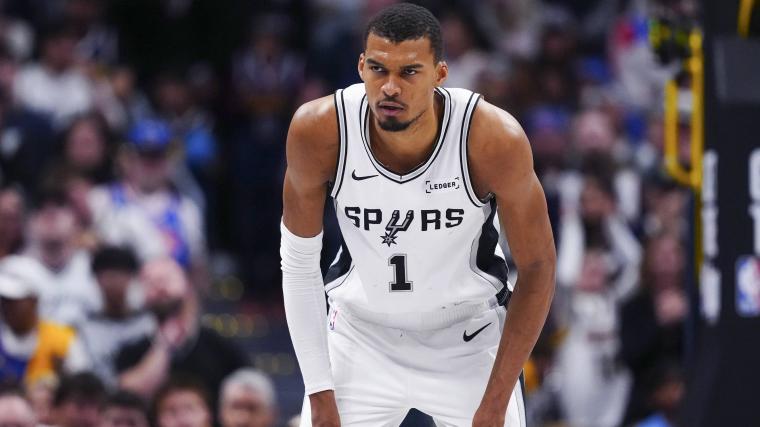
Shai Gilgeous-Alexander for the Thunder — and Victor Wembanyama for the Spurs, these aren’t just basketball players. They’re corporate assets, brand ambassadors, the literal embodiment of their teams’ hopes. They’ve lived up to the billing, no doubt, delivering performances that, at times, have verged on the superhuman. But even they aren’t immune to the chaos. Wembanyama, the gangly phenom, had been, well, phenomenal. SGA, a maestro of the mid-range, showed he was fallible, human. That vulnerability, incidentally, made it all the more compelling.
But the true flashpoint arrived in the third quarter. With San Antonio chipping away at an OKC lead, two questionable calls—or non-calls—back-to-back set the stage for widespread public discontent. A missed goaltending decision that felt as clear as day to one side, followed swiftly by an out-of-bounds ruling that ignored a Spurs’ challenge. It’s the sort of moment that makes folks lose their minds—it truly does—especially when a series hangs in the balance.
Spurs Head Coach Gregg Popovich, a man whose tenure has seen him navigate countless such tempests, minced few words when questioned post-game. “This league, it’s a living thing. It breathes, it sweats, it makes mistakes,” he drawled, ever the philosopher-king. “Folks keep wanting basketball to be clean, neat little algorithms. But it ain’t. It’s sweaty bodies, questionable whistles, and sometimes, a little luck—good or bad, take your pick.” For the Thunder, their Head Coach Mark Daigneault tried to steer the narrative back to effort. “It’s easy to point fingers, it always is,” Daigneault said, his voice flat with exhaustion. “But Game 5s in a series like this are always a test of resolve, not just jump shots or official’s judgment.”
And the world watches, you know. Far beyond the arenas in America’s heartland, these athletic gladiators captivate an audience reaching across continents. From the cafes of Istanbul to the bustling markets of Karachi, millions tune in, often late into the night, to witness this very drama unfold. The NBA’s strategic push into international markets means that a perceived officiating blunder in Oklahoma City isn’t just a domestic talking point—it becomes fodder for debate among fans in Lahore or Dhaka, fueling conversations that sometimes mirror the intense, often politically charged arguments in their own societies. Because the allure of raw, high-stakes competition—and its inherent injustices—transcends borders, much like the broader, more complex geopolitical struggles defining a nation’s fate.
It’s not just optics either. The sheer parity on display has been astonishing. Across the first four games of the series, the total cumulative score stood at San Antonio 446, Oklahoma City 442, an average margin of just one point per game—according to official NBA league statistics. That’s a hair-splitting difference, practically statistical noise, underlining how tiny advantages, real or perceived, could tip the scales.
What This Means
This contentious Game 5 isn’t merely another entry in a sports almanac; it’s a telling snapshot of broader socio-economic and political dynamics. For the NBA, maintaining competitive integrity is an ongoing public relations tightrope walk. Perceived unfairness, especially in a series so tightly contested, chips away at audience trust, however subtly. It’s a challenge facing many global entities, where the transparency of decision-making can be scrutinized instantly and globally, impacting fan engagement and ultimately, revenue. On the economic front, host cities experience a palpable buzz and significant local spending during playoff runs, but any sense of impropriety could dampen enthusiasm. And from a human perspective, the brutal truth of fleeting moments and their outsized consequences resonates universally. It’s a brutal game, this life, whether you’re on the court or negotiating global supply chains.
the heightened scrutiny on officiating mirrors the demand for accountability in all spheres of public life. In an age of instant replays and hyper-critical analysis, any misstep—be it on the hardwood or in the halls of power—is magnified. This constant demand for perfect justice in imperfect systems poses a serious test, forcing organizations to reckon with the fallibility inherent in human endeavor, even as the stakes continue to rise.