
NBA’s ‘Stupid’ Award Finds Unwilling Recipient in Celtics Coach Mazzulla
POLICY WIRE — BOSTON, USA — There’s a peculiar irony in getting something you didn’t ask for, particularly when you’d already dismissed it as inherently flawed....

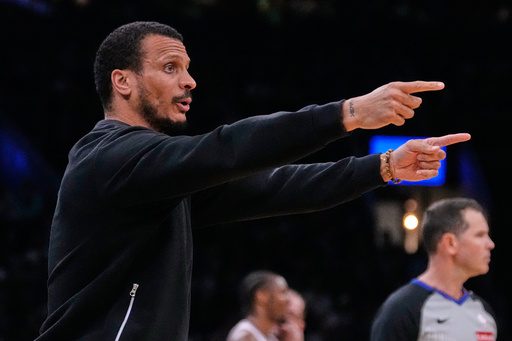
POLICY WIRE — BOSTON, USA — There’s a peculiar irony in getting something you didn’t ask for, particularly when you’d already dismissed it as inherently flawed. That’s exactly where Joe Mazzulla, head honcho of the Boston Celtics, found himself Tuesday. The man who’d openly declared in March that he didn’t need it—and in fact thought it’s a stupid award—is now the NBA’s official Coach of the Year for the 2025-26 season. Talk about a curveball.
It wasn’t some quiet, begrudging acceptance either. Mazzulla, young for the gig at 37—the youngest winner of this specific award since Phil Johnson snagged it way back in 1975, a stat confirmed by the NBA—reiterated his stance. He did it publicly, on NBC, thanking not just players but the unseen engine room of any successful outfit. He truly believes the honor belongs to a collective, a “coaching staff of the year” rather than singling out one guy. And, really, who can argue with that sentiment when you’re in charge of a juggernaut like Boston?
Because let’s face it, getting to the No. 2 seed in the Eastern Conference isn’t a one-man show. Not when you’ve got Jayson Tatum on the shelf for a chunk of the season with Achilles surgery, and not when you’re still trying to re-jigger the lineup after big names like Al Horford, Kristaps Porzingis, and Jrue Holiday have departed. It’s messy business, team building. And Mazzulla’s point isn’t just some humility play; it’s a peek into the intricate mechanics of professional sports at its highest level.
His acceptance speech wasn’t boilerplate stuff, either. It was a proper nod to the behind-the-scenes heroes, the folks whose work is rarely glamorous but absolutely critical. [QUOTE_PLACEHOLDER] Mazzulla said, listing the veritable army of quiet professionals. [QUOTE_PLACEHOLDER] It’s a refreshing take, honestly, in an era where individual branding often eclipses team effort.
And so, Mazzulla joins a pretty elite club. He’s only the fourth Celtics coach to grab the Red Auerbach Trophy—named, fittingly, after a legendary Boston bench boss—following Auerbach himself in 1965, Tom Heisohn in 1973, and Bill Fitch in 1980. Auerbach, for the record, didn’t just win a trophy; he piloted the Celtics to nine NBA championships. Nine. That includes a mind-boggling eight in a row from 1959 through 1966. Mazzulla’s got some big shoes to fill, legacy-wise, but at least he’s started on the right foot, even if he didn’t care for the footwear itself.
Of course, the powers-that-be were quick to praise. Brad Stevens, the Celtics President of Basketball Operations—and also just got Executive of the Year, for what it’s worth—summed it up neatly: “This is well deserved recognition and a testament to both Joe and his staff,” Stevens said. “With all of our unknowns entering the season, Joe did a fantastic job building and growing a team. He pours everything he has into competing at a high level, while helping players find the best versions of themselves within the framework of a team.” Detroit’s J.B. Bickerstaff came in second—again, for the second consecutive year—while San Antonio’s Mitch Johnson snagged third. The award, remember, is strictly about the regular season.
But consider this. While the NBA doles out its gilded prizes, Mazzulla’s almost reluctant embrace of individual glory resonates in places far beyond the parquet floors of American basketball. In many South Asian and Muslim-majority nations, the emphasis on communal contribution often outweighs solo accolades, especially in areas of public service or collective endeavor. Think of the intricate web of family or community elders in, say, a Pakistani village, where successful ventures are almost always attributed to a broad network of support, wisdom, and effort. A prominent Imam leading a local mosque wouldn’t necessarily accept a “Religious Leader of the Year” award without first acknowledging the hundreds of congregants, volunteers, and benefactors who truly make his mission possible. It’s that same philosophical grounding—the ‘we’ over the ‘me’—that Mazzulla is inadvertently, or perhaps quite deliberately, championing. It’s about humility, — and the acknowledgement that true leadership fosters collective success. For more on this, one might look at the subtle shifts in leadership acknowledgement over time. See: Beyond the Sidelines: Mazzulla’s Humility and the Shifting Tides of Credit in Modern Leadership.
What This Means
Mazzulla’s paradoxical award win isn’t just a feel-good sports story; it’s a sharp jab at the modern fixation on individual hero worship. Economically, in the sports world, branding often means isolating — and elevating a single figure. That’s easier to market, easier to monetize. But Mazzulla is actively pushing back against that narrative, and it actually elevates his own brand by showing a selflessness that’s becoming increasingly rare. This isn’t just about basketball strategy; it’s about the philosophy of management, leadership, and public recognition. His approach could, for lack of a better term, inspire a reconsideration of how organizations — from a multi-billion dollar sports league to a start-up — distribute praise and understand success. If the top dog consistently says, “it wasn’t just me,” it changes the internal culture dramatically. Politically, leaders in any sphere often campaign on promises of teamwork and collective good, only to then soak up all the glory when wins come. Mazzulla’s outspokenness might not shift the global political landscape, but it’s a neat little microcosm of how we define and reward achievement. And it reminds us that sometimes, the biggest statements come not from what you embrace, but what you publicly call “stupid.” The voters, a panel of 100 reporters and broadcasters, had their say during the play-in tournament; Mazzulla’s staff probably deserved a nod from them too, wouldn’t you agree?