


India’s Fuel Fixation: Price Hikes and Regional Ripples Amidst Geopolitical Jitters
POLICY WIRE — New Delhi, India — The quiet thud of official decrees often lands heaviest on the working man’s budget. While global attention remains fixed on a shaky US-Iran ceasefire—a tension cited...

POLICY WIRE — New Delhi, India — The quiet thud of official decrees often lands heaviest on the working man’s budget. While global attention remains fixed on a shaky US-Iran ceasefire—a tension cited in the original news headline context, hinting at broader energy market sensitivities—India’s state-run fuel providers have been busy with a far more domestic, yet equally impactful, endeavor. They’ve again nudged up retail prices for diesel — and petrol. It isn’t a headline grabber, maybe, but for millions across the subcontinent, it’s a cold, hard dose of reality, signaling more strained finances.
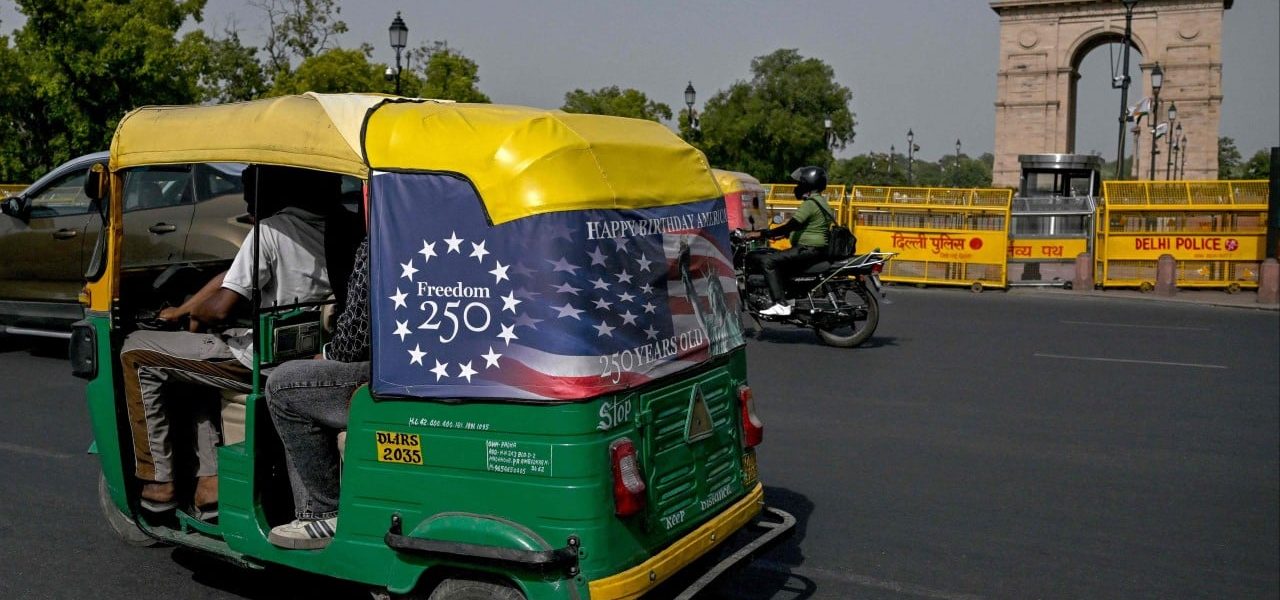
It’s the third such hike within a mere eight days, a seemingly incremental move that stitches a growing pattern. Ostensibly, these adjustments are there to help processors cut losses on discounted sales. They’re also, apparently, to control a spike in demand—a curious objective in a country where economic buoyancy is perpetually sought, and energy consumption is a key metric for that very growth. One has to wonder: exactly whose demand spike are they looking to control? Not the auto rickshaw driver’s, certainly, nor the countless small business owners whose logistics chain just got a shade pricier. It’s a tough pill to swallow for India’s aspirational middle class, a quiet economic squeeze playing out in plain sight.
The numbers don’t lie, though they can often mask the deeper narrative. Prices of both fuels rose by nearly one per cent, or less than 1 rupee, according to the official website of Indian Oil Corporation, the country’s largest fuel retailer. In the bustling capital, petrol now commands a price of 99.51 rupees (US$1.0399), while diesel fetches 92.49 rupees per litre in New Delhi. But don’t mistake New Delhi’s figures for a national benchmark. Because of local taxes—each state eager to collect its pound of flesh—prices vary across India. So, the impact felt from, say, Karnataka to Uttar Pradesh, won’t be uniform. It’s a decentralized burden on a national problem.
The state’s refiners—the government’s extended arm in the petroleum market—have been on a tightrope walk. They’re trying to manage global oil price fluctuations while simultaneously maintaining a semblance of affordability for a populace where small margins make a massive difference. But let’s be blunt: when a government entity says it’s trying to control a demand spike, it often means they’re not eager to fully subsidize what the market demands. And that inevitably means consumers pay more.
The official narrative emphasizes helping processors. But it’s easy to read between the lines, isn’t it? The energy markets, much like global diplomacy, are a complex beast, especially when the spectre of international tensions —like that US-Iran ceasefire—hangs heavy over the Persian Gulf. Even distant tremors send ripples to a nation like India, which imports the lion’s share of its crude. And these ripple effects aren’t contained within India’s borders.
📄 POLICY WIRE WHITEPAPER PUBLISHED: PAKISTAN'S NATIONAL SECURITY POLICY PRIORITIES
👉 READ BY CLICKING HEREConsider the broader South Asian context. When India, a regional economic heavyweight, experiences even minor inflationary pressure through fuel price hikes, it sets off alarm bells elsewhere. Pakistan, its neighbor to the west, constantly grapples with its own economic fragility, including severe energy import challenges and balance of payments issues. India’s energy pricing woes can provide an uncomfortable mirror image, reinforcing the economic insecurities common across the subcontinent. A stable, or unstable, Indian economy has direct implications for regional trade, labor flows, and even geopolitical positioning for its smaller neighbors. It’s why events here are watched with quiet intensity from Islamabad to Colombo. For a country like Pakistan, where an ongoing [QUOTE_PLACEHOLDER] for Pakistani expatriates in the Gulf can hit remittance inflows hard, any further economic tightening from its largest regional player adds to an already complicated picture. That’s why every twitch of India’s economic muscle matters way beyond its own frontiers.
What This Means
This trifecta of price increases signals a strategic pivot by New Delhi. It’s less about market forces freely operating and more about governmental pragmatism—perhaps a pre-emptive measure to shore up the financial health of state-run entities that might be bleeding funds through discounted sales, or simply an acknowledgement of elevated global crude costs that can’t be perpetually absorbed. The timing is important: continuous small hikes are less likely to spark widespread public outrage than one massive jump. It’s a calculated distribution of pain. Economically, these repeated hikes, however modest individually, fuel inflation, making everything from daily commutes to agricultural produce more expensive. This, in turn, disproportionately impacts low-income households and small businesses, the very engine of many local economies. It’s not just a marginal change in gasoline costs; it’s an inflationary spiral beginning to wind, silently squeezing the consumer’s wallet until it’s noticeably lighter.
Politically, it’s a tightrope walk for the ruling establishment. They’ve got to balance the imperative of sound economic management—even if that means unpopular price rises—against the ever-present specter of public discontent. But for now, they seem to prefer the steady drip of small increases, banking on the idea that public memory, often short-lived in these matters, will forget the cumulative effect of these repeated pinpricks. The energy security, or insecurity, of major developing nations like India carries considerable weight. And it’s going to weigh, heavily, on everyday lives.