


Court Couture & Commercial Calculation: Osaka’s French Open Golden Statement
POLICY WIRE — Paris, France — Another Grand Slam, sure. Another forehand winner, you bet. But here’s the thing: sometimes, the real power play isn’t even about what happens between the...

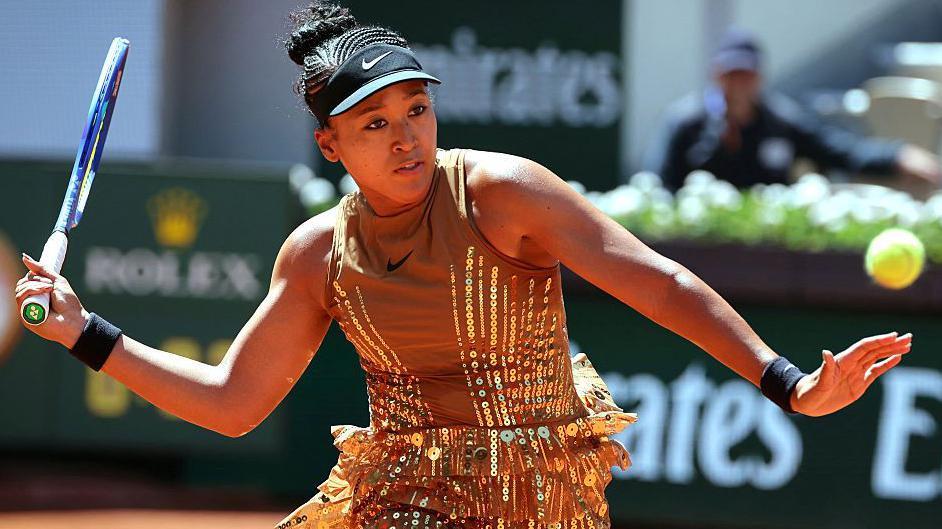
POLICY WIRE — Paris, France — Another Grand Slam, sure. Another forehand winner, you bet. But here’s the thing: sometimes, the real power play isn’t even about what happens between the lines. Sometimes, it’s about a sequined dress under a black cloak, flashing in the Parisian sun, setting tongues wagging, and inadvertently charting the course for the next generation of athlete branding. That’s precisely what Naomi Osaka did when she walked onto Court Suzanne Lenglen.
We’ve long moved past the era where athletes were simply skilled practitioners of their craft. Now, they’re global enterprises, living, breathing billboards. And Osaka? She’s mastering this art, whether critics like it or not. Her recent French Open entrance—an all-black, flowing number dramatically shed to reveal a shimmering, gold Nike dress—wasn’t just a fashion statement. It was a calculated, brilliant, and deeply modern gambit in the high-stakes game of sports commerce, making every bit as much noise as her winning serves.
This isn’t about modesty; it’s about visibility, about leveraging every possible square inch of an athlete’s presence to extend their narrative. And boy, did she extend it. “When I first saw it, I felt like I look like the Eiffel Tower at night time when it’s bright,” Osaka candidly admitted post-match, brushing aside initial worries about its reflectivity on court. It was a perfectly pitched soundbite, instantly meme-able, endlessly quotable—marketing gold, quite literally.
Because, really, these are the moments that break through the sports-page clutter. Other players—they just play tennis. But some, the savvy ones, they understand the show. They get that a global audience, constantly bombarded by digital content, needs more than just a score. They need theater. They crave a story, a talking point. And this outfit? It delivered all that in spades. Top seed Aryna Sabalenka, catching the display live, seemed to grasp it instantly. “This is sparkling. I love it. I love that she’s expressing herself — and feels confident,” Sabalenka enthused. “That’s the beauty of the fashion world, there’s space for anything and I love that she’s bringing it on court.” That endorsement alone, from a rival, is a telling nod to the influence of these carefully crafted appearances.
The sheer impact, the buzz generated, far outstripped mere sartorial praise. We’re talking about earned media, brand amplification, — and a message that echoes far beyond Paris. Think about it: a design collaboration with Kevin Germanier (who’s got serious street cred for sustainable fashion, mind you) and a custom Nike dress. This isn’t haphazard. This is big business. Stephanie Chen, VP of Brand Partnerships at Octagon Sports Management, puts it bluntly: “This isn’t just about what’s worn on court; it’s about owning the narrative, expanding the global footprint of women’s sports. The revenue streams tied to these moments? They’re becoming immense.” She’s not wrong. SportsPro Media recently estimated that global sports sponsorship spend exceeded $65 billion in 2023, with athlete endorsements forming a significant, and growing, fraction of that immense pie.
And, let’s be honest, her return to top-tier form after motherhood makes it all the more potent. Since the birth of her daughter in 2023, Osaka has surged back into the world’s top 20, reaching the semi-finals at the US Open last September. It’s a comeback narrative, bolstered by unapologetic self-expression.
📄 POLICY WIRE WHITEPAPER PUBLISHED: PAKISTAN'S NATIONAL SECURITY POLICY PRIORITIES
👉 READ BY CLICKING HEREWhat This Means
Osaka’s golden moment isn’t just fleeting glamor; it’s a window into the increasingly blurred lines between sports, entertainment, and commercial policy. Her carefully staged entrance speaks to a broader, profound shift in how modern athletes engage with their personal brands and, by extension, how global corporations strategize market penetration. These aren’t just athletes, they’re media moguls, micro-economies unto themselves.
Politically, the implications are subtle but significant. Athletes, particularly those with Osaka’s global reach and mixed heritage, are becoming powerful, albeit informal, cultural diplomats. Their choices, their aesthetics, even their subtle political leanings woven into personal statements, resonate across borders. Consider how this spectacle of gold, glitter, and unbridled expression translates to audiences in cultures where modesty or traditionalism might be more pronounced—say, across parts of South Asia or the Muslim world. The visual language of opulence, of shimmering gold, though rooted in different cultural contexts (think elaborate bridal wear or intricate jewelry design), still holds a universal appeal, communicating status and aspiration in ways that transcend language. And the French Open, always a crucible for tradition versus modernity, provides the perfect backdrop.
Economically, her choice reflects a savvy understanding of audience engagement in a fragmented digital landscape. It’s about virality. It’s about content generation beyond the sport itself. Brands aren’t just looking for a logo on a jersey anymore; they want a story, an influencer, someone who can generate eyeballs and emotion outside the narrow confines of an athletic competition. For policy makers and sports federations, this growing influence necessitates new considerations: safeguarding athlete authenticity against commercial exploitation, ensuring fair labor practices in sportswear manufacturing, and grappling with the growing power of individual athletes to dictate terms. The ball, quite frankly, is in their court. But as Osaka so deftly demonstrated, sometimes, the game’s played with something much shinier than a tennis ball.