


Mecca’s Human Tide: Hajj Pilgrims Converge, a Fragile Truce in a Region on Edge
POLICY WIRE — Mecca, Saudi Arabia — Every year, the ancient rhythms of faith assert themselves, pulling millions towards Islam’s holiest sites. But this season, as the Hajj commences, those rhythms...

POLICY WIRE — Mecca, Saudi Arabia — Every year, the ancient rhythms of faith assert themselves, pulling millions towards Islam’s holiest sites. But this season, as the Hajj commences, those rhythms pulse against a backdrop of chilling geopolitical static. Here in Mecca, a vast human tide—over 1.5 million strong, and counting—surges through holy precincts, their singular purpose briefly eclipsing the region’s simmering resentments, its ongoing proxy skirmishes, and the not-so-distant rumble of Iranian influence operations. It’s a miracle of logistics, frankly, — and a high-stakes tightrope walk for Riyadh.
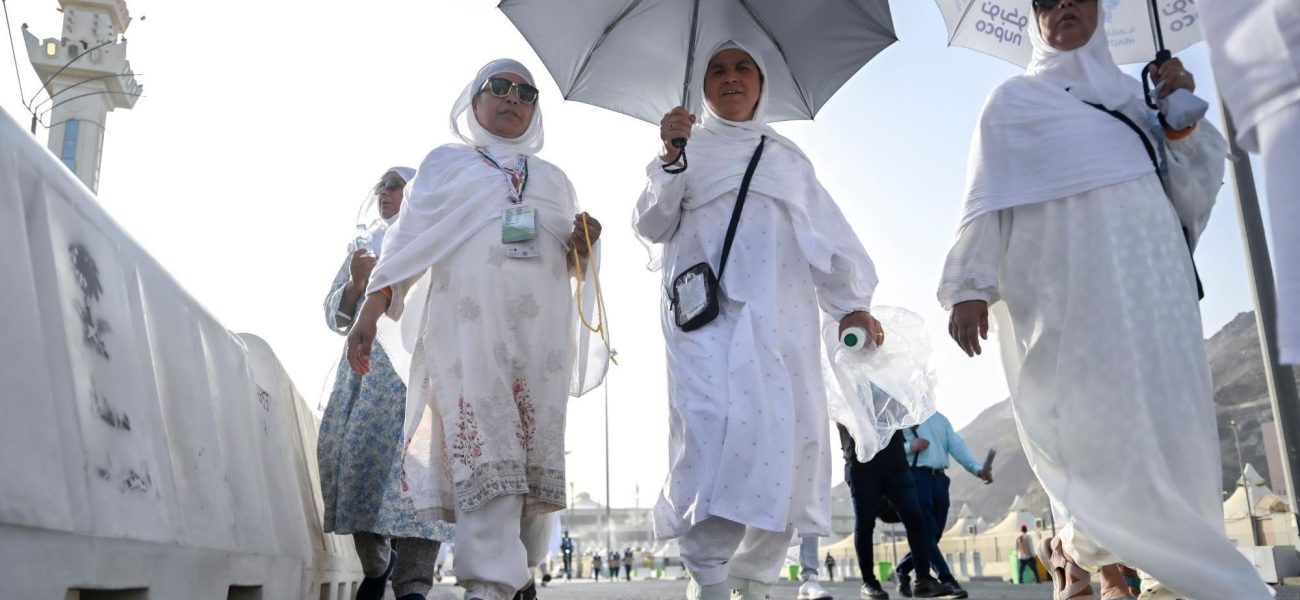
You see them everywhere: faces etched with reverence, speaking dozens of languages, draped in white. They’re a living, breathing testament to a faith that transcends borders, ideologies, and the ever-present threat of a wider conflict in the Gulf. For a few sacred days, the Kaaba stands as a magnet, drawing devotees away from a world teetering on a precarious edge. Don’t underestimate the profound significance of this moment, its inherent, almost stubborn, insistence on unity amidst discord.
The sheer scale is dizzying. According to official estimates from the Saudi Ministry of Hajj and Umrah, a staggering 1,621,048 international pilgrims had arrived by Friday evening alone, joining countless domestic worshipers. It’s a human ocean, navigating an intricate network of pathways, services, and security measures—all designed to facilitate one of the world’s largest annual spiritual gatherings. And let’s be clear: this isn’t some simple village fair. It’s an urban marvel, reborn every year to accommodate a temporary mega-city of faith.
But the spiritual quietude of the Hajj is never truly insulated from earthly clamor. Concerns over regional instability, particularly the volatile dance between Saudi Arabia and Iran, hang in the air like an unspoken prayer. “We have spared no expense to ensure the safety and sanctity of every pilgrim’s journey,” declared a spokesperson for the Saudi Ministry of Interior, speaking under condition of anonymity to a pool of international journalists. “The Kingdom’s priority remains the secure — and unimpeded performance of this blessed rite. Regional politics, as significant as they’re, recede during these sacred days; our focus is singularly on God’s guests.” It’s a powerful statement, yes, but also a stark reminder that regional politics aren’t just out there; they’re woven into the fabric of this event.
This year’s Hajj occurs while Iran and Israel are still trading blows (albeit through proxies or in carefully calibrated retaliation cycles), with Yemen’s grinding conflict continuing to bleed into the background, and general unease gripping Gulf shipping lanes. Yet, millions came anyway. Because faith, for many, is stronger than fear. It’s also a powerful affirmation of Riyadh’s religious soft power—a role the Kingdom guards jealously, perceiving any challenge to its custodianship as a direct threat.
Pilgrims from across the Muslim world—including a substantial contingent from Pakistan, whose faithful often face immense financial and logistical hurdles to make the journey—underscore the global dimension of the Hajj. For many Pakistani pilgrims, this isn’t just a trip; it’s the culmination of a lifelong dream, funded by years of saving, often at great personal sacrifice. Their presence, a quiet assertion of religious freedom and shared belief, stands in stark contrast to the political divisions that sometimes rend the OIC (Organisation of Islamic Cooperation) nations.
Dr. Tariq Al-Hashimi, a geopolitical analyst specializing in Gulf affairs, noted the subtle messages embedded in this mass convergence. “The Saudis are performing a masterful balancing act. They’re projecting competence and stability on the world stage—specifically the Muslim world stage—even as their region faces severe friction points. The Hajj effectively functions as a massive, live-action demonstration of their capacity for orderly governance under pressure,” he observed, during a phone interview. “But don’t mistake peace here for resolution elsewhere. These millions of pilgrims will eventually return home, bringing their spiritual fulfillment back to often-unstable homelands. And the underlying tensions, they’ll still be there, waiting.”
📄 POLICY WIRE WHITEPAPER PUBLISHED: PAKISTAN'S NATIONAL SECURITY POLICY PRIORITIES
👉 READ BY CLICKING HEREWhat This Means
The successful and orderly execution of the Hajj is far more than just a religious event; it’s a strategic triumph for Saudi Arabia. Politically, it reaffirms Riyadh’s unparalleled role as the custodian of Islam’s holiest sites, a claim that garners immense legitimacy and prestige across the Muslim world. It acts as a powerful counter-narrative to those—like Tehran—who would challenge its leadership. Managing such an influx amidst regional volatility showcases state capacity, directly bolstering the Saudi monarchy’s credibility and stability claims.
Economically, the Hajj is a gargantuan revenue stream and a significant component of Saudi Arabia’s Vision 2030 diversification efforts, which aim to lessen reliance on oil. Millions of pilgrims translate to billions of dollars injected into the hospitality, retail, and transportation sectors. This annual economic boost helps fuel infrastructure development in Mecca and Medina, further solidifying the Kingdom’s economic position and its ability to continually upgrade pilgrim facilities. But it also means that any disruption, from internal issues to external conflicts, could have swift and severe economic repercussions, something Riyadh guards against with obsessive fervor.
Ultimately, the Hajj provides a brief, potent image of pan-Islamic unity — and resilience. For the broader Muslim world, it’s a profound reminder of shared heritage and devotion, offering a momentary respite from sectarian divisions and political grievances. It shows that even when powers like Iran and Saudi Arabia are locked in cold-war style maneuvering, the foundational elements of Islam—its rituals, its pilgrimages, its universality—continue to draw its adherents, undeterred by the noise of human conflict. For deeper analysis on how such intricate regional dynamics play out in unexpected arenas, consider Israel’s ongoing struggle with conscription and its wider social implications, which mirror these deep-seated tensions in a different cultural context.