

The President’s Phantom Threat: Kenya’s Elite Guard Under the Microscope After Chilling Close Call
POLICY WIRE — Nairobi, Kenya — It wasn’t a bullet, nor was it a bomb. But a moment of unsettling proximity—a simple man, a simple message, but the terrifying implications—has just triggered a...

POLICY WIRE — Nairobi, Kenya — It wasn’t a bullet, nor was it a bomb. But a moment of unsettling proximity—a simple man, a simple message, but the terrifying implications—has just triggered a wholesale purge within President William Ruto’s personal protection unit. They’re calling it a “security adjustment,” but in the hushed corridors of State House, everyone knows it was a deeply embarrassing, potentially catastrophic failure.
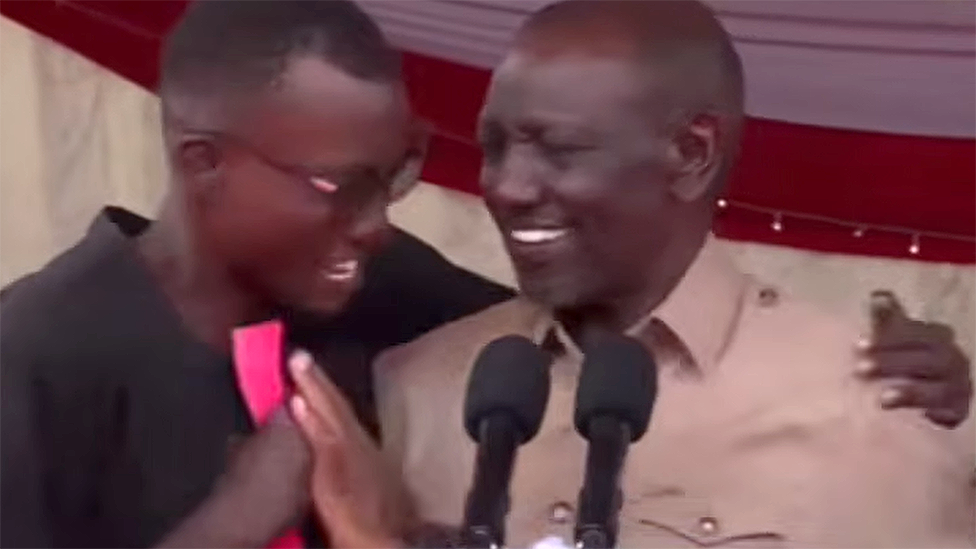
Picture this: a provincial visit, the president glad-handing the masses, and a seemingly benign figure, holding aloft a crudely written protest sign. Harmless enough, right? Except this fellow wasn’t supposed to be *that* close. Not with an improvised device in his bag, a device later confirmed to be inert, thank goodness, but indistinguishable from a very real threat in those first agonizing moments. That’s the sort of hiccup that keeps security chiefs staring at the ceiling in cold sweats—a stark reminder of how perilously thin the line is between state spectacle and outright calamity. This wasn’t some back-alley scuffle; it was a near-miss that reportedly cut within feet of the Commander-in-Chief.
And because of it, senior officers are now looking for new jobs, while the rank-and-file are undergoing what some describe as a ‘re-sensitization’ regimen. It’s an aggressive reshuffle—one that implies more than just procedural lapses, doesn’t it? It suggests a deeper complacency, an insidious rot perhaps, that no amount of protocol papering-over can truly hide. You don’t overhaul a president’s close protection detail for a mere logistical snafu; this means trust has evaporated faster than dew on a desert morning.
“There are times when bureaucratic inefficiency becomes an existential risk,” offered Chief Inspector Benji Kiprop of the National Police Service, speaking off the record but with palpable intensity. “The message from the top has been unambiguous: we either secure the leadership, or we lose everything. We’re talking about fundamental principles here – integrity, readiness. They aren’t optional.” Kiprop alluded to systemic failures—something he said went far beyond individual negligence, touching on training, intelligence sharing, and even procurement of surveillance tech. But he didn’t elaborate on those broader failures, not on the record anyway.
But then, Kenya isn’t alone in this delicate dance of executive protection — and public engagement. Across the Muslim world, from Pakistan’s highly militarized capital to the crowded precincts of Jakarta, leaders face a constant barrage of both overt and covert threats. And their security apparatuses, often paramilitary in nature, regularly contend with balancing accessibility—a political necessity for legitimacy—with the hard reality of asymmetric warfare and internal dissent. This particular incident, minor as it appeared externally, sends tremors far beyond Nairobi. It highlights a common vulnerability: the moment a leader engages directly with the populace, security transforms from an exercise in control to a high-stakes improvisation. Data suggests that in emerging democracies, physical attacks or assassination attempts against heads of state carry a significantly higher probability of occurrence compared to established Western nations, according to a 2021 study by the Uppsala Conflict Data Program (UCDP), citing figures up to 5 times greater.
But why now? Because the stakes in East Africa feel particularly acute. Kenya, often viewed as an island of stability in a tempestuous region, carries immense weight as a political and economic hub. And any sign of internal shakiness, especially concerning presidential safety, acts like a homing beacon for both legitimate concern and opportunistic mischief-making. The perception of control is often just as important as control itself.
📄 POLICY WIRE WHITEPAPER PUBLISHED: PAKISTAN'S NATIONAL SECURITY POLICY PRIORITIES
👉 READ BY CLICKING HERE“This shake-up isn’t just about personnel,” Dr. Akil Khan, a noted political analyst specializing in East African security matters, observed during a recent Policy Wire forum. “It’s about sending a clear message: that the state remains potent, responsive. Anything less breeds uncertainty—a vacuum others might be tempted to fill. Especially when economic frustrations run high — and extremist groups cast a long shadow. This isn’t just about President Ruto; it’s about Kenya’s standing. It impacts investor confidence, tourism, everything.” His tone was grave, conveying the subtle but profound anxieties bubbling just beneath the surface of official pronouncements.
And it’s not simply an internal affair. Neighbors watch. Regional rivals observe. Even global powers, often quietly supporting African democracies, tally up these perceived cracks in the veneer of order. A security breach at this level isn’t just a local news story; it’s an intelligence brief passed around in half a dozen foreign capitals.
What This Means
The implications of this silent purge extend far beyond individual careers. Politically, it’s a direct attempt to reassert dominance and discipline within Kenya’s security apparatus, perhaps to inoculate the regime against accusations of laxity. It could also be a strategic move to replace figures whose loyalties might be questionable, solidifying Ruto’s power base. Economically, while an isolated incident, prolonged perceptions of instability or an incapable security state could subtly deter foreign direct investment and slow the flow of crucial tourist dollars—money the nation sorely needs as it grapples with a spiraling debt burden and youth unemployment.
There’s also a less tangible but equally significant impact: national confidence. Kenyans, like people anywhere, want to believe their leaders are safe, their nation secure. When that belief is even slightly shaken, it corrodes public trust. And trust, once fractured, is not easily mended, a fact many politicians often learn too late. This ‘adjustment’ serves as a brutal public performance of competence, designed to staunch the bleeding of that essential confidence. But only time will tell if it works, or if the underlying vulnerabilities remain, lurking just out of sight.
📖 GET YOUR FREE COPY NOW OF POLICY WIRE DIGITAL MAGAZINE JULY 2026 EDITION
👉 READ & DOWNLOAD FREE MAGAZINE