


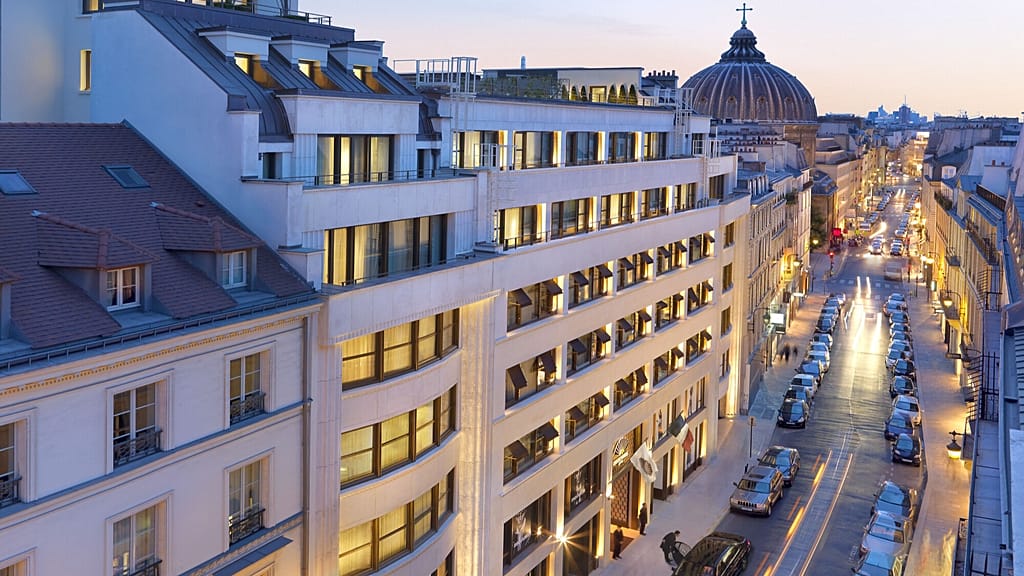
The Cracks in Paris’s Gilded Cage: Bureaucracy Strips Three Grand Hotels of ‘Palace’ Status
POLICY WIRE — Paris, France — The whisper campaign had been circulating for months, but when the official decree finally landed, it was less a seismic tremor and more a quiet, meticulous unmaking of...

POLICY WIRE — Paris, France — The whisper campaign had been circulating for months, but when the official decree finally landed, it was less a seismic tremor and more a quiet, meticulous unmaking of myth. Imagine, if you will, the audacity of a government agency — not some rival corporate titan, but the very stewards of national image — deciding your century-old, marble-clad establishment simply isn’t… *palatial* enough anymore. That’s the cold reality now for three of France’s most celebrated luxury hotels, abruptly stripped of their coveted ‘Palace’ distinction by the country’s stringent tourism authorities.
It isn’t about failing basic health codes or falling into disrepair. Oh, no. This is far more nuanced, far more French. This bespoke, government-issued label sits above even the humble five-star rating. It’s supposed to signify an almost impossible standard of impeccable service, unparalleled location, and unique heritage, a kind of UNESCO listing for places that serve very expensive champagne. And now, for these three, that golden seal of approval? Gone. It’s a quiet demotion, a subtle yet savage jab at their very identities.
“The ‘Palace’ designation isn’t a mere marketing trinket; it’s a commitment, a promise of French excellence upheld by rigorous, uncompromising standards,” stated Amélie Dubois, a spokesperson for France’s Ministry of Tourism, in a remarkably cool official communiqué. “We won’t compromise on what distinguishes French hospitality on the global stage. If the experience falls short of extraordinary, the label must reflect that.” It sounds clinical, doesn’t it? But behind that bureaucratic neatness lies a fierce defense of brand France, a defense many didn’t think necessary for institutions perceived as untouchable.
And then there’s the broader context. Paris has always been the jewel in the crown of global luxury travel. But the competition, it’s gotten brutal. You’ve got mega-rich patrons from the Gulf, from burgeoning economies across Asia, all with specific demands, changing tastes. They don’t just want gilded decor; they want privacy, bespoke digital integration, culinary innovation that often challenges the traditional French stalwarts. This isn’t just about French tourists. It’s never just about French tourists.
“Maintaining a ‘Palace’ involves an astronomical investment in constant renovation, staff training, and the sheer alchemy of anticipating every guest’s unspoken need,” explained Henri Moreau, head of the French Luxury Hospitality Association, sounding weary over the phone. “The margins, they’re thin even for these behemoths. Losing this status impacts their pricing power, their global perception, and quite frankly, the morale of hundreds of staff members. It’s a wake-up call for the entire sector.”
The implications ripple out. You see, the Gulf states, particularly the UAE and Qatar, have significant stakes in global luxury hospitality, both as investors and as sources of ultra-high-net-worth clientele. Imagine what this bureaucratic sting tells an Emirati investor eyeing potential acquisitions or partnerships in Europe. It suggests an environment where legacy alone isn’t enough; where government oversight, for better or worse, holds immense power over perceived value. It certainly highlights the complex and sometimes maddening bureaucracy of France, a reality that global enterprises often wrestle with. That’s not always an easy sell for migrants or investors trying to navigate international complexities, is it?
📄 POLICY WIRE WHITEPAPER PUBLISHED: PAKISTAN'S NATIONAL SECURITY POLICY PRIORITIES
👉 READ BY CLICKING HEREWhat This Means
The stripping of ‘Palace’ status from these establishments—even if the individual hotels remain unnamed in most reports to avoid specific defamation, their reputations are already tarnished by association—is a stark reminder of France’s zealous guardianship of its national image. It’s less a commercial judgment than a cultural one, an assertion of governmental authority over the perceived quality of its luxury goods and services. For tourists from emerging markets like Pakistan, who increasingly aspire to experience—and pay for—the pinnacle of European luxury, this official recognition matters. It’s a tangible symbol of genuine exclusivity, distinguishing the truly elite from merely expensive. This decision might cause potential patrons and investors, particularly those from the Muslim world who often view Parisian luxury as the gold standard, to scrutinize other European and even Asian contenders more closely. Because why pay top dollar for a ‘Palace’ that isn’t really a ‘Palace’?
Economically, while direct revenue losses from just three hotels might not tank France’s formidable tourism sector (which generates over 8% of the nation’s GDP annually, according to official government figures), the reputational dent could be far more corrosive. It challenges the assumption of effortless perfection in French hospitality, forcing others in the hyper-competitive luxury bracket to re-evaluate their own operations. But it also presents a risky gambit for the remaining palaces. They’re under even more scrutiny, even more pressure. The bureaucratic meticulousness might prevent some from ever qualifying, regardless of expenditure. But for the ones who retain the crown, their luster, one imagines, will now shine even brighter, burnished by the sacrifice of their fallen comrades. It’s a high-stakes, distinctly Gallic power play, telling the world that not all that glitters in Paris is, officially speaking, solid gold. Not anymore, anyway.
📖 GET YOUR FREE COPY NOW OF POLICY WIRE DIGITAL MAGAZINE JULY 2026 EDITION
👉 READ & DOWNLOAD FREE MAGAZINE