

San Antonio’s ‘Must-Win’ Meltdown: Wembanyama’s Lone Stand as Playoff Dreams Flicker
POLICY WIRE — San Antonio, USA — When the buzzer sounded on Game 4 of the Western Conference Finals, it wasn’t the final score that truly spoke volumes; it was the quiet, almost resigned...

POLICY WIRE — San Antonio, USA — When the buzzer sounded on Game 4 of the Western Conference Finals, it wasn’t the final score that truly spoke volumes; it was the quiet, almost resigned desperation settling over the Alamodome, a sentiment far heavier than any stat sheet could convey. This wasn’t just a loss; it felt like an epitaph for San Antonio’s season, leaving the Spurs teetering on the precipice of elimination after a brutal beatdown by the Oklahoma City Thunder. Their championship aspirations now hang by a thread so thin you’d need a microscope to find it. But here we’re—a basketball empire grappling with a potentially swift, humiliating collapse.
It’s not that the Spurs didn’t show up. They did. Victor Wembanyama, the phenom, tried. He poured in 27 points, snatched 6 rebounds, and swatted away 3 shots in 24 minutes, a truly remarkable individual effort. And still, it was nowhere near enough. That’s the cold, hard calculus of professional basketball: sometimes, even otherworldly talent can’t plug all the leaks when the dam’s crumbling all around you. The Thunder, conversely, looked like a well-oiled machine, dismantling San Antonio with an unnerving efficiency that suggested they weren’t just playing; they were asserting a new dominance.
“We didn’t play our best brand of basketball tonight, and that’s on all of us,” Head Coach Gregg Popovich grimly told reporters after the game, his usual acerbic wit replaced by a quiet weariness. “You’ve gotta earn it, every possession. We didn’t earn enough tonight. That’s it.” It was a rare, unvarnished admission of strategic failure. Because let’s face it, they’ve been outmaneuvered, outhustled, — and often, out-thought. Oklahoma City controlled nearly every statistical category in Game 4, extending its series lead to a daunting 3-1.
For the Spurs, this series is now a historical uphill battle, almost certainly unwinnable. History isn’t on their side, not by a long shot. League statisticians point to an unforgiving reality: teams down 3-1 in conference finals have clawed their way back to win the series in a mere 7% of instances. Only one team, the legendary 1968-69 Boston Celtics, has ever achieved that particular miracle. But this isn’t 1969, — and frankly, these aren’t those Celtics.
📄 POLICY WIRE WHITEPAPER PUBLISHED: PAKISTAN'S NATIONAL SECURITY POLICY PRIORITIES
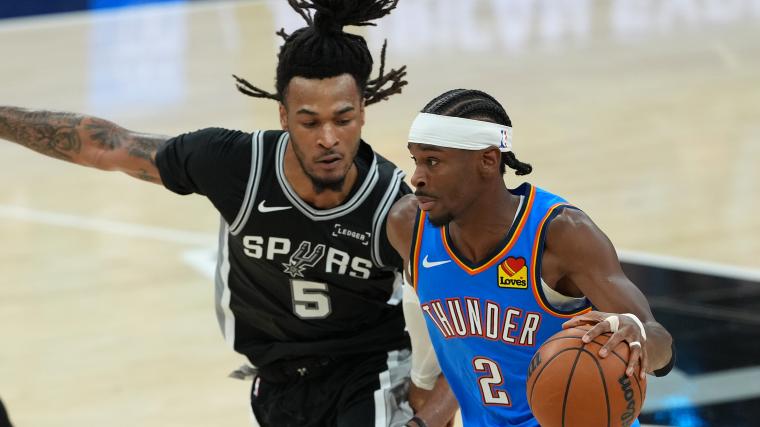
👉 READ BY CLICKING HEREOklahoma City’s strategy, seemingly simple, has proven devastatingly effective. They’ve exploited the Spurs’ defensive gaps, particularly inside the arc, scoring almost at will within 15 feet. Shai Gilgeous-Alexander led the Thunder charge with his customary coolness, delivering 16 points and 6 assists, making the game look easier than it had any right to be. And the Thunder’s coach, Mark Daigneault, maintains a cautious optimism, knowing full well that no victory is truly secure until the final buzzer of the final game. “We’re pleased with the result, absolutely,” Daigneault stated, though his tone was more businesslike than triumphant. “But this isn’t over. We respect what San Antonio can do, — and we’ll prepare for Game 5 like it’s a new series. It’s the only way to operate.”
Even in Lahore’s bustling late-night cafes, where allegiance to Manchester United or Real Madrid often overshadows American basketball, the seismic shifts in the NBA’s hierarchy—particularly the ascendancy of raw talent like Wembanyama and his team’s unexpected stumbling—command a curious sort of attention. It’s less about the scores — and more about the narrative, a universal drama of ambition and its discontents. Don’t these stories of triumph and despair echo those grand, sweeping sagas of political will and public discontent that animate the news cycle across the subcontinent? It’s the human element, the battle against overwhelming odds, that transcends cultural borders.
What This Means
This 3-1 deficit means more than just a potential playoff exit; it has profound ripples. Economically, a shorter series translates to fewer high-revenue home games, impacting everything from arena concession sales to local hospitality. San Antonio thrives on its Spurs identity, and a premature end to a promising postseason dampens community morale—a subtle but potent economic indicator. Think of how fan engagement, sponsorships, — and merchandise sales might plateau. For a team built around a generational talent like Wembanyama, every playoff appearance is not just about sports; it’s a strategic investment in the city’s brand and, frankly, the league’s global reach. Failure to capitalize on this hype cycle, even if expected given the team’s youth, still represents a missed opportunity for further economic injection into a mid-sized market that cherishes its team. it pushes the conversations about team construction and future spending further into the uncomfortable spotlight. Will the Spurs double down on aggressive moves this offseason, or will ownership opt for a more conservative, organic growth model? These are boardroom debates disguised as locker-room reflections, with significant financial implications. The psychological weight on Wembanyama, barely out of his teens, to carry an entire franchise alone, also demands serious attention. That’s a burden that few athletes—or leaders, for that matter—have successfully managed to shoulder in modern sports history.
📖 GET YOUR FREE COPY NOW OF POLICY WIRE DIGITAL MAGAZINE JULY 2026 EDITION
👉 READ & DOWNLOAD FREE MAGAZINE