

Belfast Activist’s Homecoming: A Fresh Squall in Gaza’s Unending Humanitarian Saga
POLICY WIRE — Belfast, Northern Ireland — They say old habits die hard. Or, in this particular corner of the world, perhaps they just lie dormant, waiting for the right moment to flare up again. For...

POLICY WIRE — Belfast, Northern Ireland — They say old habits die hard. Or, in this particular corner of the world, perhaps they just lie dormant, waiting for the right moment to flare up again. For the seasoned observers of geopolitics, the return of a certain Belfast native after yet another ejection from the Middle East isn’t just a local human interest piece. It’s a fresh gust stirring the murky waters of international diplomacy, humanitarianism, and the stubborn resistance movement against a blockade that just won’t fade into history.
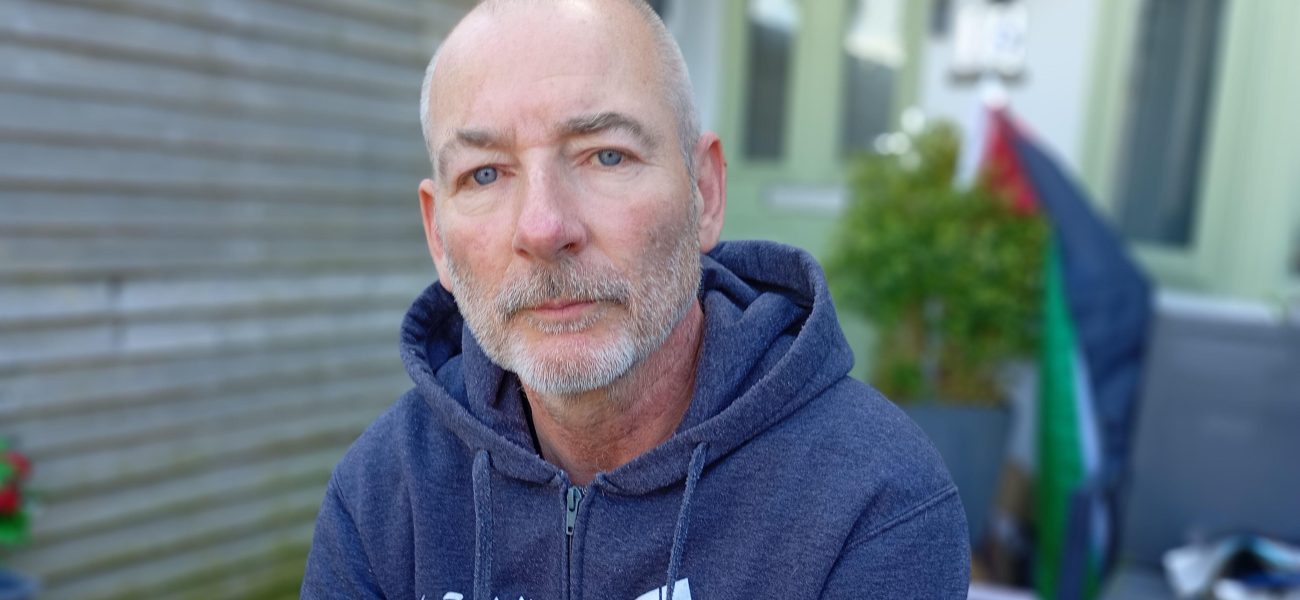
James Kelly, a familiar face to anyone tracking Gaza’s long, slow suffocation, landed back in Belfast last week, an outcome perhaps as predictable as a winter rain in Ulster. His deportation, following attempts to join a humanitarian flotilla aimed at breaking the decade-long siege on Gaza, marks less an ending and more a grim, episodic repeat. But it’s never just about one person. His re-emergence spotlights the relentless, often unglamorous, grind of activists chipping away at a wall of international indifference, a blockade that still defines daily life for millions.
It’s worth remembering, if anyone needed reminding, that Gaza isn’t some historical footnote. It’s a teeming, suffocated strip of land where, according to the United Nations Office for the Coordination of Humanitarian Affairs (OCHA), over 80% of the population relies on humanitarian assistance. Eighty percent. That figure, straight from UN reports, isn’t a suggestion; it’s a cold, hard fact of collective punishment, and the driving force behind these often-quixotic, always-fraught maritime expeditions.
Kelly, in his quiet way, represents a broader, cross-border alliance of conscience. And that’s what makes him — and others like him — a persistent thorn. These aren’t isolated incidents. They’re deliberate challenges to a geopolitical status quo, designed to force governments and international bodies to look, really look, at what’s happening. Many, including those across the Muslim world from Islamabad to Istanbul, see these activists as modern-day crusaders for justice, not mere provocateurs. This is how these actions reverberate, becoming touchstones for widespread public sentiment.
“We can’t simply stand by and watch human rights violated day after day,” stated Carál Ní Chuilín, a prominent Sinn Féin MLA, speaking from Stormont. “Mr. Kelly, — and many others, are trying to ensure that Gaza isn’t forgotten. Their actions, though perhaps unconventional, compel us to confront our shared responsibility.” It’s a message that resonates far beyond Irish shores, finding echo in speeches delivered in parliamentary sessions from Ankara to Kuala Lumpur.
📄 POLICY WIRE WHITEPAPER PUBLISHED: PAKISTAN'S NATIONAL SECURITY POLICY PRIORITIES
👉 READ BY CLICKING HEREBut governments, predictably, remain uncharmed. “States have an inherent right to control their borders and manage who enters their sovereign territory,” a UK Foreign Office spokesperson told Policy Wire, requesting anonymity to speak on matters of ongoing diplomatic sensitivity. “We expect all our citizens to abide by the laws of the countries they visit.” Diplomatic speak for: we understand your feelings, but don’t expect us to intervene forcefully on your behalf in a mess you arguably instigated. It’s the classic tightrope act between principle and practicality, between human rights and realpolitik.
What This Means
Kelly’s latest chapter isn’t just a personal story; it’s a minor tremor in the broader, always-shifting landscape of Mideast politics. His deportation—and others like it—signals the enduring potency of the Gaza blockade as both a policy and a symbol. It demonstrates that for all the regional rapprochements and grand bargain discussions, the core human rights issues underpinning the Israeli-Palestinian conflict remain a gaping wound, attracting periodic intervention from civil society. Because governments aren’t always keen to lead on these things, you see.
Economically, such flotillas, while rarely succeeding in breaking the siege in any material sense, serve to inflict a different kind of cost: reputational. They force difficult conversations. They remind global trade partners, investors, and policymakers that humanitarian concerns still exist, despite attempts to normalize relations. These symbolic acts apply a subtle, constant pressure on nations to either justify or alleviate the blockade. And this ongoing international scrutiny, amplified by groups who’ve built robust networks across continents — including deeply engaged communities in Pakistan and across South Asia who track these efforts with unwavering attention — creates a long-term diplomatic burden.
The consistent defiance embodied by activists like Kelly forces governments, even those keen to avoid controversy, to periodically acknowledge a problem they might prefer to ignore. It’s an inconvenient truth, ferried across choppy seas, that eventually makes its way to the quiet, mahogany tables of power. It doesn’t change things overnight. Never does. But it keeps the fire smoldering.
📖 GET YOUR FREE COPY NOW OF POLICY WIRE DIGITAL MAGAZINE JULY 2026 EDITION
👉 READ & DOWNLOAD FREE MAGAZINE