

Munich’s Midas Touch: Bayern’s Double-Edged Triumph in a World Demanding More Than Gold
POLICY WIRE — Munich, Germany — The champagne’s gone flat, the celebratory banners are furled. Another season ends, and Bayern Munich, that seemingly ceaseless Bavarian juggernaut, has added two more...

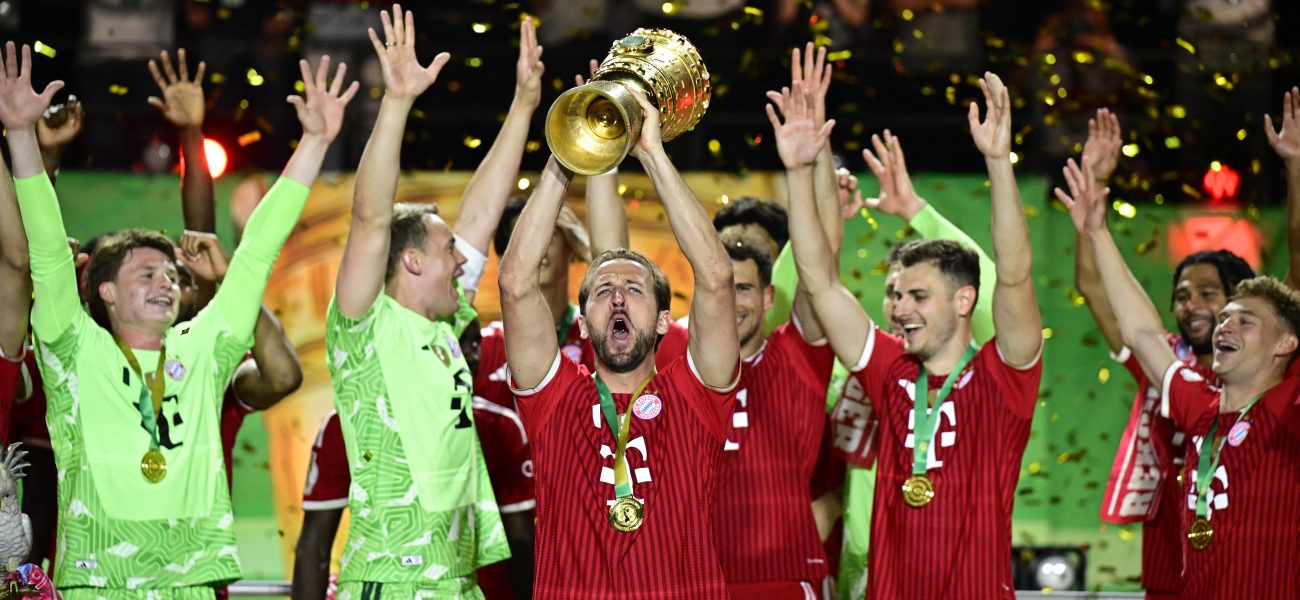
POLICY WIRE — Munich, Germany — The champagne’s gone flat, the celebratory banners are furled. Another season ends, and Bayern Munich, that seemingly ceaseless Bavarian juggernaut, has added two more domestic titles—the Bundesliga and the DFB-Pokal—to its already overflowing trophy cabinet. Most clubs, hell, *any* club in Europe would give a limb for such spoils. But in Munich, amongst the steely-eyed administrators and the demanding faithful, a quiet discontent often lurks, a faint whisper that ‘good enough’ simply isn’t Bayern’s standard.
It’s an odd position to be in, isn’t it? To win everything local, to absolutely dominate your own turf, — and still feel the pang of an unfulfilled quest. That’s the gilded cage Bayern inhabits. This isn’t just about football scores; it’s about a club operating as a powerful economic entity and a projection of national sporting prestige.
Vincent Kompany, the Belgian strategist brought in to mold this beast, managed to quell the occasional rumblings of dissent with a potent blend of attacking prowess and renewed defensive grit. But European nights—ah, those hallowed European nights—remain the ultimate benchmark. Bayern, for all its might, stumbled there. “We laid bricks this season, firm foundations for something bigger,” Kompany was reportedly overheard telling confidantes, acknowledging the sting of continental exit while emphasizing a longer game. “The Champions League certainly tested our resolve, but true champions aren’t built in a single season. We’re on a trajectory—a hell of a trajectory.”
And yet, this particular club signed Harry Kane not merely to rack up Bundesliga goals, which he did with an almost robotic efficiency, setting personal bests and pulverizing records. They signed him to conquer Europe. Kane himself doesn’t mince words on the subject. “You come here to win everything,” he said in a recent, somewhat curt, post-match interview. “It’s a club that *demands* it. And yeah, I’ve hit some milestones personally, but until that big one—that European Cup—is in our hands, there’s always going to be an itch. You don’t sign up for less.” That itch, for both player — and club, is very real.
Individually, it was quite the show. Kane, naturally, was a goal machine. Michael Olise flashed moments of absolute brilliance, hinting at future stardom. Joshua Kimmich and Dayot Upamecano, too, shrugged off earlier criticisms to deliver commanding performances when it counted. But despite the domestic hardware and individual heroics, the squad frequently felt incomplete, often battling a frustrating wave of injuries and occasional defensive lapses that cost them dear on the grandest stage. It leaves fans pondering the ‘what ifs’ – a classic supporter’s torment.
📄 POLICY WIRE WHITEPAPER PUBLISHED: PAKISTAN'S NATIONAL SECURITY POLICY PRIORITIES
👉 READ BY CLICKING HEREBut let’s be honest, few clubs enjoy Bayern’s financial heft. Bayern Munich reported a staggering turnover of €792 million for the 2022/23 season, according to the Deloitte Football Money League, consistently placing them among the global elite in terms of sheer economic power. This fiscal muscle allows them to attract and retain top-tier talent, maintain world-class infrastructure, and ultimately, perpetuate their cycle of success. Their dominance isn’t just about sporting acumen; it’s an economic behemoth rolling through European football.
Their reach, stretches far beyond Bavaria. Bayern’s brand resonates with millions across Asia, Africa, — and the Middle East, becoming a cultural touchstone. In South Asian nations, for instance, where football often competes with the established religion of cricket, clubs like Bayern cultivate vast fan bases. It’s not simply about German football; it’s about a global commercial enterprise, offering a slice of European glamour to distant shores. These fans, many in places like Pakistan, consume the sport voraciously—a testament to the ever-expanding influence of European football as both entertainment and soft power. This phenomenon speaks to the global commercial calculus that shapes modern sport, from European football giants to cricket dynasties in the subcontinent.
What This Means
Bayern Munich’s season, far from being a simple tale of triumphs, offers a nuanced snapshot of modern football’s political and economic currents. Domestically, their continued dominance reinforces Germany’s position as a footballing powerhouse, but the lingering taste of European defeat means Germany’s flagship club isn’t quite the undisputed European titan it strives to be. It highlights the growing disparity in expectations between national and continental success, especially for institutions with Bayern’s gravitas and fiscal might. Economically, this relentless pursuit of continental glory isn’t just about trophies; it’s about maintaining brand value, attracting sponsorships, and competing in the high-stakes poker game for elite talent. Political implications emerge in the projection of German sporting excellence, which serves as a subtle, yet potent, form of national soft power on the global stage. Anything less than a treble, it seems, isn’t just a sporting disappointment—it’s a slight dent in an otherwise polished national image.
📖 GET YOUR FREE COPY NOW OF POLICY WIRE DIGITAL MAGAZINE JULY 2026 EDITION
👉 READ & DOWNLOAD FREE MAGAZINE