


Shadow of the Oreshnik: Ukraine Braces for Moscow’s Unseen Strategic Threat
POLICY WIRE — KYIV, Ukraine — Sometimes, the quiet threat resonates louder than a battlefield explosion. This week, President Volodymyr Zelensky didn’t just mention another Russian rocket — he...

POLICY WIRE — KYIV, Ukraine — Sometimes, the quiet threat resonates louder than a battlefield explosion. This week, President Volodymyr Zelensky didn’t just mention another Russian rocket — he name-dropped the Oreshnik, a designation whispered with a particular dread. It’s not about immediate carnage, not entirely. It’s about what such a weapon implies, what it shifts in the terrifying, cold calculus of protracted conflict. This isn’t just about Ukraine; it’s a chilling footnote in a global narrative that frankly, none of us needed.
Because, let’s be honest, we’re all a bit fatigued by the grim litany of missiles. But the Oreshnik isn’t your garden-variety artillery shell. We’re talking about a rumored intercontinental ballistic missile, or something darn close to it, purportedly capable of delivering multiple warheads. Suddenly, the tactical shifts into the strategic. It’s a message, wrapped in steel and propellant, meant to pierce far beyond the immediate target zone, designed to make capitals—and stock markets—wobble.
Kyiv isn’t new to this particular dance with dread. They’ve endured sustained bombardments, they’ve seen cities razed. But a missile like the Oreshnik—if Moscow actually fields it en masse, or even implies it might—that’s a different animal entirely. It’s about deterrence, sure, but also about psychological warfare on a grand scale. You don’t just protect against an ICBM; you manage its terrifying prospect. And that’s a whole other level of awful to process, isn’t it?
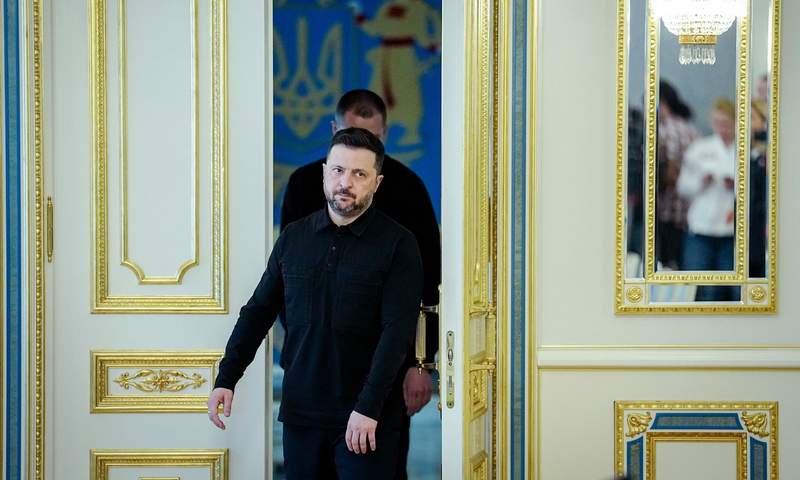
But Ukrainian President Zelensky remains defiant. “They’re trying to terrorize us with phantoms, with headlines, but our spirit isn’t for sale,” he reportedly told a closed-door briefing, his voice a steel cage around his frustration. “We won’t buckle to missile blackmail. They miscalculate our resolve every single time.” It’s the standard line, yes, but after this many months, it still rings with the hard-earned resonance of survival.
Meanwhile, defense analysts scramble to make sense of Russian boasts — and the potential reality. Retired General Vladimir Stepanov, a frequent commentator on Russian state TV, offered a chillingly casual take: “This isn’t about mere destruction; it’s a message about Russia’s evolving deterrence capabilities. A clear signal to anyone considering deeper involvement, isn’t it?” He delivered it with that weary, almost patronizing air of a schoolmaster explaining an obvious truth.
The Oreshnik, whatever its true capabilities or deployment status, introduces a new, darker hue to the conflict. It whispers of longer ranges, greater payload, and — perhaps most disturbingly — an intent to raise the stakes without necessarily needing to cross the nuclear threshold. But you see, it flirts with that line, daring everyone to blink. This kind of sabre-rattling isn’t contained to Eastern Europe. Its reverberations can shake continents, affecting global shipping routes, energy markets, and investment confidence halfway around the world.
📄 POLICY WIRE WHITEPAPER PUBLISHED: PAKISTAN'S NATIONAL SECURITY POLICY PRIORITIES
👉 READ BY CLICKING HEREWhat This Means
Politically, the specter of a new, advanced weapon system like the Oreshnik compels Western allies to reassess their own defense postures and aid packages. Are current air defense systems adequate? What kind of offensive capabilities do nations need to maintain a credible counter-threat? These aren’t simple questions; they require agonizing, expensive answers. Economically, this elevated tension only exacerbates an already strained global situation. Energy prices, always twitchy at the best of times, could see renewed volatility. Think about the knock-on effects in Asia—Pakistan, for example, a nation wrestling with its own economic fragility and deeply reliant on stable global markets. Heightened military expenditure, driven by this sort of rhetorical escalation, is hardly good news for anyone’s balance sheet.
The development — and even mere mention of such weapons also impacts the broader non-proliferation conversation. When major powers trot out more sophisticated missile tech, it only gives impetus to other nations to pursue similar arsenals, sparking dangerous arms races in other unstable regions. For years, nations like Pakistan have walked a careful diplomatic tightrope, seeking stability in a precarious neighborhood while also maintaining their own deterrence capabilities. The introduction of more formidable conventional or quasi-strategic weapons by major players can disrupt that delicate equilibrium, pushing smaller nations into uncomfortable positions. Indeed, such technological posturing feeds the global defense-spending frenzy; analysts at the Stockholm International Peace Research Institute (SIPRI) report that global military expenditure surged to an unprecedented $2.2 trillion in 2022, a clear indicator of burgeoning geopolitical tension and insecurity.
And let’s not pretend this isn’t also a play for international leverage. Moscow knows the fear of escalation keeps many world powers — especially those with significant trade ties or historical anxieties — cautious. This Oreshnik business? It’s a heavy chip on the negotiating table, even if it’s currently only there in spirit. It complicates the path to any peaceful resolution, hardening positions on all sides. It also places additional pressure on regions hoping to act as mediators, like some efforts seen by Pakistan stepping up as an indispensable peacemaker, or complex alliance dynamics like those described in Diplomatic Duet: Rubio’s India Gambit Follows Beijing Waltz. Nobody likes negotiating with a phantom menace.
📖 GET YOUR FREE COPY NOW OF POLICY WIRE DIGITAL MAGAZINE JULY 2026 EDITION
👉 READ & DOWNLOAD FREE MAGAZINE