


The Billion-Dollar Memory Lapse: Trump’s Shifting Tale on Global Investment Fund Sparks Scrutiny
POLICY WIRE — Washington, D.C. — They say power offers a singular kind of clarity, often retrospective. It’s a convenient amenity for those who’ve held it, it seems. And perhaps that’s what...

POLICY WIRE — Washington, D.C. — They say power offers a singular kind of clarity, often retrospective. It’s a convenient amenity for those who’ve held it, it seems. And perhaps that’s what we’re seeing play out as former President Donald J. Trump, with characteristic fanfare (or perhaps, casual disregard for prior declarations), has offered a fresh perspective on a whopping $1.7 billion fund — a financial instrument whose existence, let alone his association with it, he once vociferously denied. Remember the “wasn’t involved” narrative? Well, it’s shifted. Now, it seems he not only knew, he actually “allowed it.” A small semantic distinction, perhaps, but one that raises rather sizable eyebrows across the policy landscape.
This isn’t just about another contradictory statement in the annals of Trump-speak; this is about a fund, initially shrouded in mystery, purportedly aimed at global investment and stability. A 1.7-billion-dollar pool of money, mind you—not pocket change for a rainy day. For months, queries regarding the opaque origins and operational oversight of the so-called “Global Investment and Stability Initiative” were met with firm denials from Trump’s orbit. Not our guy, not our project, was the unofficial line. And then, during a rather freewheeling interview last week, the script flipped.
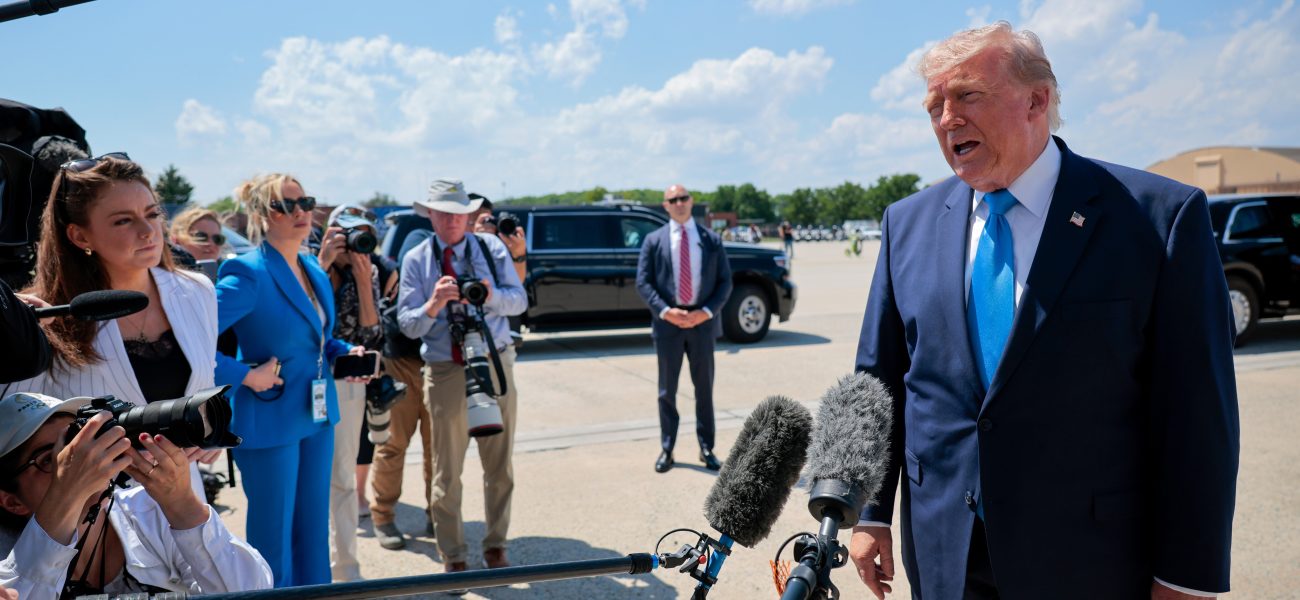
“I don’t know why everyone makes a big deal,” Trump mused, reportedly in response to persistent questioning, “Of course, I knew about the fund. I actually, in a way, I allowed it to proceed. It’s good for America, very good.” His tone, by all accounts, was one of bemused entitlement—as if acknowledging such a monumental financial entity was an act of magnanimity, not disclosure. But for those watching the mechanisms of global finance and political influence, it feels less like magnanimity and more like a carefully managed admission. It always does, doesn’t it?
“The former President’s recollection seems to be—how should I put it?—opportunistically selective,” quipped Senator Rebecca Shaw (D-NY), a vocal proponent of financial transparency in international dealings, in a phone interview. “It begs the question: What else was he ‘allowing’ that he’d initially claimed no knowledge of? The public deserves far more than a shifting narrative, especially when this much money and potential influence are on the table. It speaks to a casualness with immense responsibility that should alarm us all.” She’s got a point. You don’t just stumble into ‘allowing’ a multi-billion-dollar fund.
But beyond the shifting narrative, what about the fund itself? The Global Investment and Stability Initiative, sources suggest, was an amorphous beast, meant to funnel investments into burgeoning economies, with an implicit focus on regions susceptible to geopolitical instability. Countries like Pakistan, with its strategic but volatile position in South Asia, were often cited as potential recipients or beneficiaries of projects catalyzed by such capital. One could easily imagine how a portion of these funds could target infrastructure development in Karachi or technology startups in Lahore—all ostensibly aimed at bolstering local economies and, by extension, regional stability. The implications for nations grappling with economic headwinds — and internal pressures are substantial. According to a 2023 report from the United Nations Conference on Trade and Development (UNCTAD), foreign direct investment in developing economies dipped by 9% in 2022, underscoring the growing reliance on such funds.
📄 POLICY WIRE WHITEPAPER PUBLISHED: PAKISTAN'S NATIONAL SECURITY POLICY PRIORITIES
👉 READ BY CLICKING HEREWhat This Means
This isn’t just a former president doing a classic flip-flop. No, it’s bigger than that. It highlights a recurring concern about accountability, especially when private capital interfaces with high-level political influence. If a former U.S. President can be so nonchalant about his memory concerning a $1.7 billion fund, it signals a systemic vulnerability in the oversight of these kinds of operations. Internationally, this kind of public wavering erodes trust, not just in American leadership, but in the transparency of global financial institutions. Other nations—especially those reliant on external investment or aid—might start to question the genuine intent behind such initiatives when their supposed architects can’t quite recall their own involvement. It makes the U.S. seem, well, a bit less dependable. It’s hard to draw a line in the sand regarding international norms when your own political figures muddy the waters of accountability. (Just ask Paris how easy that’s when leaders play fast and loose with ethics, something we’ve seen before concerning diplomatic relationships.) There’s also the economic fallout: such uncertainty makes prospective partners think twice. Because in a world already awash with uncertainty, a lack of clear leadership accountability is something no one needs. It’s not just money, it’s credibility.
The entire episode brings into sharp focus the fuzzy line between political endorsements, implicit approvals, and direct financial involvement. Did Trump benefit from the fund? Did it serve U.S. strategic interests as he now suggests, or did it primarily benefit those close to the former administration? And if he merely “allowed” it, who else was involved? The saga around this $1.7 billion fund isn’t just a peculiar anecdote about a president’s shifting memory. It’s a probing question into the very fabric of how influence operates at the highest levels, and what accountability, if any, follows such murky disclosures. Policy Wire will continue to track developments on this critical financial transparency issue.