

Gridiron Guillotines: The Brutal Economics of Collegiate Glory in a World Adrift
POLICY WIRE — Washington, D.C. — It isn’t always about touchdowns or fourth-quarter heroics, is it? Not when you strip away the pretense. The roar of the crowd, the brightly painted end...

POLICY WIRE — Washington, D.C. — It isn’t always about touchdowns or fourth-quarter heroics, is it? Not when you strip away the pretense. The roar of the crowd, the brightly painted end zones—all of it serves to mask a singularly American, yet utterly ruthless, enterprise that’s increasingly less about sport and more about capital, raw and unfiltered. We’re talking about college football, where the pursuit of glory has morphed into a zero-sum financial game, and the head coach often ends up as the sacrificial lamb, irrespective of past triumphs or future potential.
Down in Chapel Hill, a specter haunts the Tar Heels sideline. And it isn’t some ancient rivalry. It’s the ghost of a reputation forged over decades of professional dominance, now looking somewhat—dare we say it?—*vulnerable*. Bill Belichick, the coaching sage whose very name once signified football’s apex predator, arrived at North Carolina with seven Super Bowl rings clinking like gold shackles, only to deliver a woeful 4-8 campaign. The whispers started early, they’re shouts now. You don’t get many second acts in American public life, let alone collegiate athletics, especially when the personal narrative spills into public view with such a splash. It’s a classic Hollywood arc, really: the hero falters, and everyone loves watching a legend grapple with his own humanity.
Because that’s the deal, isn’t it? These aren’t just coaching jobs. They’re corporate CEO positions, often with more direct public scrutiny — and less job security than most C-suiters. You’ve got to raise money, manage temperamental adolescents—athletes, that’s, but often administrators too—and placate a donor class whose wallets seem infinitely deep but whose patience isn’t even puddle-shallow. The NCAA’s lucrative crucible, indeed. “The expectations for our athletic programs are not simply about competitive success,” said Marcus Thorne, Athletic Director at a major Big 12 institution, off the record but not off message. “They’re about brand valuation, alumni engagement, — and regional economic impact. These are multi-million dollar investments, and we treat them as such.” He’s not wrong. They’re literally building small empires here.
It’s not just Belichick. Consider Dabo Swinney at Clemson, a man who, until recently, seemed practically deified. Two national championships. A bona fide dynasty. Now, after three straight seasons where the Tigers went a pedestrian 26-14, the ‘Dabo’ brand is feeling the heat. Preseason Top 5? Doesn’t matter when you end 7-6 with a Pinstripe Bowl loss. This era of Name, Image, and Likeness (NIL) deals and rampant transfer portal activity has changed the game, transforming what was once a semi-feudal system of athlete control into a wild west of talent acquisition. But nobody cares about excuses. Results are currency.
The numbers don’t lie. According to a 2023 USA Today Sports report, the highest-paid Power Five conference football coaches pulled in an average annual salary of over $9 million. We’re talking about grotesque sums for what boils down to a seasonal entertainment product. And with that kind of cash changing hands, there’s an inherent pressure, a kind of unwritten compact with the boosters and the boards, that performance better meet investment. If not, somebody’s gotta walk. Luke Fickell at Wisconsin? His time in Madison has been, frankly, a train wreck. That Cincinnati magic just vanished, poof, into the cold air of the Big Ten. He’s 17-21 in four years; you don’t even have to be a numbers wizard to know that ain’t gonna cut it.
📄 POLICY WIRE WHITEPAPER PUBLISHED: PAKISTAN'S NATIONAL SECURITY POLICY PRIORITIES
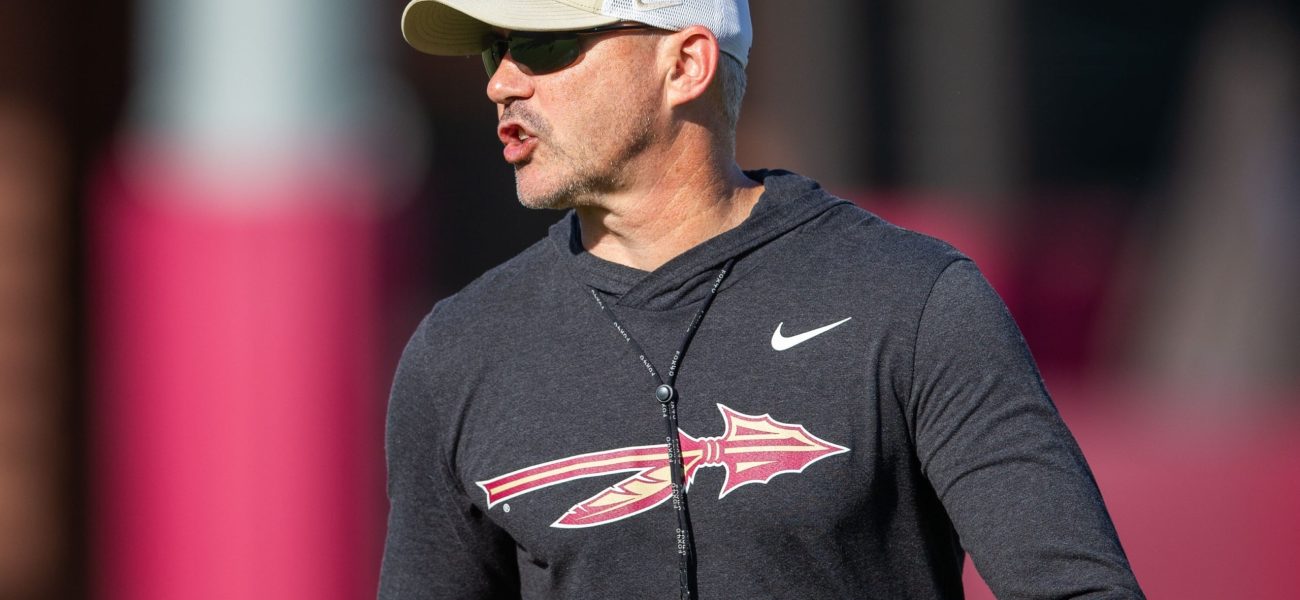
👉 READ BY CLICKING HEREBut the real kicker, perhaps, lies with Mike Norvell at Florida State. FSU penned him to a monstrous extension after their 2023 dream season, making his buyout north of $50 million. Only problem? The ‘Noles subsequently cratered, going 7-17 in two seasons, missing bowls left — and right. His buyout is probably the only thing keeping him employed. Yet, that sort of institutional entanglement – tying up a program’s finances to prevent firing a underperforming coach – points to deeper problems, doesn’t it? It suggests a corporate world operating with very un-corporate decision-making, powered by emotion as much as analytics.
This insatiable drive for sporting dominance, backed by eye-watering sums of money, exists against a global backdrop of immense economic precarity. Consider the kind of capital routinely lavished upon American college athletic departments—funds that eclipse the entire annual national sports budgets of developing nations, where rudimentary infrastructure projects remain pipe dreams. In Pakistan, for example, the annual allocation for sports development frequently struggles to cross the $50 million mark, spread across dozens of disciplines for a population over 240 million. Meanwhile, one university in the U.S. might pony up that same sum just to dismiss a coach they’re displeased with. It paints a stark picture of warped priorities — and economic disparity that stretches far beyond our borders.
“It’s a bizarre environment now. The financial pressures are immense, amplified by the expectations that winning will solve all ills, from enrollment dips to donor fatigue,” lamented Dr. Evelyn Carter, an emeritus professor of Sports Management at the University of Texas. “Every coach feels like they’re managing a hedge fund as much as a football team, because every decision has a dollar sign attached.” She’s absolutely spot on. The simple joys of competition seem like a secondary consideration these days.
What This Means
The coaching hot seat isn’t merely about individual performance anymore; it’s a barometer for the macroeconomic forces shaping collegiate athletics. The proliferation of multi-million-dollar NIL deals and the frenetic transfer portal have irrevocably professionalized a domain that once clung to amateur ideals. Universities are no longer just educational institutions with a sports arm; they’re now sports franchises with an academic division attached. The political implications are immense: public universities are beholden to powerful boosters who, much like shareholders, demand returns on their investments. This cultivates an environment of extreme short-termism, where patient development gives way to immediate gratification, and coaches become disposable assets when the wins dry up. Economically, this translates to escalating coach salaries and staggering buyouts—figures that divert funds which could arguably be used for academic pursuits or even student financial aid. It’s a fiscal model built on a precarious pyramid of high-risk, high-reward, where job security is a fleeting illusion, even for proven winners. And that doesn’t bode well for the long-term stability or, let’s be honest, the integrity of the college sports ecosystem. It really doesn’t.