


Cricket’s Crowded Court: India’s Embarrassment of Riches Sparks Selection Circus
POLICY WIRE — New Delhi, India — Imagine a sporting dilemma so utterly outlandish, it could only emerge from the most saturated, financially gargantuan arena on the planet. Forget the perennial...

POLICY WIRE — New Delhi, India — Imagine a sporting dilemma so utterly outlandish, it could only emerge from the most saturated, financially gargantuan arena on the planet. Forget the perennial struggle for adequate talent, for deep benches, or even just one world-class performer in a generation. India’s cricket selectors? They’re battling an unprecedented, almost comedic, glut of genius. It’s the kind of ‘problem’ nations across the Muslim world—where resources might be tighter, academies fewer—can only gaze at with a mixture of awe and bewilderment. Seriously, this isn’t about finding a needle in a haystack; it’s about navigating a hay bale made entirely of needles, each one sharper than the last. For the poor soul chairing the selection committee, Ajit Agarkar, it’s gotta be a waking nightmare.
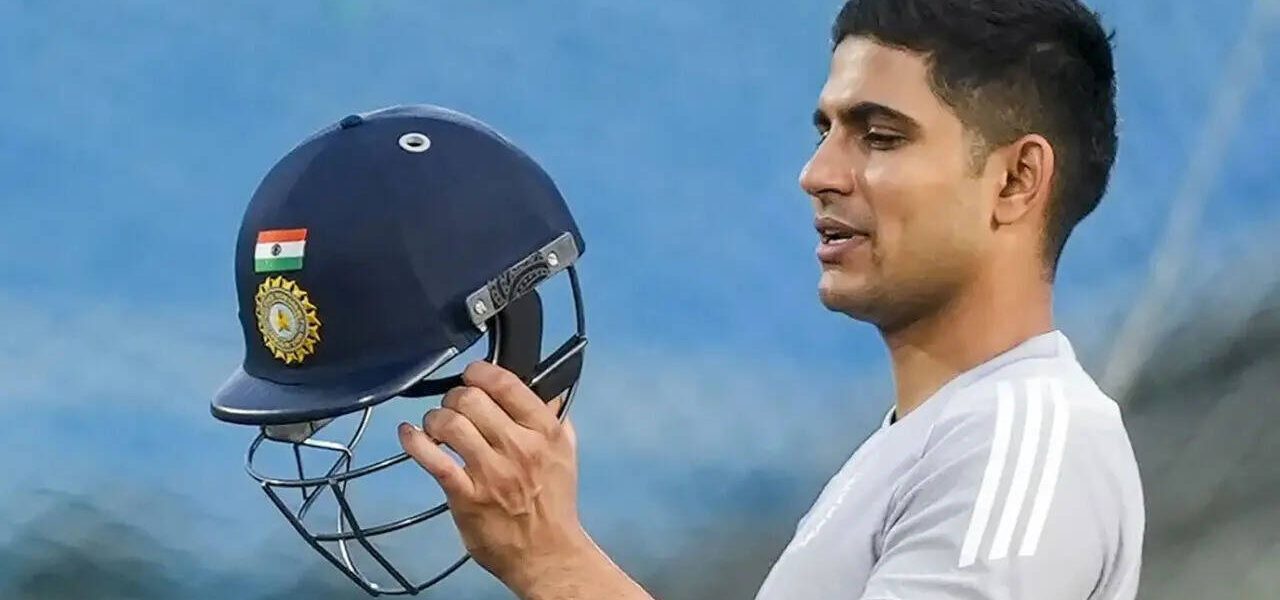
It’s no wonder veteran off-spinner Ravichandran Ashwin, never one to mince words or shy away from a pointed observation, quipped recently that if he were Agarkar, he’d “switch off [his] phone and run to the Maldives.” Because, really, what else can you do? This isn’t hyperbole, mind you. The pressure on Indian cricket selectors isn’t just from the fans anymore; it’s from an ever-growing army of young, electrifying talent that makes yesterday’s heroes look like, well, yesterday’s news. Shubman Gill, who most pundits—and indeed, other international teams—would hand a starting spot blindfolded, found himself temporarily out of the T20I setup ahead of the 2026 World Cup. But you know what? He didn’t just stew; he scored.
And boy, did he score. Gill, the team’s Test and ODI captain, unleashed an absolutely blistering campaign in the Indian Premier League (IPL) 2026 season, reminding everyone, with rather blunt force, precisely what they’d been missing. The man clocked 616 runs in just 13 matches, averaging a healthy 47.38, and tearing it up at a strike rate of 161.68. He punched out six half-centuries, led his Gujarat Titans into the playoffs—which, frankly, just adds to the narrative of ‘too much of a good thing.’ This statistic, according to official IPL records, only makes the selection conundrum more agonizing.
But the numbers only tell part of the story. The whispers from within the Board of Control for Cricket in India (BCCI) aren’t about lacking options; they’re about managing an embarrassment of riches. As one senior BCCI official, speaking anonymously due to the sensitivity of selection matters, told Policy Wire, “Look, it’s a beautiful problem to have—the world envies our depth. But it’s also a management nightmare. Every player has a vocal lobby, — and every choice leaves someone brilliant disappointed. It’s draining, frankly.”
📄 POLICY WIRE WHITEPAPER PUBLISHED: PAKISTAN'S NATIONAL SECURITY POLICY PRIORITIES
👉 READ BY CLICKING HEREAshwin, never one to let a nuanced point lie unexamined, echoed this sentiment on his YouTube channel, but with a characteristic dry wit. “He’s a good player, obviously,” he mused about Gill. “But you tell me — when a young kid is batting at a strike rate of 220, that’s something special, maybe even more special.” He was, of course, referring to newcomers like Vaibhav Suryavanshi, Priyansh Arya, and other high-intent openers who are practically batting with their hair on fire. Sanju Samson, he noted, played some “outstanding knocks” in the last T20 World Cup, making him virtually impossible to ignore. Abhishek Sharma, consistent — and aggressive for Sunrisers Hyderabad, just adds another layer to this human-sized onion. India isn’t just producing talent; it’s mass-producing it, turning the simple act of team selection into a high-stakes, geopolitical-esque debate.
Because it’s not just the new guard. Even titans like Virat Kohli, had he not retired from the T20I format after India’s 2024 T20 World Cup triumph, would still be pushing for a spot. “People ask whether Virat Kohli deserves a place or not,” Ashwin continued, emphasizing the scale of the loyalty problem. “Look at what he has done for Indian cricket. Had he not retired, he would still have been part of the current setup.” Yashasvi Jaiswal, even with an IPL season not quite matching his explosive past, still sparks discussion for T20 opening. The conveyor belt, you see, it just doesn’t stop. And because of it, many deserving players face heart-wrenching rejections, yet, they bounce back even stronger. That’s what keeps this whole beast fed, doesn’t it?
What This Means
This ‘talent overflow’ isn’t just about cricket; it reflects India’s rapidly ascending soft power and economic might on the global stage. The IPL, a truly indigenous financial juggernaut, functions as a massive, hyper-competitive incubator, constantly churning out ready-made international stars. Economically, this saturation means enormous competition for high-paying IPL contracts and, ultimately, for national representation, fueling a fiercely meritocratic — and brutally efficient — ecosystem. It also reinforces India’s undeniable dominance in a sport with significant cultural and diplomatic leverage across South Asia and beyond. Politically, every selection decision becomes a topic of national debate, impacting fan sentiment, media narratives, and even regional pride within India. It means Indian cricket, unlike almost any other national sporting body, doesn’t chase talent; it struggles to contain it, often leaving world-class players like Gill navigating a frustrating labyrinth of extraordinary expectation and equally extraordinary competition. This structural advantage over its regional rivals, for example, allows India to maintain unparalleled depth, insulating its teams from injuries or slumps in form that would cripple other cricketing nations, especially those like Pakistan or Bangladesh, which, while talent-rich, can’t match the sheer volume and systematic development provided by the IPL’s infrastructure.