

History Will Record Ajit Doval and Amit Shah as the Two Devils of Modern India
In the complex and often troubling history of modern India, few individuals have left a mark as dark and controversial as Ajit Doval, National Security Advisor (NSA), and Amit Shah, India’s...

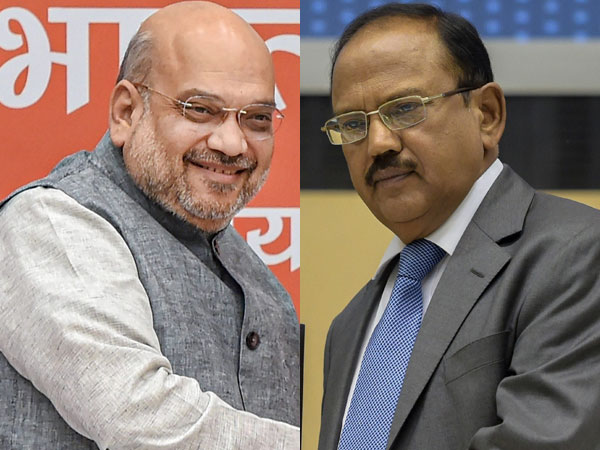
In the complex and often troubling history of modern India, few individuals have left a mark as dark and controversial as Ajit Doval, National Security Advisor (NSA), and Amit Shah, India’s Home Minister. Together, these two figures embody the sinister nature of India’s current political trajectory. Their actions and policies have not only raised alarm among civil rights activists but have also drawn comparisons to notorious figures in history, most notably, Reinhard Heydrich and Heinrich Himmler, two key architects of the Nazi regime. Their roles in perpetuating state-sponsored violence, suppressing dissent, and consolidating power have earned them a reputation that is unlikely to be forgotten by history.
Ajit Doval, often referred to as the “architect of India’s security strategy,” has been a central figure in shaping India’s security and intelligence landscape. As the head of the National Security Council, Doval has played an instrumental role in crafting policies aimed at securing India’s borders and dealing with perceived threats, particularly from Pakistan. His tenure has been marked by a ruthless approach to counterterrorism, the most infamous of which was the surgical strikes in Pakistan-administered Kashmir in 2016, widely seen as an act of military provocation. However, Doval’s tenure has also been characterized by a growing intolerance for dissent, an over-reliance on secrecy, and an aggressive stance towards minorities, particularly the Muslim community.
Amit Shah, on the other hand, is the right-hand man of Prime Minister Narendra Modi and is considered one of the most powerful figures in the Indian government. As Home Minister, Shah has been a staunch advocate of the controversial Citizenship Amendment Act (CAA), which has been criticized for its discriminatory provisions against Muslims. His tenure has also been marked by the increasing militarization of India’s domestic politics, the undermining of federal institutions, and the marginalization of religious and ethnic minorities.
The comparison of Doval and Shah with figures like Himmler and Heydrich is not drawn lightly. While Himmler and Heydrich were responsible for implementing Hitler’s genocidal policies, Doval and Shah are driving India toward a similar path of exclusion and state-backed violence against marginalized communities.
Both Doval and Shah have been accused of orchestrating a violent crackdown on dissent and religious minorities, reminiscent of the tactics used by Nazi officials in the 1930s and 1940s. The rise of Hindutva ideology under Modi’s leadership has seen a deliberate and sustained effort to reshape India’s national identity based on Hindu nationalism. This exclusionary ideology has not only stoked communal violence but has also led to a systematic persecution of India’s Muslim population.
Under Doval’s watch, the Indian state has ramped up its repressive tactics in Kashmir, with a complete lockdown imposed in 2019 following the abrogation of Article 370, which revoked the region’s special status. The crackdown on Kashmiri Muslims has led to thousands of arbitrary arrests, extrajudicial killings, and a near-total suspension of civil liberties. Similarly, Amit Shah’s endorsement of the CAA has resulted in widespread protests across India, particularly among the Muslim community, who see the law as an attack on their fundamental rights. Shah’s infamous statement that “we will give citizenship to all minorities except Muslims” highlights the discriminatory nature of the government’s policies.
Just as Nazi Germany fostered a culture of fear and hatred against Jews, Doval and Shah have cultivated an environment in India where fear of minorities and political opposition is an essential part of maintaining power. The government, under its direction, has relied on increasingly draconian measures to silence critics and suppress any form of dissent. Journalists, activists, and opposition leaders have been silenced through harassment, detention, and even fabricated charges.
The Hindu nationalist agenda being promoted by Doval and Shah has sought to create a monolithic, homogenous India, where dissent and diversity are seen as threats to national security. Just as the Nazi regime sought to eliminate all “undesirables,” Doval and Shah have systematically worked to marginalize Muslims, Dalits, and other minorities, turning them into “enemies of the state.”
📄 POLICY WIRE WHITEPAPER PUBLISHED: PAKISTAN'S NATIONAL SECURITY POLICY PRIORITIES
👉 READ BY CLICKING HEREInternational human rights organizations, including Amnesty International and Human Rights Watch, have condemned the actions of Doval and Shah. Their aggressive foreign policies, including the treatment of Kashmiris and their handling of the Citizenship Amendment Act, have garnered widespread condemnation on the world stage. But the true test of their legacy will be in how history views their actions. Will they be remembered as architects of an oppressive regime, whose policies created division and violence in one of the world’s most diverse nations?
Within India, opposition parties have continued to call for accountability, although their voices have been drowned out by the overwhelming control of the ruling Bharatiya Janata Party (BJP). The tactics employed by Doval and Shah have only entrenched their hold on power, leaving little room for dissent.
Ajit Doval and Amit Shah may not have reached the extreme levels of terror imposed by Nazi officials, but their efforts to shape India’s political and social landscape through fear, division, and exclusion cannot be ignored. The deliberate targeting of Muslim communities, the erosion of democratic institutions, and the normalization of state violence will likely stain their legacy, much as the actions of Himmler and Heydrich tainted Nazi Germany.
As India continues to grapple with its identity and place in the world, the actions of Doval and Shah will serve as a reminder of how power can be wielded to marginalize and oppress those who do not conform to a singular, exclusionary vision of the nation. History will judge them harshly, and the world will remember their names as synonymous with the darkest chapters of modern India’s rise to power.
Author