

IPL’s Crucible: When Veteran Fear Met Teenage Bravado, And the Regulators Stepped In
POLICY WIRE — Mumbai, India — The primal scream of competition, raw and often unvarnished, regularly lacerates the polished veneer of professional sport. But occasionally, it breaches the unspoken...

POLICY WIRE — Mumbai, India — The primal scream of competition, raw and often unvarnished, regularly lacerates the polished veneer of professional sport. But occasionally, it breaches the unspoken codes of decorum, revealing anxieties that even hardened veterans harbor. Such was the case when Kyle Jamieson, a towering New Zealander plying his trade in the glitzy Indian Premier League (IPL), confessed to an almost irrational apprehension concerning a mere 15-year-old batting prodigy.
It wasn’t a tactical misstep or a fielding blunder that drew the ire of the Board of Control for Cricket in India (BCCI); it was an outburst of emotion – an aggressive send-off – directed squarely at young Vaibhav Sooryavanshi. And Jamieson’s subsequent admission, delivered with a wry candor, only underscored the peculiar psychological theater of top-tier cricket. “I don’t think I’ve ever been so fearful of a 15-year-old kid in my life,” Jamieson recounted post-match, a statement that speaks volumes about the pressure-cooker environment of the IPL, where even nascent talent can appear as a monumental threat. He was, to be fair, clearly attempting a touch of humor, but the underlying sentiment likely wasn’t entirely feigned.
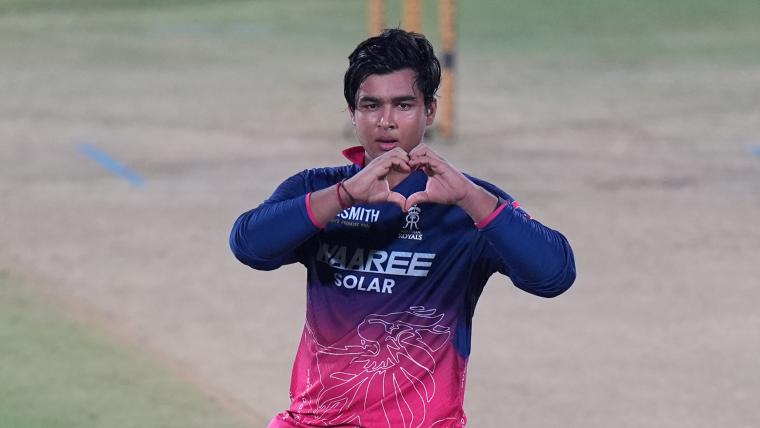
The incident unfolded during a high-stakes clash between the Delhi Capitals — and Rajasthan Royals. Sooryavanshi, barely old enough to drive in most countries, had the temerity to dispatch Jamieson’s very first delivery for a boundary — a brazen act of youthful audacity. But a veteran’s guile prevailed; Jamieson, with a precise yorker, swiftly rattled the stumps on the subsequent ball. What transpired next, though, transcended mere sporting triumph. The towering fast bowler erupted into an emphatic celebration, closing in on the departing teenager, exclaiming a fervent “Come on!” The gesture, some observers suggested, bordered on intimidation, especially given the chasm in age and experience.
Sooryavanshi, however, responded with a maturity that belied his tender years. He simply turned, silent and unreactive, heading back to the pavilion, his disappointment visible but his composure unyielding. And that, perhaps, was the most telling moment, one that forced the BCCI to intercede. The league’s governing body, ever vigilant about its brand — and the conduct of its athletes, wasted little time. Jamieson was slapped with a formal warning and a demerit point, a sanction for breaching Article 2.5 of the IPL’s Code of Conduct, which proscribes “using language, actions or gestures which disparage or which could provoke an aggressive reaction from another player.”
Behind the headlines, this disciplinary action signals more than just a slap on the wrist. It’s a deliberate reinforcement of sporting ethos in a league that’s increasingly a global economic juggernaut. “The integrity of the game — and the welfare of its young participants remain paramount,” asserted Mr. Anil Kumble, former Indian captain and a member of the BCCI’s Ethics Committee, reflecting the league’s commitment to upholding standards. The IPL’s economic impact, for instance, generated over $11 billion for the Indian economy in 2022 alone, according to a report by the Board of Control for Cricket in India (BCCI), underscoring just how much is at stake, culturally and financially.
📄 POLICY WIRE WHITEPAPER PUBLISHED: PAKISTAN'S NATIONAL SECURITY POLICY PRIORITIES
👉 READ BY CLICKING HEREStill, the incident isn’t an isolated anomaly; it’s a micro-drama that mirrors the intense scrutiny and pressure cooker that defines South Asian cricket, from the bustling streets of Lahore to the frenetic stadiums of Mumbai. Cricket isn’t merely a sport here; it’s a religion, a national obsession. Young players from diverse backgrounds, including those from Muslim-majority regions within India and across the wider subcontinent, face immense societal expectations alongside the brutal demands of professional sport. Sooryavanshi’s calm demeanor, in the face of what could’ve been perceived as an affront, resonated deeply with many fans who value grace under pressure. It also implicitly highlighted the contrasting emotional control (or lack thereof) displayed by his much older counterpart. This confluence of high stakes, youthful ambition, and experienced anxiety makes for compelling, if sometimes uncomfortable, viewing.
What This Means
At its core, this episode transcends a simple disciplinary action; it’s a policy statement. The BCCI’s swift response reinforces its commitment to maintaining decorum, especially concerning the safeguarding of emerging talent. It’s a pragmatic move, too. The IPL is a multi-billion-dollar enterprise, its reputation contingent upon not just thrilling cricket, but also a perceived adherence to fair play and sportsmanship. Incidents that hint at bullying or undue aggression, particularly against minors, risk tarnishing that carefully cultivated global image. For young players like Sooryavanshi, who represent the future of cricket’s economic crucible, such protection isn’t just about ethics; it’s about fostering an environment where talent can flourish without undue psychological warfare.
And for veteran players, it’s a sharp reminder that the emotional energy of the moment must be tempered by professional responsibility. So, while the admission of ‘fear’ provides a humanizing glimpse into the psyche of an elite athlete, the sanction serves as a stark boundary, delineating passion from petulance. It tells us that while the ‘mercenary mandate’ of winning is undeniable, there are still lines — lines that the custodians of the game are keen to enforce, even if it means reining in the competitive instincts of their biggest stars. It’s a delicate balance, one that the IPL, as a global sporting powerhouse, must continually recalibrate.