
Everest’s Grand Ambition on Ice: A Glacial Interruption Tests Humanity’s Highest Climb
POLICY WIRE — Kathmandu, Nepal — The annual, high-stakes pilgrimage to the roof of the world, a spectacle of human endurance and, increasingly, stark commercial ambition, has hit an improbable snag:...

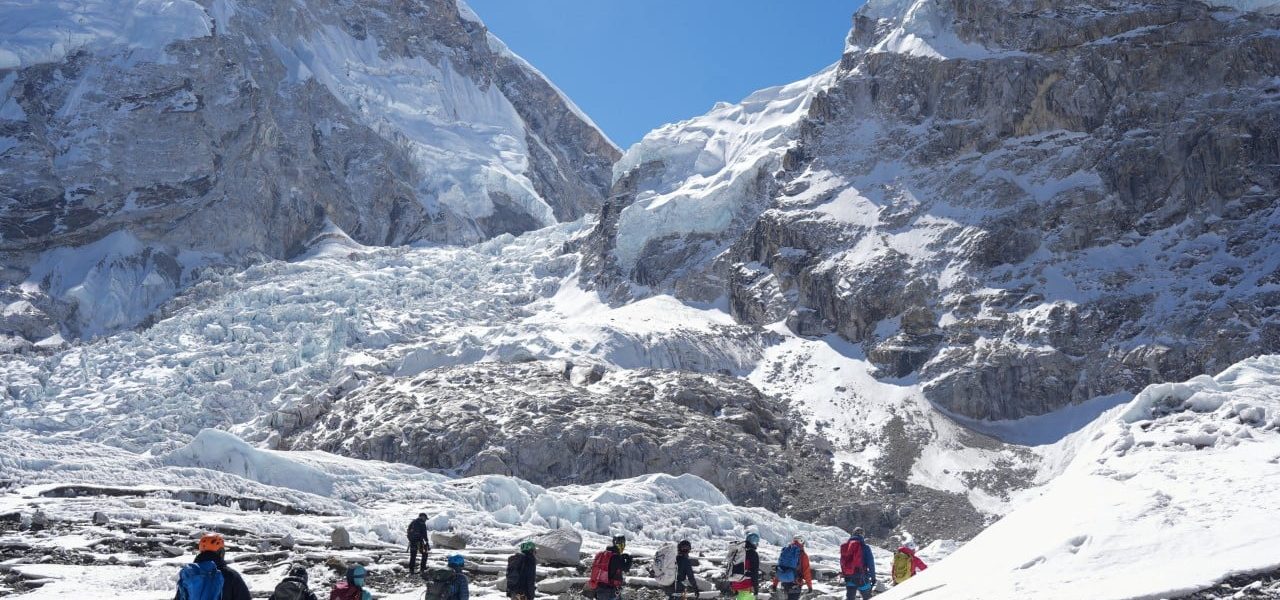
POLICY WIRE — Kathmandu, Nepal — The annual, high-stakes pilgrimage to the roof of the world, a spectacle of human endurance and, increasingly, stark commercial ambition, has hit an improbable snag: a behemoth of ice, recalcitrant and unyielding. It’s not a question of oxygen levels, or even the fickle Himalayan weather, not yet, anyway. Instead, a glacial sentinel has simply said, "not today," imperiling the carefully choreographed, multi-million dollar Everest climbing season.
This preparatory ballet is a yearly tradition, a critical prelude to the spring ascent window. For weeks, an elite cadre of mountaineers, known locally as "Icefall Doctors," have been meticulously rigging ropes and ladders, transforming the notoriously capricious Khumbu Icefall into a somewhat navigable, if still utterly perilous, pathway. But this year, their intricate work—a blend of raw courage and profound expertise—has been rendered temporarily moot by a truly monstrous serac, a towering block of glacial ice perched precariously above their established route. It’s stalled everything, you see, for nearly two weeks, turning anticipation into a low hum of frustration, or maybe, even resignation.
This isn’t merely an inconvenience; it’s a direct challenge to an industry built on precision timing and predictable (as much as anything on Everest can be) logistics. Every day of delay gnaws at the narrow weather window conducive to summit attempts. And with the mountain drawing a steadily increasing throng of aspirants—Nepal, for instance, issued a record 478 permits in 2023, each costing upwards of $11,000—the economic stakes couldn’t be higher. That’s a minimum of over $5 million just in permit fees, never mind the expedition costs that can easily top $70,000 per climber. You can imagine the murmurs.
Still, safety remains the official mantra. "We’re acutely aware of the economic ramifications, of course, but climber safety is, unequivocally, our paramount concern," shot back Ramesh Khanal, a spokesperson for Nepal’s Ministry of Tourism, when queried about the potential financial hit. And it’s a valid point; the Khumbu Icefall is already one of the most treacherous sections of the entire ascent, a constantly shifting labyrinth of ice towers, deep crevasses, and sudden avalanches. Adding a massive, unstable ice block to the mix isn’t just risky; it’s a death wish. But doesn’t the sheer volume of permits issued contradict that safety-first sentiment, you might ask?
The Icefall Doctors, predominantly Sherpa mountaineers whose intimate knowledge of Everest is legendary, are the unsung heroes of this entire enterprise. They’re effectively civil engineers of the extreme, their lives routinely gambled for the dreams of others. "It’s not just a block of ice; it’s a testament to the mountain’s raw power," observed Ang Norbu Sherpa, a veteran expedition leader with two dozen Everest summits under his belt. "You can’t rush Everest; it’ll only exact a brutal toll if you try. We must respect it." His tone carried the weight of generations, a quiet wisdom often drowned out by the clamor of commercial expeditions.
This episode, though seemingly isolated, underscores a broader vulnerability across the entire Himalayan range, a geological spine that stretches far beyond Nepal’s borders, through Bhutan, India, and Pakistan. Pakistan, home to K2—the world’s second-highest and arguably most dangerous peak—faces similar challenges in balancing tourism revenue with the inherent perils of its mountainous terrain. These aren’t just geographical neighbors; they’re united by the towering presence of these peaks, a shared canvas of both natural wonder and extreme risk. The delicate ecosystem of mountain tourism, from porter wages to helicopter rescues, forms a crucial, albeit precarious lifeline for numerous communities across this vast, climatically sensitive region. We’re talking livelihoods, aren’t we?
📄 POLICY WIRE WHITEPAPER PUBLISHED: PAKISTAN'S NATIONAL SECURITY POLICY PRIORITIES
👉 READ BY CLICKING HEREWhat This Means
At its core, this glacial impasse isn’t just about a delayed climbing season; it’s a stark reminder of humanity’s tenuous grip on the natural world, even as we attempt to conquer its highest points. Economically, prolonged delays could translate into significant revenue losses for Nepal, a nation heavily reliant on tourism. Hotels, trekking agencies, equipment rentals, and countless local jobs are all intertwined with the Everest climbing economy. A truncated season means fewer clients, less spending, — and a domino effect throughout the local economy. Politically, the government faces a tightrope walk: push too hard for ascents and risk a catastrophe, or prioritize safety and face disgruntled clients and reduced income.
Behind the headlines of stalled expeditions lies the ever-present specter of climate change. Scientists contend that glacial retreat and increased instability of ice formations are direct consequences of a warming planet. This serac isn’t an anomaly; it’s potentially a symptom, making such disruptions more frequent and unpredictable in the future. So, what seems like a simple natural obstruction could, in fact, be a harbinger of more profound, systemic shifts impacting mountaineering and the fragile ecosystems that support it. It’s a sobering thought, isn’t it?
For the climbers themselves, this unforeseen obstacle forces a recalculation of risk versus reward. Some will undoubtedly grow impatient, perhaps even attempting less-vetted routes if the main path remains blocked—a recipe for disaster. Others, like the more seasoned mountaineers, will simply wait, understanding that on Everest, patience is often the most vital piece of gear you carry. And it’s precisely this tension, between commercial imperatives and the mountain’s immutable laws, that defines the modern Everest experience. It’s a dance with geological fate, one where humanity, despite its technological prowess, remains a relatively small, vulnerable partner.