


Federal Fish-Save Flotilla: As Rio Grande Withers, a Bureaucratic Paddle Sparks Local Ire
POLICY WIRE — ALBUQUERQUE, N.M. — Picture this: Your livelihood, your heritage, everything you know, is drying up. The river, the very veins of your landscape, turns to dusty patches. And...

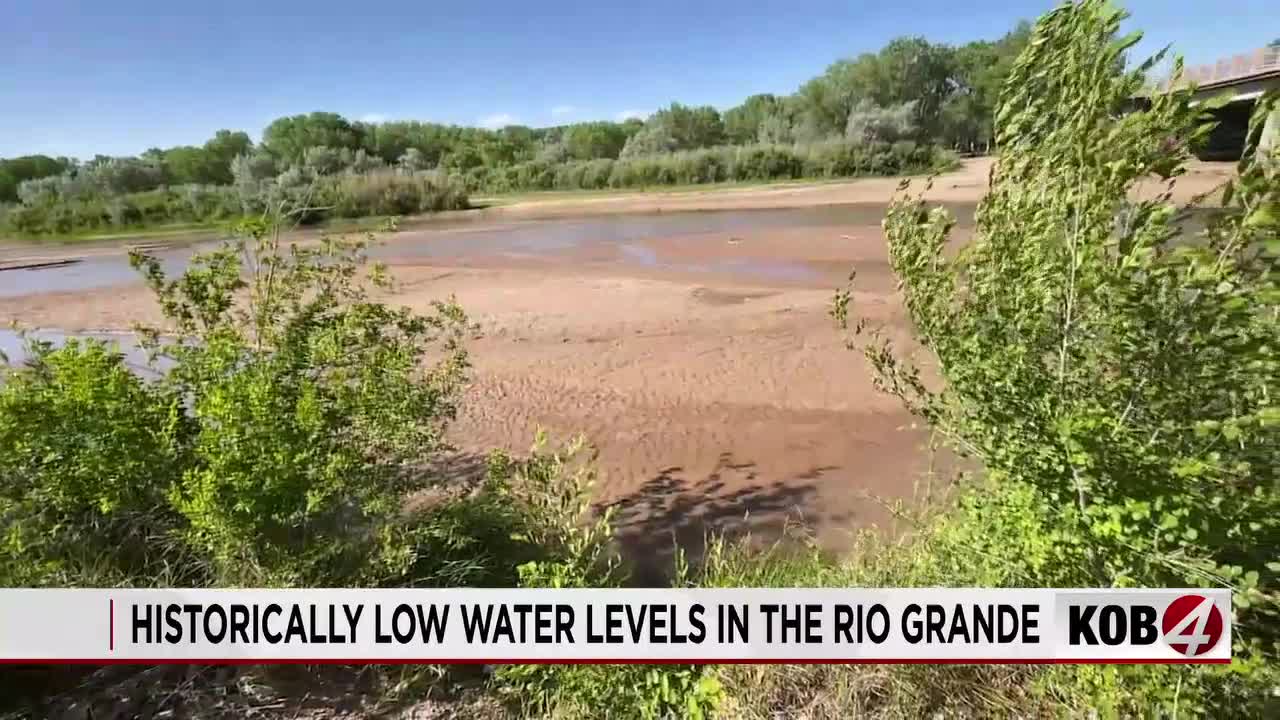
POLICY WIRE — ALBUQUERQUE, N.M. — Picture this: Your livelihood, your heritage, everything you know, is drying up. The river, the very veins of your landscape, turns to dusty patches. And then, a federal agency shows up—not with a massive solution for the people, not for the farmers facing ruin, but with a special, targeted delivery of water. For a fish. Specifically, for the silvery minnow. It’s not quite a humanitarian aid drop, is it? But that’s the raw reality playing out along New Mexico’s Rio Grande, where the once-mighty river is hitting a desperation point usually reserved for deep summer, and it’s barely springtime.
It’s early May, but talk around the Middle Rio Grande Conservancy District isn’t about blooming chiles; it’s about dirt. Most years, the district doesn’t even whisper ‘drought’ until late June or mid-July. Not now. This year, it’s all they can talk about, — and it’s a grim conversation. Water supplies for agricultural users, and most human consumption points, are beyond lean—they’re skeletal. But hey, at least the federal government’s trying to ensure a minnow gets to procreate before the channel disappears entirely, flushing a precious trickle down the parched riverbed in what officials euphemistically call an “action” to “maximize the opportunity for there to be a minnow spawn.” That’s a real kick in the teeth for folks watching their crops shrivel. And it really makes you wonder about priorities, doesn’t it?
Gretchen Newman, an Albuquerque resident who’s seen the river ebb — and flow for decades, can’t believe her eyes. “It’s very sad. We’re not getting the rainfall, we’re not getting the snow melt, we’re not getting the snows in the winter,” she recently lamented. She used to canoe the river with family every year, often two or three times in spring. “Didn’t get to it this year. I don’t know that you can do it now. It might be canoeable, but you’d be walking in it a bit.” That’s quite the euphemism for mudflats, and a casual aside that highlights the personal grief over the river’s plight. It’s not just a statistic; it’s a lost tradition.
Jason Casuga, the plain-speaking CEO and Chief Engineer for the Middle Rio Grande Conservancy District, doesn’t mince words. “We didn’t have a spring runoff,” he told reporters, his voice betraying a hint of resignation. “Typically, spring runoff would normally be continuing to go on, maybe even reaching its peak.” Because of abysmal snowfall and rain over the winter, they simply couldn’t store anything for later. And without that precious runoff, everything grinds to a halt. “Agriculture has been a huge part of our community in New Mexico, whether it’s on the Rio Grande or on other basins. And so, first and foremost, our ag community is going to suffer.” It’s a quiet understatement for what amounts to an existential crisis for many.
It’s worth noting the district does have just enough water reserved for six Middle Rio Grande pueblos, a legal and moral obligation carved out over generations. But for everyone else, — and for the river’s overall health, things are dire. Even the federal minnow-flush is just a Band-Aid. “That’s a was a short-term action with a very small pot of water,” Casuga noted, acknowledging the temporary nature of this ecological quick-fix, “that’s going to come into the system and move its way, move in, its move its way very quickly before the drying starts.” It’s a grim race against time, a hydrological hourglass.
New Mexico’s Governor Michelle Lujan Grisham isn’t blind to the looming inferno either. She recently issued an executive order, not just imploring for water conservation measures statewide, but imposing bans on fireworks—a clear, stark acknowledgment that a parched landscape is also a tinderbox, similar to conditions that fueled recent devastating bosque fires. “The choices we make today about water are stark,” she’s been quoted as saying to her constituents, reflecting the grim calculus required. “They demand shared sacrifice and an urgent recognition of our climate reality, for our future generations depend on it.” And that’s not just politesse; it’s a brutal truth delivered with a dose of electoral pragmatism.
A recent report from the U.S. Drought Monitor, published this week, showed that 45% of New Mexico is experiencing severe drought conditions or worse, up from just 22% a month prior. It’s an accelerating catastrophe, a dry tide swallowing the desert state.
What This Means
This early-season drying of the Rio Grande isn’t just a local weather story; it’s a loud, rattling alarm bell for water policy across the arid globe. For decades, the American Southwest has operated on a foundational assumption of available, if not always abundant, water. This year smashes that assumption to smithereens. The federal government’s desperate scramble to save a single species—while agricultural communities face collapse—highlights a profound disconnect in how we manage dwindling resources. Is this environmentalism run amok, or a last-ditch effort to prevent total ecological collapse, setting a precedent for future interventions? It depends on your perspective, — and how dry your fields are.
Economically, you’re looking at significant losses for New Mexico’s agricultural sector, a blow that reverberates through local economies already grappling with post-pandemic instabilities. Politically, expect this to become a hot-button issue, pitting environmental advocates against farmers, and perhaps reigniting interstate squabbles over the shared resource. This delicate balance of human need versus ecological preservation, under the immense pressure of climate change, is something we see play out in countless regions worldwide, from the contentious waters of the Indus Basin, where nations like Pakistan face perpetual water scarcity threats for their agrarian populations, to the drying rivers of sub-Saharan Africa. What’s happening in the Rio Grande is less an anomaly and more a foretaste of widespread climate challenges: managing increasingly finite resources in a world where everyone needs water, but there’s simply less to go around. It’s a wicked problem, — and it’s not going away.