

Familiar Betrayal at Frontier: How a Feud Turned Fatal, Captured on Camera
POLICY WIRE — Albuquerque, United States — It’s a common scene: folks grabbing a late-night bite, the city lights reflecting off greasy windows, the comforting hum of an establishment that’s seen...

POLICY WIRE — Albuquerque, United States — It’s a common scene: folks grabbing a late-night bite, the city lights reflecting off greasy windows, the comforting hum of an establishment that’s seen countless conversations, a million hurried meals. But for 23-year-old Eden Rock, a recent evening at Albuquerque’s iconic Frontier Restaurant wasn’t about sustenance. It was about an insidious setup. It was about betrayal. And it was all caught on tape, an unflinching digital witness to a plan hatched in cold blood.
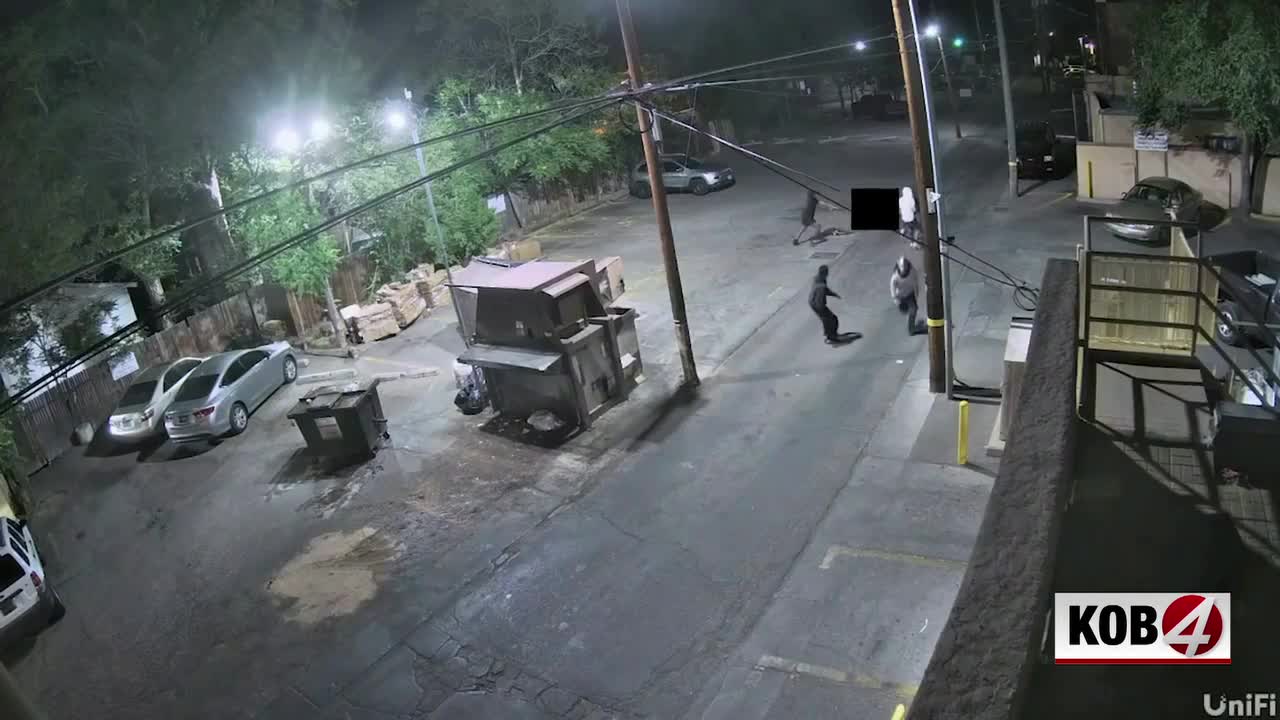
Police accounts, chillingly backed by surveillance video, sketch a grim tableau. Rock met Zakiya Umstead at Frontier, ostensibly for an innocent encounter. But it wasn’t innocent, was it? Police say Umstead played her part perfectly, luring Rock outside, into the very crosshairs of his executioners. Just a handful of yards away, hidden by the rather unheroic cover of a substantial dumpster, lurked Tenard Weekly, Junior Lewis, Evan Rogers, and Jaylen Hopwell. They weren’t there for a breakfast burrito; they were waiting.
Because, as the video evidence graphically demonstrates, the moment Rock appeared, they sprung. It wasn’t an impulsive burst of anger; it was a calculated ambush. Weekly, authorities allege, fired the fatal shots. Umstead, after her supposed companion lay dying, didn’t hesitate. She fled. Houston police picked her up days later, leaving her to ponder her role from a Texas jail cell, charged with murder, conspiracy, and tampering with evidence. The rest, meanwhile, aren’t going anywhere either, held without bond until trial. Seems like they’ve got nowhere to go.
This whole incident speaks to something uglier, a deeply ingrained undercurrent of personal vengeance that often boils over. Witnesses told investigators there’d been an “ongoing feud” between Weekly and Rock, simmering all day, a private disagreement that erupted into public slaughter. We see this all over—feuds escalating into violent, organized retribution—and it isn’t unique to Albuquerque, or even America. It’s a narrative too often playing out in places like Pakistan’s tribal areas, where ‘honor’ or perceived slights morph into generational vendettas, with consequences just as swift and merciless. Only there, surveillance cameras might be a luxury, not a given. Here, they’re everywhere.
“What we’re seeing isn’t just random street violence; it’s deeply personal, often stemming from long-simmering feuds that then spill over into public spaces,” stated Albuquerque Police Chief Mark Padilla, reflecting on the disturbing footage. “We can put cameras everywhere, but it’s the rot underneath that truly needs addressing.” And he’s got a point. You can track the external movements, but how do you track the bitterness in someone’s heart? Surveillance technology, though, has definitely changed the game for investigators. According to the Council on Foreign Relations, the U.S. alone boasted an estimated 85 million surveillance cameras in operation by 2021—that’s a lot of eyes on the street, even if they can’t read minds.
“Surveillance footage is a double-edged sword,” added Dr. Lena Khan, a professor of criminal justice at the University of New Mexico, whose insights frequently cut to the heart of such matters. “It provides incontrovertible evidence, yet it also paints a stark picture of calculated malice, often making a defense nearly impossible once the chain of events is so graphically laid bare.” It strips away any pretense, you see. No room for a plausible accident, no scope for self-defense when you’re lying in wait behind a dumpster. It’s just cold, hard fact.
And so, while justice grinds slowly forward in the courts, the video remains: a testament to a personal quarrel resolved with bullets, played out against the backdrop of an unsuspecting city. It makes you wonder what other hidden dramas unfold daily, away from the lens, perhaps even by the very Rio Grande that carves a path through the city. (A river that, much like Albuquerque’s future, often feels under threat.)
What This Means
The Frontier Restaurant shooting isn’t just another local crime story; it’s a stark reminder of escalating interpersonal conflicts, where private grievances spill into lethal public confrontations. Economically, businesses like Frontier—community staples—can suffer from such high-profile incidents, impacting local commerce and perceptions of safety. For city leadership, it poses awkward questions about urban violence despite ubiquitous surveillance. Politically, it often translates into demands for increased policing budgets or stricter anti-violence measures, sometimes overlooking the societal factors—like long-standing feuds and cycles of vengeance—that underpin such tragedies. It reflects a growing tension where easily accessible firearms, combined with unaddressed disputes, transform mundane settings into sudden death traps, challenging communities to find ways to de-escalate rather than simply record the aftermath.