


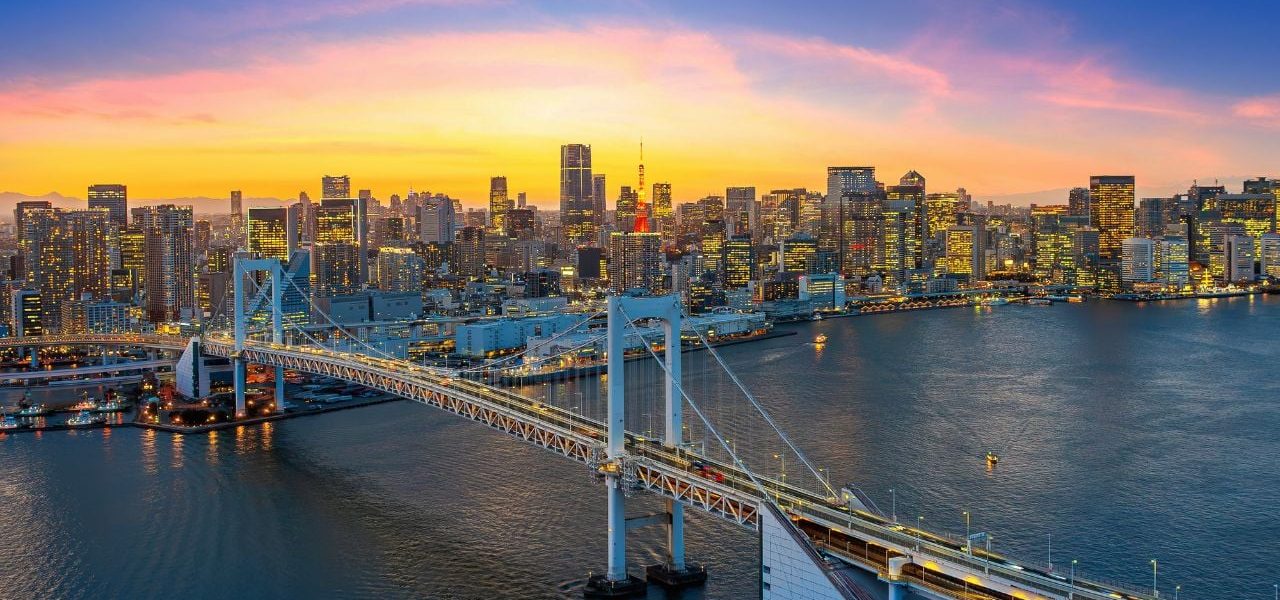
Tokyo’s Subtle Power Play: Curated Comfort in a Global Scramble for Tourists
POLICY WIRE — Tokyo, Japan — In an era where every nation-state grapples with the boisterous demands of mass tourism, Japan’s approach feels… different. It’s less a mad dash for footfall and...

POLICY WIRE — Tokyo, Japan — In an era where every nation-state grapples with the boisterous demands of mass tourism, Japan’s approach feels… different. It’s less a mad dash for footfall and more a meticulously planned welcome, specifically for those who might feel a tad worn out by the world’s relentless pace. Forget the thronged queues — and selfie sticks obscuring every iconic vista. Tokyo, and indeed the broader archipelago, isn’t just opening its doors; it’s handpicking its guests, or at least, curating an environment designed to attract a particular, often affluent, sensibility.
It’s a clever bit of psychological engineering, really. The notion of ‘beauty, comfort, and less overwhelm’ isn’t accidental branding; it’s a policy directive wrapped in polite invitation. While other countries contend with ‘overtourism’ by erecting turnstiles and raising prices indiscriminately, Japan appears to have taken a path that champions the quality of the visit over sheer quantity—a subtle nod to its national psyche of order and exquisite attention to detail.
“We don’t merely want visitors; we seek to forge meaningful connections,” stated Atsushi Nakamura, Director of International Tourism Policy at the Japan National Tourism Organization, during a recent, understated briefing. “Our objective isn’t just economic inflow, but cultural exchange that resonates deeply. That means providing an experience where every interaction, every vista, contributes to a sense of tranquility and genuine immersion.” It’s a message that clearly aims for distinction in a crowded global marketplace.
But make no mistake, beneath the veneer of serene hospitality lies a sharp economic calculus. Japan, facing a contracting workforce and a historically low birth rate, sees inbound tourism not just as supplementary revenue but as a significant engine for economic diversification and regional revitalization. It’s an astute strategy to offset some long-term domestic headwinds, turning inherent national traits—cleanliness, politeness, punctiliousness—into prime commodities.
And it’s a strategy that resonates, unexpectedly, far beyond the typical Western traveler. For instance, in the burgeoning economies of South Asia and parts of the Muslim world, where bustling cities often provide a constant cacophony, the promise of an orderly, respectful, and thoughtfully arranged travel experience holds significant allure. We’re seeing a steady increase in travelers from nations like Pakistan, Malaysia, and Indonesia who are drawn to Japan’s blend of ancient tradition and futuristic efficiency, particularly as local services—halal dining options, prayer facilities—become more commonplace. It’s about cultural respect, too; the discretion and inherent deference often found in Japanese interactions aren’t lost on visitors from culturally conservative backgrounds. And for many, the ‘less overwhelm’ part isn’t a luxury, it’s a genuine relief.
The numbers don’t lie, either. After the post-pandemic rebound, Japan welcomed approximately 25 million foreign visitors in 2023, marking a robust return to pre-COVID levels, according to figures released by the Japan National Tourism Organization. But crucially, the focus now is increasingly on their per-capita spending and the dispersal of that spending beyond Tokyo and Kyoto.
“Our diplomatic efforts often extend through the channels of cultural understanding, and tourism is perhaps our most potent instrument in that regard,” observed Koji Tanaka, a seasoned official within Japan’s Ministry of Foreign Affairs, quietly acknowledging the soft-power dividends. “When visitors return home with a deeper appreciation for our culture, our values, our peaceful demeanor, that fosters goodwill that can’t be measured solely in yen.” It’s a calculated long game, this cultivation of comfort. Because ultimately, happy, un-harried tourists often become repeat visitors—and vocal advocates.
What This Means
Japan’s conscious decision to pivot towards a “curated comfort” model isn’t just about pleasant holidays; it reflects a broader, sophisticated foreign policy agenda. By fostering a high-quality visitor experience, particularly for those seeking respite and cultural depth, Japan subtly positions itself as a stable, attractive, and culturally rich alternative in a globally turbulent landscape. It’s a diplomatic play, selling soft power — and economic resilience in one neatly packaged journey. This selective approach also speaks to an understanding that unchecked mass tourism can erode the very appeal that attracts visitors in the first place, leading to local resentment and environmental degradation—problems Japan’s methodical governance would rather pre-empt.
Economically, spreading tourist activity beyond Tokyo, Osaka, and Kyoto is a masterstroke designed to inject much-needed capital into Japan’s often aging, depopulated rural areas. Think local craftspeople, small family-run ryokans, — and regional delicacies finding new global markets. Politically, a satisfied global contingent of visitors, having experienced Japan’s orderliness and beauty firsthand, forms a natural network of unofficial ambassadors, subtly strengthening Japan’s international standing without the need for bombastic pronouncements. It’s a quiet diplomacy, much like Italy’s subtle cultural influence abroad. The shift signifies a strategic choice: preferring depth over superficial volume, betting that discernment will ultimately yield greater returns—both tangible and intangible—in the long run.