

Moscow’s Shrewd Gambit: Kremlin Whispers Peace While Europe Steels for War
POLICY WIRE — Brussels, Belgium — The chill in European capitals these days isn’t just about the fading winter; it’s a deep-seated unease, a pervasive skepticism. So, when the Kremlin...

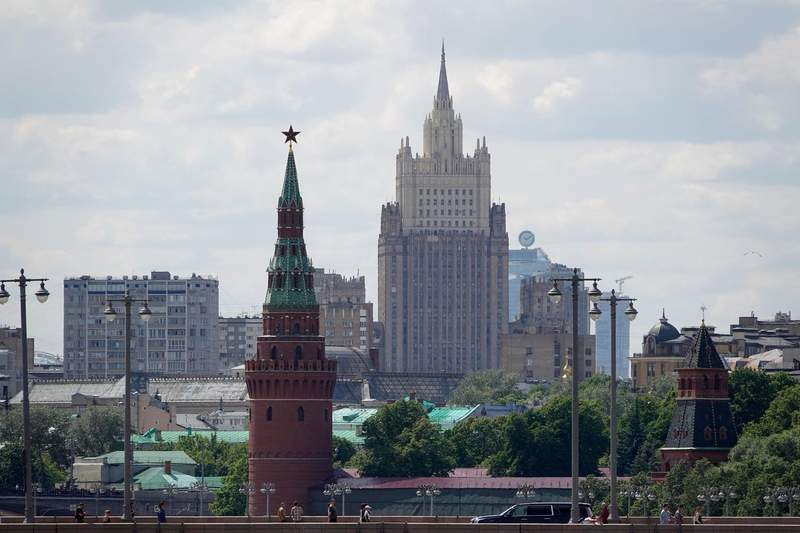
POLICY WIRE — Brussels, Belgium — The chill in European capitals these days isn’t just about the fading winter; it’s a deep-seated unease, a pervasive skepticism. So, when the Kremlin recently murmured about being “ready for dialogue” with Europe, it landed less like a breakthrough and more like a dropped pin in an echo chamber of past grievances. It didn’t thaw anything—not a bit. This wasn’t some grand diplomatic shift; it felt, for many, like a practiced, slightly tired refrain from a playbook everyone’s seen too many times.
It’s funny, isn’t it? The timing of these olive branches—always so particular, always when the geopolitical currents are churning thickest. This particular pronouncement, coming from Moscow, barely registered a ripple beyond a collective, weary sigh in chancelleries from Berlin to Warsaw. They’ve heard it before. They’ve seen the overtures, followed by actions that tell a different story entirely.
The message, attributed to Kremlin spokesperson Dmitry Peskov, suggested Moscow wasn’t slamming any doors, particularly to European states. “We’ve always kept the door ajar, haven’t we? It’s just that nobody on the other side seemed keen on stepping through,” Peskov reportedly stated, his voice laced with the usual mix of reasonableness and thinly veiled blame. “Europe’s political class has a choice: blind adherence to NATO’s hawkish line or genuine engagement for regional stability. We’re waiting.” He always makes it sound so simple, doesn’t he?
But the memory isn’t short here. Europe still remembers gas cut-offs — and violated borders. This isn’t just about Ukraine; it’s about a shattered trust that no casual invitation to the negotiating table can quickly repair. “Moscow’s sudden amiability, it feels more like a tactic than a sincere shift in posture,” one senior European diplomat—who insisted on anonymity to speak candidly about sensitive relations—remarked. “We’ve been down this road; the potholes are well-known, — and we’re not looking to take another spill. Where’s the actionable change? We need deeds, not just dulcet tones from a distance.” It’s a sentiment many quietly share, fearing another false dawn. What’s the endgame?
The broader world watches, too. Nations far removed from the immediate European theater—like those across South Asia and the Muslim world—find themselves navigating this precarious high-stakes game. Pakistan, for instance, a nation trying to balance its long-standing Western ties with growing energy and economic needs that sometimes pull it toward alliances with Russia or China, observes these moves carefully. Its own energy woes, exacerbated by global supply chain disruptions and volatile prices, are directly impacted by Moscow’s diplomatic and military actions. A perceived easing of tensions in Europe could, theoretically, stabilize global energy markets, which would offer a welcome, albeit temporary, reprieve to import-dependent economies. But it’s a big ‘if.’
And speaking of economic pressures, the data doesn’t lie. Europe has, painfully but decisively, shifted away from Russian energy dependence. The EU’s reliance on Russian pipeline gas, for example, plummeted from approximately 45% of its total gas imports in 2021 to around 15% in 2023, according to data compiled by Eurostat and the EIA. That’s a staggering economic decoupling, not easily undone. Because once you’ve gone through the agony of severing such deep-seated ties, you don’t jump back into bed without an awful lot of compelling reason.
But what if there’s more to this than just a play for PR? Russia has, after all, ramped up its diplomatic engagement with countries often viewed as outside the traditional Western orbit, cultivating ties in Africa, Latin America, and indeed, within parts of Asia and the Muslim world. Perhaps this European outreach is a test—a feeler, to see how deep the fissures are within the Western alliance itself, or to gain leverage on other fronts. Maybe it’s a way to demonstrate its global standing, despite Western efforts to isolate it. They’re still a player, Moscow implies, no matter how many sanctions pile up.
It’s hard to tell sincerity from strategy these days. The rules of engagement, it seems, have changed. There’s a cynicism baked into the very fabric of international relations now, a sense that every diplomatic gesture holds multiple meanings, some less benign than others. For Europe, the scars of recent history are still fresh, — and a simple invitation to talk isn’t enough to heal them. It takes a lot more than words to mend what’s been so deliberately broken, especially when global strife continues.
What This Means
This Kremlin ‘open-door’ messaging isn’t just boilerplate, nor is it an act of genuine appeasement. Politically, it aims to sow doubt and division among Western allies, testing the resolve of European capitals and perhaps dangling a carrot for those feeling the economic strain of current policies. If even a few European nations show willingness to engage on Moscow’s terms, it validates Russia’s position as a regional arbiter and chips away at the unified front against it. Economically, while Europe has significantly reduced its reliance on Russian energy, Moscow’s continued willingness to signal ‘readiness to talk’ keeps alive a slim hope—for some—of eventually resuming profitable energy partnerships, which could in turn influence global commodity markets. But it’s a slim hope indeed, one fraught with the specter of past betrayals. This isn’t about peace; it’s about power projection, a subtle maneuver in a larger, much colder war, attempting to redefine the battlefield without firing a shot.