


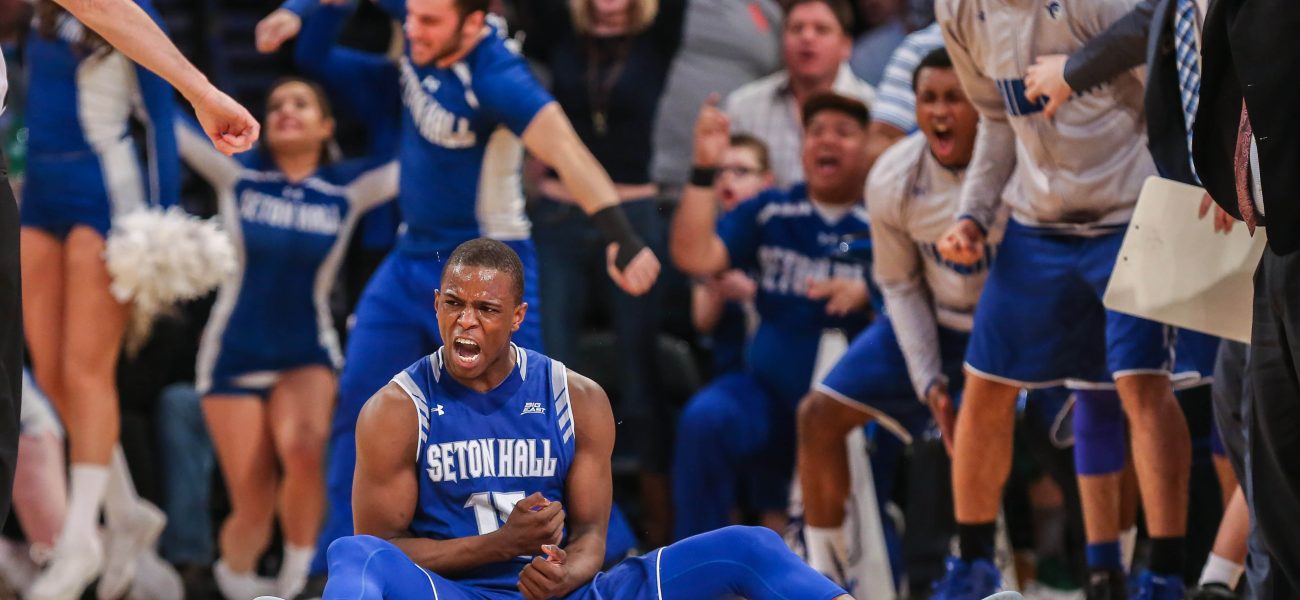
Hoops Diplomacy: Ex-Seton Hall Star’s Return a Shot at Nostalgia Amidst Global Strife and NIL Flux
POLICY WIRE — Newark, New Jersey — In an era where athlete loyalty often bends to the wind of transfer portals and fat NIL deals, the very notion of ‘returning home’ can feel like a...

POLICY WIRE — Newark, New Jersey — In an era where athlete loyalty often bends to the wind of transfer portals and fat NIL deals, the very notion of ‘returning home’ can feel like a quaint, almost antiquated concept. But for Isaiah Whitehead, the former Seton Hall phenom who once etched his name into Big East lore, the pull of the past isn’t just sentimental; it’s a tangible, boots-on-the-ground reality, influenced as much by the shifting sands of college sports economics as by the brutal realities of international geopolitics.
Whitehead, you see, isn’t just lacing up his sneakers for a reunion tour. He’s organizing a collegiate comeback, orchestrating the Seton Hall alumni team for The Basketball Tournament (TBT), a summer gauntlet where the winner snags a cool two million dollars. This isn’t some low-stakes pickup game. And it’s definitely not just about reminiscing over old times, though there’s plenty of that, too.
His return to Walsh Gym—a venue where he authored some truly spectacular chapters—isn’t merely a nostalgic pilgrimage. It’s a deliberate maneuver, a strategy to inject some much-needed morale, perhaps even a financial jolt, into a program navigating the choppy waters of modern college athletics. “There’s nothing like having guys who did what the program is striving to do come back and show face again,” Whitehead put it, his voice carrying the weary authority of someone who’s seen the game from every angle. He speaks about ‘getting fans back and rejuvenated,’ a tacit acknowledgment of the emotional capital an engaged alumni base brings.
But his story runs deeper than collegiate pride. Just weeks ago, Whitehead was playing professionally in Israel, a routine engagement for many American players finding careers overseas. He left because of “the war.” It’s a blunt, visceral statement, stripped of any journalistic fluff. The sheer randomness of conflict interrupting a player’s livelihood, forcing an abrupt exodus, really does underscore the fragile existence of professional athletes abroad. Many of his peers play in leagues across Europe, parts of Asia, or the broader Muslim world, places often subject to unpredictable political or security fluctuations that can abruptly alter — even end — a career. Think about players in Turkey or Pakistan’s domestic leagues; their choices are rarely just about the game itself, are they?
His former teammate, Desi Rodriguez, another Brooklyn native — and now a fellow TBT recruit, decided to stick it out. “Desi lives life on edge,” Whitehead chuckled wryly. “I told Desi, ‘You don’t have kids. I’ve got kids. My daughter is old enough to read the news.’” Because personal safety, frankly, trumps professional obligation when your family’s on the line.
Recruiting familiar faces has been central to Whitehead’s mission. Khadeen Carrington, Anthony Nelson, KC Ndefo, Romaro Gill, and Darnell Brodie are already in the fold, many of them members of that fiery 2016 team that famously ‘rebranded Seton Hall basketball.’ Angel Delgado, another pillar of that squad, is recovering from surgery but promises to appear. Even coach Elisha Boone, a former teammate, embodies the tightly-knit ethos of this particular cohort. Loyalty, it seems, isn’t entirely dead.
But loyalty in college basketball nowadays is less about school ties and more about the connections forged with mentors, like Shaheen Holloway, Seton Hall’s current head coach. “Sha has meant everything,” Whitehead reflected, a clear admiration in his tone. “From the time I was a high school senior to now, I could always call Sha and talk to him.” That sort of foundational relationship — a personal bond stretching years and continents — anchors players to institutions even as the formal ties fray. It’s an inconvenient truth for administrators fixated solely on booster NIL coffers.
What This Means
Whitehead’s initiative, and The Basketball Tournament itself, highlight a significant trend in the evolving political economy of college sports. As Name, Image, and Likeness (NIL) deals transform collegiate athletics into a semi-professional landscape, the traditional pipeline of alumni giving and programmatic stability faces new pressures. Players are economic actors first, sentimentalists second—if at all. This TBT push isn’t merely an exhibition; it’s a strategic repurposing of alumni goodwill. For Seton Hall Athletics, tacitly supporting ‘Hall In’ represents a smart, low-cost investment in retaining connection with high-profile former players who can, in turn, influence recruits and invigorate the fan base, bypassing the chaotic bidding wars of NIL directly.
From a broader geopolitical standpoint, Whitehead’s experience in Israel mirrors that of countless athletes, business professionals, and expatriates whose careers are held hostage by conflicts. While the average fan might not connect a mid-summer basketball tournament in New Jersey to foreign policy, these players’ narratives underscore a global reality: economic opportunity often leads to volatile environments, and the decisions individuals make are inherently tied to international stability. Pakistan, for instance, has its own evolving basketball scene; any American player considering a contract there weighs both financial incentives and regional security—decisions much like Whitehead’s. Geopolitical events, unfortunately, always shape personal choice, regardless of your sport.
the willingness of Seton Hall alums to participate for prize money and exposure on Fox Sports 1 speaks to a more pragmatic, capitalist view of college loyalty. It’s an effective workaround, a way to professionalize alma mater connections without formally involving the NCAA’s rigid structures. Ryan Mulvaney, an attorney and agent acting as the team’s GM, told us it’s about establishing something for ‘years to come,’ making clear this isn’t just a one-off.
And so, as Whitehead and his squad prepare to tip off against Syracuse in a best-of-three series, starting July 21st in South Orange, their games carry an unexpected weight. They’re a living testament to a changing world—a world where old allegiances find new economic expressions, where global events touch local courts, and where a basketball tournament, of all things, becomes a poignant commentary on loyalty, opportunity, and sheer human endurance. The fans will show up; they always do. But they’ll be watching more than just basketball, won’t they?