

Gilded Dreams, D.C. Realities: Trump’s Arch Saga Endures Architect’s Skepticism, Legal Fights
POLICY WIRE — Washington, D.C. — Picture this: a colossal, gold-laden Roman arch, smack dab in the solemn heart of Washington, D.C. This isn’t some outlandish concept art for a video game. No,...

POLICY WIRE — Washington, D.C. — Picture this: a colossal, gold-laden Roman arch, smack dab in the solemn heart of Washington, D.C. This isn’t some outlandish concept art for a video game. No, this is former President Donald Trump’s vision, one he’s pushing hard for a dramatic, gilded monument intended to leave an indelible mark on the nation’s capital. And you know what? That mark? It’s currently mired in more bureaucracy, architectural dissent, — and courtroom drama than a D.C. traffic jam during rush hour.
It’s getting yet another go-around before federal arbiters, folks who—it appears—aren’t quite buying the entire spectacle. Specifically, the U.S. Commission of Fine Arts, many of whose members were, ironically, appointed by Trump himself, recently signed off on the *concept*. But even that conditional nod came with enough caveats to make a lawyer blush. They’re back this week, considering updated plans for what might be D.C.’s flashiest, most audacious — some would say garish — structural addition.
The proposed design, let’s call it the “Triumphal Arch of the Twenty-First Century,” isn’t subtle. It’s got a “Lady Liberty-like figure” (with a torch, naturally) perched 250 feet up, flanked by two eagles. Down at the base, four gilded lions are meant to stand guard. Because, America? We need more lions. And, just for good measure, two distinct mottos, “One Nation Under God” and “Liberty and Justice for All,” are to be inscribed in gold letters. An observation deck up top would offer “360-degree views,” presumably of a city grappling with whether it truly needs a monument that could rival anything out of a particularly ostentatious monarch’s playbook.
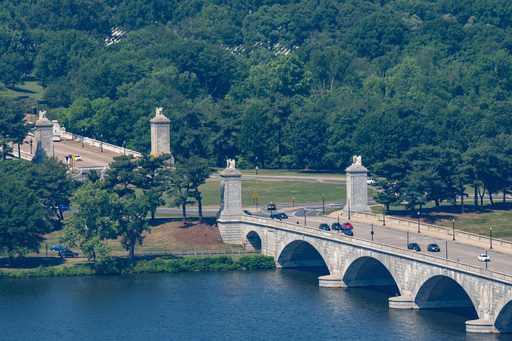
The opposition? It’s pretty vocal. Public comments, those often-ignored cries from the common folk, largely panned the idea. They don’t want it dominating the skyline. They don’t want it at all, some folks tell me. Architect James McCrery II, the commission’s vice chairman, hasn’t exactly hidden his misgivings. He stated back in April he “preferred the arch without the figures on top,” pointing out that ditching them would knock a substantial 80 feet off the arch’s considerable height. And those lions? He found them a bit… geographically incongruous. “Not a beast natural to the North American continent,” McCrery drily observed, cutting through the gilded fantasy with a simple biological truth. He also pushed back on an underground tunnel, envisioned to guide pedestrians to the structure, planned for a traffic circle somewhere between the Lincoln Memorial and Arlington National Cemetery. Practicality, you see, often clashes with grandeur.
Because, of course, where there’s a Trump project, there’s usually a lawsuit. A group of veterans — and a historian have already hauled the administration into federal court. Their beef? The arch, they claim, would mess with the sightline between the Lincoln Memorial and Arlington House, among other concerns about hallowed ground. But what’s a monument without a few legal skirmishes, right?
Doug Burgum, who serves as Interior Secretary and whose department, the National Park Service, controls the very land in question, stands firmly with the former president. He’s often reiterated the point that Washington, alone among major Western capitals, “lacks such an arch.” Indeed, Burgum was recently quoted observing, “Every truly great Western capital boasts such a landmark; Washington shouldn’t be an exception in projecting its strength and historical triumph. It’s a statement, you see.” His sentiment reflects a broader idea of how nations—from Paris with its Arc de Triomphe to more modern capitals—use architectural statements to stamp their presence on the global stage. Yet, sometimes these colossal projects feel less like statements of unity — and more like echoes of a singular ego. Look at projects in other parts of the world, say, grand, almost theatrical architectural endeavors often pushed by leaders in places like Pakistan’s capital, Islamabad, or Gulf states. While seemingly asserting national pride, they sometimes bypass the messy, often more meaningful, process of organic civic identity development.
And it’s not just the arch. Trump’s other ventures in monument ‘beautification,’ like adding a blue coating to the Lincoln Memorial Reflecting Pool—just in time for America’s 250th birthday, mind you—are also tied up in litigation. The Cultural Landscape Foundation, a non-profit, alleges these changes skirted proper preservation reviews. It’s a pattern, they argue: an aggressive push for cosmetic alterations without the tedious oversight normally required for historic sites. At a proposed 250 feet, the arch would soar higher than many of its iconic D.C. counterparts, for instance, dwarfing the 99-foot Lincoln Memorial, according to U.S. Commission of Fine Arts data, — and nearly reaching half the stature of the 555-foot Washington Monument. It’s certainly ambitious. Some might say, overwhelmingly so.
What This Means
This whole gilded arch brouhaha isn’t just about whether a former president gets his vanity project built. Oh no. It’s about who gets to define a nation’s iconography. It’s about how Washington, D.C.—a city often seen as America’s stern, symbolic heart—should evolve, if at all, to reflect contemporary political aspirations without erasing its historical integrity. From an economic standpoint, massive public works, particularly those laden with controversy, often gobble up taxpayer dollars faster than a lobbyist chasing a free lunch, sparking debates about allocation priorities in a nation with plenty of other pressing needs. The sheer legal resistance, with veterans and preservationists digging in their heels, suggests a deepening chasm between the vision of top-down grandiosity and bottom-up civic attachment. The ability to push through such a project, or block it, will signal the enduring strength of executive power against established institutional checks and balances. And it’s not just a domestic affair; other nations watch how the U.S. preserves its heritage while adapting to new leaders, noting its approach to such global political theater. For good or ill, this fight over a giant arch will shape more than just a skyline; it’ll contribute to the story America tells about itself.