


Thunderous Contradiction: NBA’s Best-Kept Secret Provokes Analyst’s Ire
POLICY WIRE — New York, USA — In the often-theatrical arena of professional sports, public affection, it turns out, isn’t always tethered to athletic excellence. Narratives, instead, coalesce —...

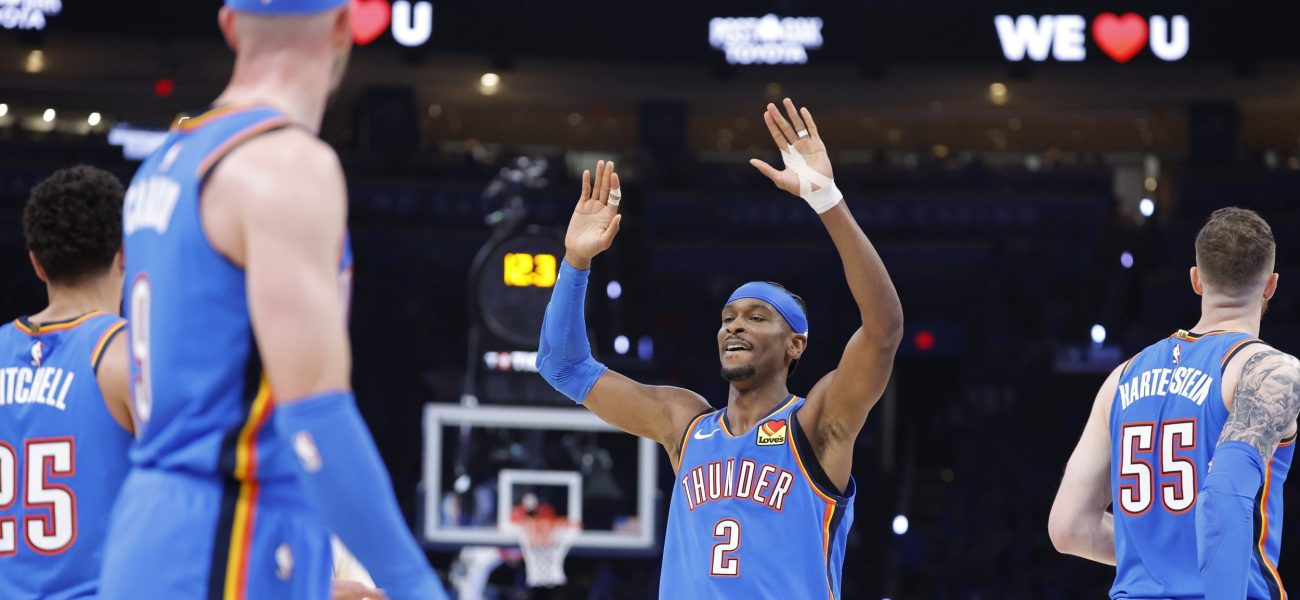
POLICY WIRE — New York, USA — In the often-theatrical arena of professional sports, public affection, it turns out, isn’t always tethered to athletic excellence. Narratives, instead, coalesce — and harden, sometimes defying inconvenient realities with stubborn indifference. And sometimes, these narratives provoke seasoned observers to question the very logic underpinning modern fan culture. Exhibit A: the Oklahoma City Thunder.
It’s an enigma, frankly, why this particular franchise, ascendant and undeniably skilled, triggers such peculiar derision from segments of the NBA’s broad audience and, surprisingly, even some media circuits. Their meteoric rise—they weren’t supposed to be this good, this fast—feels less like a fairytale and more like a nagging headache for those who prefer their champions forged in glamour markets or cloaked in dynastic pretense.
NBC’s veteran voice, Mike Tirico, a man who’s witnessed enough championship runs to spot the genuine article, has become an unlikely defender. His frustration with the prevailing Thunder antipathy is palpable. Ahead of a critical playoff showdown, speaking on The Ryen Russillo Show, Tirico didn’t hold back. “It bothers” him, he explained, to hear the endless griping about the team’s physical play or, inexplicably, the relatively smaller size of Oklahoma City itself. He drew a fascinating parallel, labeling OKC “the Green Bay of the NBA.”
He isn’t wrong. Green Bay, much like Oklahoma City, represents a unique convergence: a small-town team, punching above its weight class, built on a foundation of zealous community support rather than metropolitan glitter. But while Green Bay’s grit is romanticized, OKC’s seems to invite scrutiny. “The fanbase is unbelievable, the organization’s rock solid, they invest back in their team,” Tirico stated, his words cutting through the manufactured grievances. He sounds a bit tired, don’t you think? Like a policy wonk explaining basic economics to a skeptical legislature.
And critics, of course, have their talking points ready. They moan about what they perceive as an advantageous whistle, largely fueled by the aggressive defensive posture of the Thunder and MVP Shai Gilgeous-Alexander’s uncanny ability to draw fouls. But isn’t getting to the line part of the game? “Their stars, OK, SGA draws fouls. Great. He’s also really damn good at drawing fouls. He’s a really damn good player,” Tirico countered, a dose of hard truth into the discourse. “And he got the MVP, came back and got more efficient.” The data supports him: Gilgeous-Alexander finished the regular season second in the league in free throw attempts, a direct byproduct of his relentless, attacking style, according to ESPN statistics.
It speaks to a broader discomfort with how success is achieved, particularly when it sidesteps the usual pathways. Building a formidable team quickly, efficiently, and without succumbing to the ‘superteam’ paradigm often adopted by larger markets—it’s just not fashionable. Their players are workers. Not divas. Tirico points this out, too. “When you see (them) do the interviews after the game, when one’s there, they’re all there. They’re all about each other. They’ve set a tone for the culture for the rest of the league to be about each other.” It’s a genuine compliment, albeit one easily missed by those fixated on perceived fouls.
If their physical approach grates on some, Tirico suggests directing that ire at the league office or the referees, not the team that’s simply playing within the established rules. It’s a pragmatic, almost clinical perspective on sports, far removed from the emotional fan lens. “What is there to dislike about a team that does it the right way? It bothers me,” he insisted, exasperated. Perhaps this resistance to a genuine, scrappy team echoes sentiments found elsewhere, like in international sports where perceived ‘ugly’ play from teams like South Africa’s football squad—achieving success through sheer will, not always dazzling artistry—can stir similar mixed feelings, though ultimately earning grudging respect. See The Scrappy Triumph: How South Africa’s ‘Ugly’ Football Conquered Expectations.
What This Means
The Thunder’s predicament—high performance, low public affinity—offers a fascinating microcosm of larger societal dynamics. It’s not just about basketball; it’s about perception management and the often-biased lens through which emerging powers or non-traditional success stories are viewed. In geopolitics or economics, consider how nations in the Global South, say Pakistan for example, often grapple with persistent, outmoded perceptions that obscure real, demonstrable progress or strategic value. Like OKC, Pakistan often fights against established narratives, trying to gain equitable recognition on the global stage despite having robust, often unheralded, strengths in specific sectors. That’s a struggle. Whether it’s a basketball franchise in a smaller American city or a significant player in the Muslim world, the fight for a fair hearing, for genuine merit to override inherited prejudices, is a constant battle. This NBA situation illuminates a stark economic truth too: market size dictates media coverage, branding opportunities, and general ‘likability.’ When a smaller entity outperforms its ‘natural’ economic weight class, it challenges the status quo. It disrupts, — and not everyone appreciates disruption, no matter how earned. The public wants narratives that confirm their biases, even when the scoreboard tells a different story. And Tirico, bless his heart, is just asking us to look past the glitz and grime, to acknowledge the genuine article, for once.