


Amphibious Audits: When a Lettuce-Dwelling Amphibian Leaps into the Global Food Policy Debate
POLICY WIRE — Washington, D.C. — For a brief, uncomfortable moment, the carefully orchestrated ballet of global commerce was upended not by sanctions, not by tariffs, but by a creature whose primary...

POLICY WIRE — Washington, D.C. — For a brief, uncomfortable moment, the carefully orchestrated ballet of global commerce was upended not by sanctions, not by tariffs, but by a creature whose primary skill involves catching flies and remaining inconspicuous. Somewhere between a California farm and a dinner plate in suburban America, a small, live amphibian made an unexpected journey—tucked away in a head of organic lettuce. This wasn’t just a quirky anecdote; it was a potent, albeit green, symbol of an intricate food system suddenly revealing its seams, sparking uncomfortable questions about regulatory oversight, consumer expectations, and the cost of perceived purity.
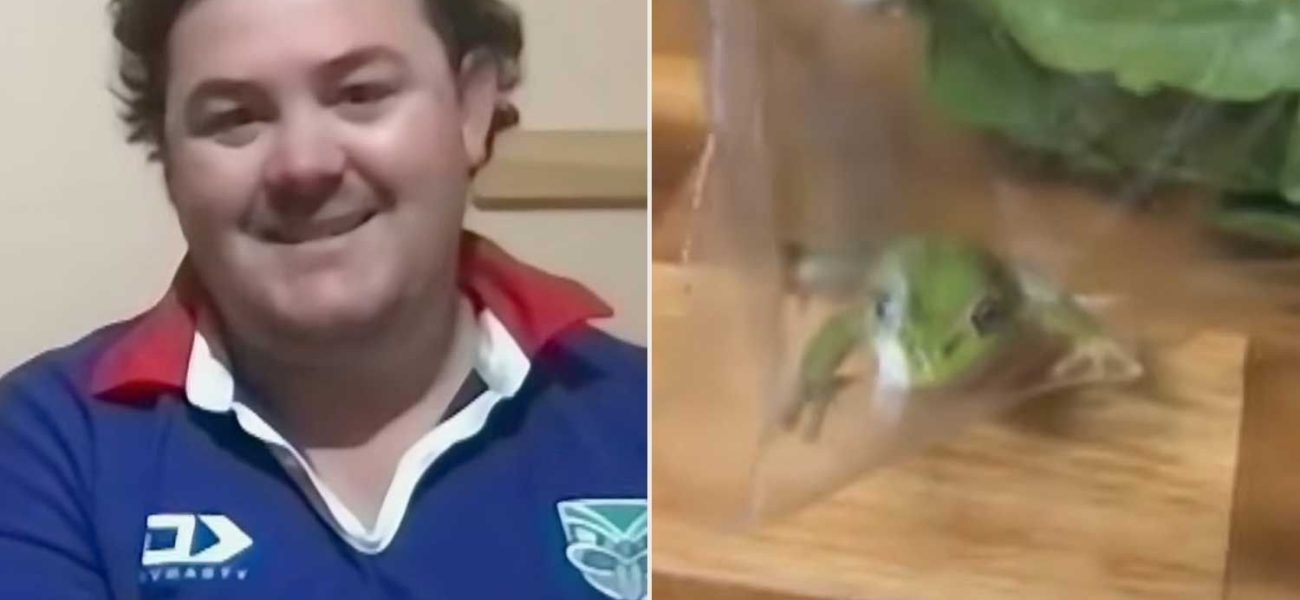
It’s become almost a modern parable: man heads to the grocer, plans a steak — and salad night. He expects pristine produce, maybe a little residual earth (if he’s feeling rustic). He doesn’t expect a bona fide biological stowaway. But that’s exactly what happened when one particular shopper, name undisclosed by the store in question but widely reported, discovered a still-kicking frog nestled among the leaves he’d picked up. The creature, apparently contentedly — or perhaps desperately — ensconced in its verdant carriage, launched a thousand online comments, a handful of indignant consumer complaints, and for the seasoned observer of policy, a ripple of unease.
“Look, incidents like this, they’re rare. Incredibly so,” stated Dr. Elaine Peterson, Deputy Undersecretary for Food Safety at the U.S. Department of Agriculture, speaking via a telephone interview from her office. “Our food supply chain, it’s one of the most robust — and secure in the world. We’ve got rigorous protocols, from farm to fork, for a reason. But you’re dealing with natural products, grown outdoors. Sometimes, nature finds a way in.” It’s a pragmatic assessment, tinged with a bureaucracy’s characteristic defensiveness. And it highlights a key tension: how much ‘nature’ is too much, especially when consumers are paying premium prices for organic labels, expecting less chemical intervention, but perhaps forgetting the occasional living organism comes with the territory.
But the public reaction often misses that nuanced calculus. They see a bug—or in this case, a frog—and the mind instantly jumps to broader issues of contamination or negligence. “This isn’t just about a frog; it’s about trust,” argues Representative Alistair Finch (D-CA), a vocal proponent for stricter supply chain auditing, in a pointed press release issued recently. “When people open their fridge, they don’t expect surprises that jump. It’s an immediate, visceral breakdown of confidence, and it affects every grocery chain, every farmer, frankly, every single producer in that chain. We’ve got to ask if current oversight—especially for highly fragmented supply lines—is truly sufficient for the modern age of agriculture.”
His point? Modern food delivery, even for seemingly simple items like salad greens, often involves dozens of hands, multiple climatic zones, and journeys across borders. Think about the path your salad takes: it could start in California, get processed in Arizona, bagged in the Midwest, and then trucked coast-to-coast. Each step, a potential vulnerability—a potential hopping-off point for an errant amphibian. And we’re increasingly interconnected. Take Pakistan, for instance, where an estimated 25% of fresh produce spoils before reaching market due to inadequate cold storage and transportation infrastructure, according to a 2022 World Bank report. While a frog in your lettuce is an inconvenience, systemic issues elsewhere have far graver consequences. But a high-profile incident here, no matter how isolated, certainly doesn’t make it easier for nascent markets in places like South Asia to prove their goods meet the hyper-sensitive standards of Western importers. It just tightens the psychological vice.
Because ultimately, these kinds of incidents erode the invisible bonds that tie consumers to their food sources. They force a public reckoning with the sometimes-unpalatable realities of nature and agriculture, even as branding attempts to present a sanitized, perfect image. The push for organic produce, for all its ecological merits, frequently forgets that ‘natural’ doesn’t mean ‘sterilized’. It can mean more birds, more bees, — and occasionally, yes, more amphibians.
What This Means
A lone frog might seem trivial, but its unexpected appearance carries real political — and economic implications. For starters, it injects a dose of immediate public relations headaches for grocers — and suppliers. Even an isolated event can dent brand reputation and trigger recalls, costing millions. But don’t misunderstand: it also fuels the ongoing debate about regulatory frameworks—do we need more granular inspection at every point, or would that simply cripple an already thinly margined industry with bureaucracy and ultimately, raise prices for consumers? The political appetite for increased government intervention often correlates with these sorts of vivid, tangible examples of perceived failure.
Economically, such occurrences can highlight the delicate balance producers must strike when catering to a globalized, health-conscious, yet aesthetically particular consumer base. There’s a constant battle between efficient, large-scale agriculture and the burgeoning demand for ‘natural’ or ‘organic’ products, which by their very definition, are more exposed to the elements (and the elements’ inhabitants). This incident, insignificant on its own, amplifies calls for enhanced transparency in the supply chain. Policymakers, especially those considering trade agreements or domestic agricultural subsidies, often have to weigh the public’s desire for pristine products against the realities of growing food economically. It adds another data point to the pressure for technological solutions in food processing—from advanced sorting machines to AI-driven quality checks—aiming to minimize human contact and, crucially, natural contamination. But will the public really embrace robots picking their kale? That remains to be seen. It’s a frog in the lettuce, and a fly in the ointment for a system that strives for flawlessness but must contend with life itself.