


Bollywood Meets Billions: A ‘Dead Rubber’ IPL Match, and the Weight of Cricket’s Empire
POLICY WIRE — Kolkata, India — Forget the intricate mathematical equations that typically hold half a billion fans rapt. Forget the headlines screaming about playoff berths — and the mad dash to...

POLICY WIRE — Kolkata, India — Forget the intricate mathematical equations that typically hold half a billion fans rapt. Forget the headlines screaming about playoff berths — and the mad dash to glory. Sometimes, the real drama isn’t about reaching the summit; it’s about simply not falling through the floor, even when the climb looks impossible.
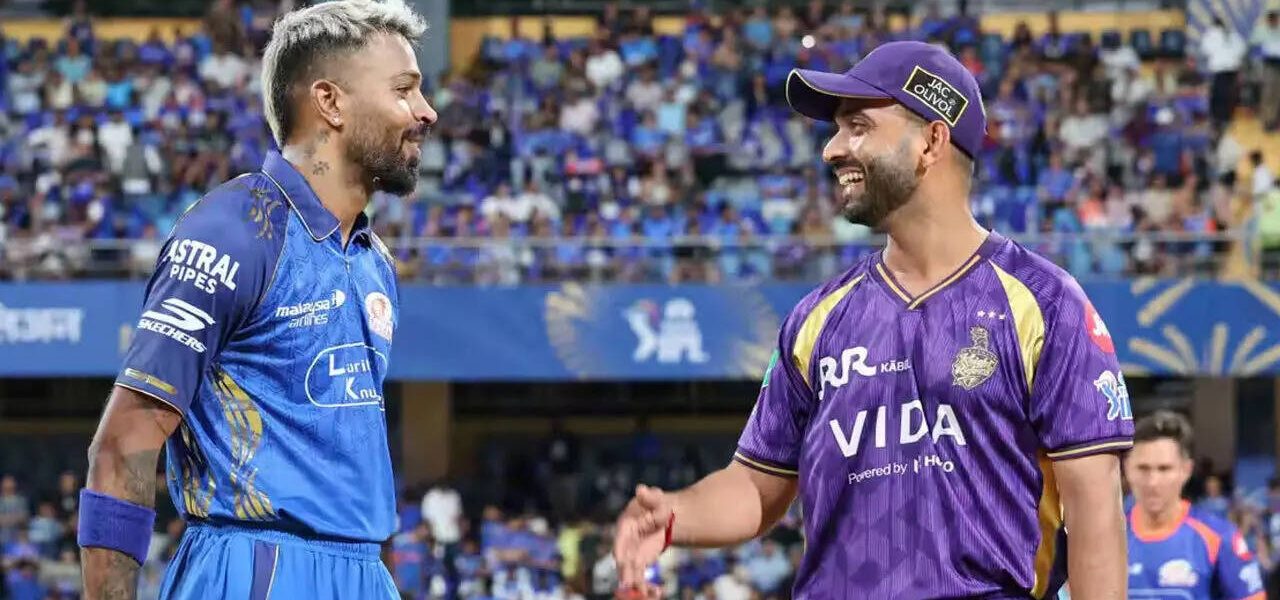
And that’s where we find ourselves with the impending showdown between the Kolkata Knight Riders (KKR) and the Mumbai Indians (MI), a match analysts are already dismissing as a ‘dead rubber.’ One team, KKR, clinging by a fingernail to a statistical ghost of a playoff dream. The other, MI, already out, a fallen titan whose early exit has shocked precisely no one watching the messy season unfold. But in the rarefied air of the Indian Premier League, with billions at stake and national pride on the line – well, there aren’t many truly inconsequential contests. Even these come loaded.
It’s an odd sort of theater, isn’t it? Here you have KKR, a team co-owned by a bona fide Bollywood emperor, Shah Rukh Khan, playing host. They’ve found some form, managing five wins in their last six matches after a frankly abysmal start. Yet, one more slip – one misfield, one poorly timed six – and their aspirations for postseason cricket will evaporate like a mirage in the Thar Desert. Their only hope relies on a bizarre constellation of other teams messing up, an act of faith rather than skill at this point. Because really, how much more can they ask for?
Then there’s Mumbai Indians, five-time champions, an outfit that historically has swaggered through the league like a conqueror. Now, they’re reduced to spoilers, albeit very dangerous ones. They proved that recently, ruining the Punjab Kings’ faint hopes. That first clash with KKR saw MI win convincingly by six wickets, with openers Ryan Rickelton and Rohit Sharma – men who could probably play this game in their sleep – leading the charge. Skipper Hardik Pandya’s expected return adds a new layer, suggesting MI isn’t quite ready to roll over — and play dead. They’ve got reputations, careers, — and future contracts to consider.
“We’re past the permutations now,” one senior KKR management source, speaking off the record, admitted to Policy Wire, his voice a gravelly mix of determination and fatigue. “It’s about pride, about putting on a show for this city that never stops believing. And you bet your last rupee, we’re not gifting anyone two points. Not now. Not ever.” He didn’t have to add the unspoken corollary: ‘because every dollar matters.’
But the pressure isn’t just about this one match. Mumbai’s season has been a catastrophic misfire, prompting serious questions about leadership — and team dynamics. “Our season’s been a tough pill to swallow, no denying it,” stated Mahela Jayawardene, MI’s Global Head of Cricket, in a rare moment of public candor. “But our players are professionals. They’re playing for contracts, for their national team calls, and yes, to upset anyone’s easy stroll to the finish line. It’s just how this game works. Every single performance is scrutinized.” His words carried the weight of experience, a nod to the immense personal and financial stakes woven into the very fabric of this league.
This ‘dead rubber’ isn’t merely a sporting contest; it’s a mirror to the broader shadow games playing out in Asia’s complex economic and political landscape. The IPL, which now holds an eye-watering valuation of over $16.4 billion according to financial consultancy Brand Finance as of 2024, transforms even these late-season games into high-stakes arenas of reputation, future earnings, and regional dominance. It’s an economic powerhouse, dwarfing many national industries. From the bazaars of Karachi to the corporate towers of Dubai, and right into the villages of rural Bangladesh, these matches generate chatter, bets, and dreams.
It’s why you can’t truly disconnect cricket from the broader geopolitics of the subcontinent. While Pakistan and India maintain a fraught political relationship, the passion for cricket and the players involved transcends those boundaries, fostering a massive shared audience in the Muslim world and across South Asia. Mumbai, Kolkata — these aren’t just cities; they’re brands that resonate far beyond their geographical borders, symbols of economic might and cultural influence, both domestically and regionally. They don’t just sell cricket; they sell dreams, identity, and, let’s be honest, an enormous amount of merchandise.
What This Means
The seeming inconsequence of this KKR vs. MI clash is deceptive. Economically, these are not just sporting franchises; they’re vast media — and entertainment entities. Every match, irrespective of its playoff implications, drives viewership, advertising revenue, and strengthens the brand equity crucial for future sponsorships and player investments. For individual players, even those already millionaires, these final games are auditions – for next season’s auction, for national team selectors, for endorsements. A moment of brilliance, or a costly mistake, could redefine a career. Politically, the IPL remains a massive soft power tool for India, showcasing its economic vibrancy and cultural pull across Asia and beyond. And this late-stage drama, this fight for even the smallest dignity, it’s all part of the package. It’s good content. It always is.